personalities cannot evade policies November 3, 2003 2:43 PM Subscribe
link one is all over every news site, and is harldy news anyway. link two is crunchlands 87 billion page, which appeared here about 2 weeks ago and has subsequently been posted to virtually every site you could name.
posted by quonsar at 2:51 PM on November 3, 2003
posted by quonsar at 2:51 PM on November 3, 2003
ok, so it didn't appear on red-hot-anal-sluts.com, but almost everywhere else!
posted by quonsar at 2:56 PM on November 3, 2003
posted by quonsar at 2:56 PM on November 3, 2003
MetaFilter: Proud to be accident free for 8, 6, 0 hours
posted by mathowie (staff) at 3:21 PM on November 3, 2003
posted by mathowie (staff) at 3:21 PM on November 3, 2003
Quonsar: I don't get why that angers you so much. The crunchland link is smack on-topic, it's news-that-matter-to-many-many pockets unlike countless other posts that in my opinion are inane ; yet I don't complain about post I think are totally useless like flash games, sometimes maybe self-advertising. I just disregard them.
It's also illogical to rule that any link posted in the past can't be re-posted if it's relevant to the subject ; it is logical not to repost it as main link (new story,update,fresh info) but in the context I see no problems with that.
posted by elpapacito at 3:23 PM on November 3, 2003
It's also illogical to rule that any link posted in the past can't be re-posted if it's relevant to the subject ; it is logical not to repost it as main link (new story,update,fresh info) but in the context I see no problems with that.
posted by elpapacito at 3:23 PM on November 3, 2003
OK so It was decided to delete my post. Fine. Probably I broken some rule I don't remember (I'll go check rules again). I'll try to repost the main article without the "87 billion how much" link as I think it's massively interesting and worth discussion. If I'll not be able to, somebody please try to post it.
posted by elpapacito at 3:29 PM on November 3, 2003
posted by elpapacito at 3:29 PM on November 3, 2003
angry? oh jeez, i'm not angry! ah shit! you mean i gotta be angry to start a metatalk?
*looks around for angrymodem*
posted by quonsar at 3:29 PM on November 3, 2003
*looks around for angrymodem*
posted by quonsar at 3:29 PM on November 3, 2003
87 billion anal sluts? Now we're talking.
posted by homunculus at 3:30 PM on November 3, 2003
posted by homunculus at 3:30 PM on November 3, 2003
el papacito, the 87 billion stuff has been discussed over and over here on dozens of threads, and crunchland's excellent site was already featured as well. It just seemed like there was nothing really to discuss anymore when the 87 billion resolution finally passed.
posted by mathowie (staff) at 3:33 PM on November 3, 2003
posted by mathowie (staff) at 3:33 PM on November 3, 2003
I'll try to repost the main article without the "87 billion how much" link as I think it's massively interesting and worth discussion. If I'll not be able to, somebody please try to post it.
Since Matt deleted it the first time, that doesn't seem like a good idea. You could always post it to WarFilter.
posted by homunculus at 3:34 PM on November 3, 2003
Since Matt deleted it the first time, that doesn't seem like a good idea. You could always post it to WarFilter.
posted by homunculus at 3:34 PM on November 3, 2003
*waves at quonsar and winks*
posted by angry modem at 3:35 PM on November 3, 2003
posted by angry modem at 3:35 PM on November 3, 2003
Aw, traffic had fallen way off. Matt coulda, just this once, let the double post stay.
posted by crunchland at 3:40 PM on November 3, 2003
posted by crunchland at 3:40 PM on November 3, 2003
mathowie: thanks for the explanations that's appreciated.
Still have some troubles about deciding when enough on a topic is really enough ; guess I could just open another weblog to make the decision myself , but devising a policy is the part that's troubling.
posted by elpapacito at 4:02 PM on November 3, 2003
Still have some troubles about deciding when enough on a topic is really enough ; guess I could just open another weblog to make the decision myself , but devising a policy is the part that's troubling.
posted by elpapacito at 4:02 PM on November 3, 2003
Now everyone's going to sing Kumbaya, I suppose....
Hey! I saw a sun pillar yester sunset!
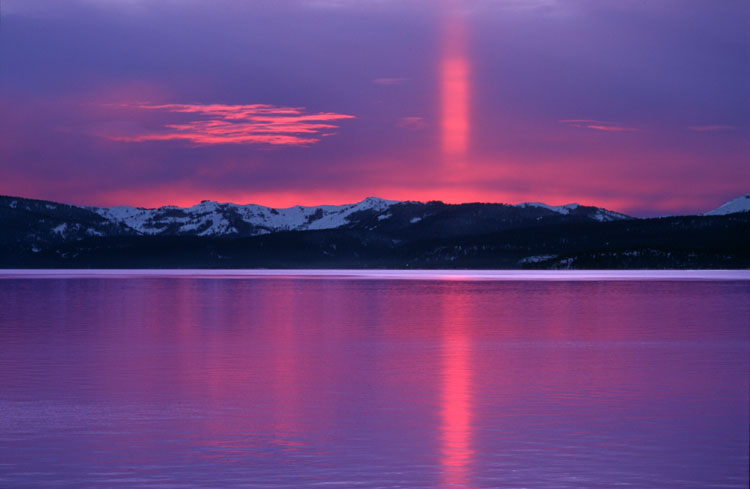
posted by y2karl at 6:10 PM on November 3, 2003
Hey! I saw a sun pillar yester sunset!
posted by y2karl at 6:10 PM on November 3, 2003
So, it's on almost every news source, but it's hardly news? That doesn't make any sense, because news organizations only report what is important and of interest. They take their responsibilities waaay to seriously to waste ink on useless crap. Get it straight, dude!
posted by Hildago at 6:42 PM on November 3, 2003
posted by Hildago at 6:42 PM on November 3, 2003
guess I could just open another weblog
Another MeTa first: poster tells self "get your own blog!"
y2k, is that for real?
It looks like a scene from Land of the Lost. Which is to say, bad special effects. Sun pillars are shitty, but making up evidence in an attempt to spur action isn't going to help.
posted by languagehat at 7:17 PM on November 3, 2003
Another MeTa first: poster tells self "get your own blog!"
y2k, is that for real?
It looks like a scene from Land of the Lost. Which is to say, bad special effects. Sun pillars are shitty, but making up evidence in an attempt to spur action isn't going to help.
posted by languagehat at 7:17 PM on November 3, 2003
That isn't a Sun pillar, it's a red krypton bomb exploding over the horizon. SmallvilleFilter!
posted by billsaysthis at 7:20 PM on November 3, 2003
posted by billsaysthis at 7:20 PM on November 3, 2003
languagehat : >
...red krypton bomb exploding over the horizon.
I dunno..to me it looks like nuclear winter in DC, and that's where the washington monument was.
posted by amberglow at 8:10 PM on November 3, 2003
...red krypton bomb exploding over the horizon.
I dunno..to me it looks like nuclear winter in DC, and that's where the washington monument was.
posted by amberglow at 8:10 PM on November 3, 2003
Shit! Pillar of Fire!
Excuse me, everyone, all of a sudden I have a LOT of work to do.
*puts on hat to hide horns, grabs briefcase, hauls ass*
posted by UncleFes at 8:39 PM on November 3, 2003
Excuse me, everyone, all of a sudden I have a LOT of work to do.
*puts on hat to hide horns, grabs briefcase, hauls ass*
posted by UncleFes at 8:39 PM on November 3, 2003
i'm not taking personal shots at anyone, but i just wonder why so many below average to bad posts have to be dragged into meta and pointed out like this. yeah, this was a bad post, but let mathowie take care of it, he's pretty good at what he does. there's no point in turning one bad post into two bad posts and a fruitless discussion.
and if the post DOES get deleted, why people take it so personally? if the post gets deleted, take it in stride, read what mathowie said and try to do better next time. having your post deleted is nothing to complain about, and i'm not talking about you elpapacito, your reaction was understandable and much better than most i've seen in the past.
posted by graventy at 8:42 PM on November 3, 2003
and if the post DOES get deleted, why people take it so personally? if the post gets deleted, take it in stride, read what mathowie said and try to do better next time. having your post deleted is nothing to complain about, and i'm not talking about you elpapacito, your reaction was understandable and much better than most i've seen in the past.
posted by graventy at 8:42 PM on November 3, 2003
It looks like a scene from Land of the Lost. Which is to say, bad special effects. Sun pillars are shitty, but making up evidence in an attempt to spur action isn't going to help.
posted by y2karl at 8:52 PM on November 3, 2003
posted by y2karl at 8:52 PM on November 3, 2003
As a self-professed online community know-nothing, someone explain to me the pronunciation of the term "meme". Does it sound like "me"/"me" or does it sound like a French word?
This has been affecting the way I live my life for months.
posted by The God Complex at 10:09 PM on November 3, 2003
This has been affecting the way I live my life for months.
posted by The God Complex at 10:09 PM on November 3, 2003
meeeeem ... rhyming with beam, beem, bleam, bream, cream, creme, deam, deem, diehm, diem, dream, gleam, gleim, greim, grieme, keim, liem, priem, ream, reim, rheem, riehm, scheme, scream, seam, seem, siem, steam, stream, teem, theme, thiem, thieme, ziehm, agleam, avrim, basim, black bream, box beam, coal seam, cold cream, daelim, downstream, egg cream, esteem, extreme, face cream, felled seam, gulf stream, hakim, ice cream, jet stream, joaquim, kareem, karim, light beam, light cream, live steam, maxime, passim, per diem, pezim, pipe dream, raheem, rahim, redeem, regime, rodime, sea bream, supreme, tie beam, upstream, vadim, wet dream, whipped cream, balance beam, clotted cream, coffee cream, color scheme, double cream, double creme, hapoalim, haradim, heavy cream, ibrahim, ion beam, joachim, laser beam, peach ice cream, sarofim, sephardim, shaving cream, soft ice cream, soured cream, sour cream, tidal stream, triple cream, triple creme, whipping cream, chocolate ice cream, chromakalim, devonshire cream, fraudulent scheme, freshwater bream, incentive scheme, melodic theme, meteor stream, musical theme, particle beam, radio beam, surgical seam, tidewater stream, vanishing cream, violent stream, american dream, atlantic sea bream, bavarian cream, european bream, strawberry ice cream, vanilla ice cream, european sea bream, and neapolitan ice cream.
posted by crunchland at 10:28 PM on November 3, 2003
posted by crunchland at 10:28 PM on November 3, 2003
Neither of my guesses was right, then. I don't know how to reconcile this.
posted by The God Complex at 10:59 PM on November 3, 2003
posted by The God Complex at 10:59 PM on November 3, 2003
day-amn I was just watching episode 7 of 'shota no sushi' and the big shoubu was all sea-bream-related.
????? ne.
posted by dorian at 11:26 PM on November 3, 2003
????? ne.
posted by dorian at 11:26 PM on November 3, 2003
er that's 恥ずかしい, dammit.
posted by dorian at 11:28 PM on November 3, 2003
posted by dorian at 11:28 PM on November 3, 2003
meme from gene, should be pronounced to rhyme with gene.
posted by dabitch at 2:45 AM on November 4, 2003
posted by dabitch at 2:45 AM on November 4, 2003
Oh, the second 'm' sounds like an 'n'! Now I got it. ;-P
posted by mischief at 5:28 AM on November 4, 2003
posted by mischief at 5:28 AM on November 4, 2003
well if its going to rhyme with gene , can someone puhlease start spelling it properly ?
it look as though it rhymes with them from where im standing.
ach , lets call the whole thing off.
posted by sgt.serenity at 6:08 AM on November 4, 2003
it look as though it rhymes with them from where im standing.
ach , lets call the whole thing off.
posted by sgt.serenity at 6:08 AM on November 4, 2003
meme from gene, should be pronounced to rhyme with gene.
What??
*bitch-slaps dabitch*
Let's not start yet another bullshit etymology that can carom around the internet and confuse people for years. As it happens, we know exactly where "meme" comes from, since its creator, Richard Dawkins, explained exactly how he coined it:
Amberglow: Yes, and it's spelled "même" (see Table of Contents here).
posted by languagehat at 7:11 AM on November 4, 2003
What??
*bitch-slaps dabitch*
Let's not start yet another bullshit etymology that can carom around the internet and confuse people for years. As it happens, we know exactly where "meme" comes from, since its creator, Richard Dawkins, explained exactly how he coined it:
We need a name for the new replicator, a noun which conveys the idea of a unit of cultural transmisision, or a unit of imitation. 'Mimeme' comes from a suitable Greek root, but I want a monosyllable that sounds a bit like 'gene.' I hope my classcist friends will forgive me if I abbreviate mimeme to meme. If it is any consolation, it could alternatively be thought of as being related to 'memory,' or to the French word même. It should be pronounced to rhyme with 'cream.'(Emphasis added.) Note that he wanted something that "sounds a bit like 'gene'"—not "comes from 'gene'" or "rhymes with 'gene'." Once more: "meme" rhymes with "cream." Meeeeeem!
Amberglow: Yes, and it's spelled "même" (see Table of Contents here).
posted by languagehat at 7:11 AM on November 4, 2003
I *heart* languagehat.
posted by widdershins at 9:01 AM on November 4, 2003
posted by widdershins at 9:01 AM on November 4, 2003
I'm going with the French pronunciation. "Meem" just doesn't do it for me.
posted by The God Complex at 11:16 AM on November 4, 2003
posted by The God Complex at 11:16 AM on November 4, 2003
Now that we've got that settled, what about GIF? Is it pronounced 'giff' or 'jiff'?
posted by debralee at 11:40 AM on November 4, 2003
posted by debralee at 11:40 AM on November 4, 2003
You're all wrong. It's pronounced in Italian and so it should be - the word was first used in Puccini's great opera La Bohème, in the seminal aria Mi Chiamano Meme:
Mi chiamano meme,
Il perchè non so.
("They always call me meme
I know not why.")
posted by MiguelCardoso at 11:47 AM on November 4, 2003
Mi chiamano meme,
Il perchè non so.
("They always call me meme
I know not why.")
posted by MiguelCardoso at 11:47 AM on November 4, 2003
maymay? : >
and giff (as in ghost), not jif as in the peanut butter.
posted by amberglow at 12:03 PM on November 4, 2003
and giff (as in ghost), not jif as in the peanut butter.
posted by amberglow at 12:03 PM on November 4, 2003
No, it's "JIF," according to its inventors, though I always say "GIF".
posted by timeistight at 12:26 PM on November 4, 2003
posted by timeistight at 12:26 PM on November 4, 2003
"Af a pirate from the 1700s, I all-wayf say jisf."
-- Pegleg O'fullivan.
posted by me3dia at 12:50 PM on November 4, 2003
-- Pegleg O'fullivan.
posted by me3dia at 12:50 PM on November 4, 2003
I'm with amberglow. The following comments from timeistight's link are correct:
Clay McGovern writes:
Clay McGovern writes:
Although an interesting diversion, the roots of a word and its original pronunciation are completely irrelevant to common usage. Words have lives of their own. The creators of a word have little control over pronunciation beyond their original act of creation. Words are meant only for communication. The salient question is on "Do you understand my meaning when I say 'GIF'?" If the answer is "Yes." Then the dispute over "proper" pronunciation is absolutely absurd. Very, very, few people pronounce GIF with a soft g. Those who do are understood as well as those who don't. Where is the problem with that...Erik J. Macki writes:
Best regards,
Clay (with a "c" as in "cat")
... English words beginning in "gi-" "ge-" or "gy-" that are not of Romance origin (French, Italian, etc.) are *all* pronounced with a velar (hard) "g." It is probably due to a misunderstanding of this principle that led the inventor of the GIF to pronounce it with an affricate (soft) "g" in the first place. This is why a native speaker of English would intuitively pronounce a word spelled "GIF" with a velar (hard) "g" without knowing otherwise. This is more consistent with all English-speakers' natural, internal morphophonology, and that is why the velar pronunciation is so widespread.posted by languagehat at 1:23 PM on November 4, 2003
Nonetheless, spelling is often irrelevant to pronunciation in English: with words like "tough," through," "gift," "gypsy," "egg," "gem," and "massage," no one need waste any effort creating logic about how the letter "g" "ought" to be pronounced in English words: there simply is no logic. One must go by usage.
English is full of words whose pronunciation deviates from prescribed standards--precisely because usage, and not prescriptive rules, dictates what is "correct." No amount of arguing from pundits and word-coiners can ever change this!
I suspect from informally surveys that the velar pronunciation in "GIF" is actually more common than the affricate ("soft") pronunciation--a point of view validated by the very existance of your Web site--and as such the velar variant is at least a "correct" alternative if not the more common and thus "more correct" form entirely.
Thanks,
Erik
Oh man, thanks: next time one of the designers here gets fussy with my pronuciation, they're getting the velar g explanation right back. Except it'll be all nonsensical and useless, but what do they know?
posted by yerfatma at 2:23 PM on November 4, 2003
posted by yerfatma at 2:23 PM on November 4, 2003
jif, damn your eyes! I'll die for my affricate pronunciation!
And it's May-tafilter for me, not Meetafilter or Meh-tafilter, while I'm at it, even if the boss (as I recall) uses the latter. Get your hands offa my power supply!
posted by stavrosthewonderchicken at 2:49 PM on November 4, 2003
And it's May-tafilter for me, not Meetafilter or Meh-tafilter, while I'm at it, even if the boss (as I recall) uses the latter. Get your hands offa my power supply!
posted by stavrosthewonderchicken at 2:49 PM on November 4, 2003
Meh-ta! Meh-ta! Meh-ta!
posted by languagehat at 4:59 PM on November 4, 2003
posted by languagehat at 4:59 PM on November 4, 2003
Jiff. Meh-ta.
posted by The God Complex at 5:54 PM on November 4, 2003
posted by The God Complex at 5:54 PM on November 4, 2003
And (again, for me) oddly, 'MeFites' is pronounced 'MeeFights'. Oddly appropriate.
posted by stavrosthewonderchicken at 2:25 AM on November 5, 2003
posted by stavrosthewonderchicken at 2:25 AM on November 5, 2003
Is 'meticulous' pronounced 'meeticulous' in Stav jibber-jabber?
I also willingly admit that "gif" makes more sense that "jiff", but it's too late to save me now.
posted by The God Complex at 12:48 PM on November 5, 2003
I also willingly admit that "gif" makes more sense that "jiff", but it's too late to save me now.
posted by The God Complex at 12:48 PM on November 5, 2003
Only if I'm channeling Foghorn Leghorn, which I've been know to do sometimes.
posted by stavrosthewonderchicken at 2:47 PM on November 5, 2003
posted by stavrosthewonderchicken at 2:47 PM on November 5, 2003
You are not logged in, either login or create an account to post comments
posted by BlueTrain at 2:49 PM on November 3, 2003