The New York TimesemiT kroY weN ehT July 7, 2009 7:16 PM Subscribe
The pictures in this feature were removed after questions were raised about whether they had been digitally altered.
Wow, so... uh, good job unixrat!
Wow, so... uh, good job unixrat!
Editor's note, in case you don't read through the entire MeFi post [which I just did, very interesting]
posted by jessamyn (staff) at 7:25 PM on July 7, 2009
posted by jessamyn (staff) at 7:25 PM on July 7, 2009
I'm also surprised at how quickly they moved. So, who wants to start the blame/excuse pool?
posted by aramaic at 7:26 PM on July 7, 2009
posted by aramaic at 7:26 PM on July 7, 2009
No way they would have pulled those based on our 256-color animated GIFs. I'm guessing someone pulled the originals and had a closer look and the evidence was even more damning. But yeah, that was pretty damned fast.
posted by Civil_Disobedient at 7:28 PM on July 7, 2009
posted by Civil_Disobedient at 7:28 PM on July 7, 2009
Has anyone ever seen Edgar Martins and Jayson Blair in the same room at the same time?
posted by phearlez at 7:29 PM on July 7, 2009
posted by phearlez at 7:29 PM on July 7, 2009
That's pretty awesome. I love watching the MeFi Detective Squad solve another Scooby-Doo mystery.
posted by middleclasstool at 7:34 PM on July 7, 2009 [6 favorites]
posted by middleclasstool at 7:34 PM on July 7, 2009 [6 favorites]
Nice work, unixrat ... and you others. I propose sidebar for the thread and unixrat's post.
posted by Rumple at 7:36 PM on July 7, 2009
posted by Rumple at 7:36 PM on July 7, 2009
The best photojournalists are going to be the worst at photoshop - they're generally not stuck behind a desk tweaking pixel by pixel like people in advertising; I'm just surprised that he thought no one would notice in such a high-profile feature.
posted by infinitefloatingbrains at 7:40 PM on July 7, 2009 [1 favorite]
posted by infinitefloatingbrains at 7:40 PM on July 7, 2009 [1 favorite]
Honestly, I completely missed that post but it's pretty astonishing that anyone actually defended that image as being real. I thought it was obviously fake (and a poor one at that) just looking at if for a couple seconds.
posted by dead cousin ted at 7:41 PM on July 7, 2009
posted by dead cousin ted at 7:41 PM on July 7, 2009
That was fast --- indeed, I propose a new temporal unit to describe it: "the jessamynute".
(formally defined as halfway between a "jiffy" and a "sec" )
posted by Rumple at 7:45 PM on July 7, 2009 [5 favorites]
(formally defined as halfway between a "jiffy" and a "sec" )
posted by Rumple at 7:45 PM on July 7, 2009 [5 favorites]
Honestly, I completely missed that post but it's pretty astonishing that anyone actually defended that image as being real.
I think it must be like the ability (and I use that term very loosely) to glance at something on TV and know whether it was shot on film or shot on video. To some people (including me) it is glaringly obvious and virtually instantaneous. Other people can't seem to tell the difference even given as much time as they want and being provided numerous examples. Brains are weird.
Although the advent of HD might be screwing things up. I see some shows like "The Unusuals" and it looks damn strange and my brain is telling me something is wrong with it and now I'm wondering if that's what video looks like on HD or something. Uh, derail, sorry.
posted by Justinian at 7:48 PM on July 7, 2009 [2 favorites]
I think it must be like the ability (and I use that term very loosely) to glance at something on TV and know whether it was shot on film or shot on video. To some people (including me) it is glaringly obvious and virtually instantaneous. Other people can't seem to tell the difference even given as much time as they want and being provided numerous examples. Brains are weird.
Although the advent of HD might be screwing things up. I see some shows like "The Unusuals" and it looks damn strange and my brain is telling me something is wrong with it and now I'm wondering if that's what video looks like on HD or something. Uh, derail, sorry.
posted by Justinian at 7:48 PM on July 7, 2009 [2 favorites]
As opposed to the cortexhappyhour which is halfway between a gimlet and a triplesec.
posted by The White Hat at 7:48 PM on July 7, 2009 [14 favorites]
posted by The White Hat at 7:48 PM on July 7, 2009 [14 favorites]
Given how long the slide show was up (before last weekend), compared with how quickly it was taken down after unixrat emailed them, its definitely the result of that thread.
posted by infinitefloatingbrains at 7:50 PM on July 7, 2009
posted by infinitefloatingbrains at 7:50 PM on July 7, 2009
Aw, I wish I hadn't said 'bullshit'. :) It was just a gut reaction and I really should have self-moderated and said 'shenanigans' or something.
posted by unixrat at 7:51 PM on July 7, 2009 [1 favorite]
posted by unixrat at 7:51 PM on July 7, 2009 [1 favorite]
Damn cache doesn't work now, of course.
posted by dead cousin ted at 7:58 PM on July 7, 2009
posted by dead cousin ted at 7:58 PM on July 7, 2009
oddly, that's come up before.
damn that "not_on_display" (a.k.a "jessaminion")
posted by Rumple at 7:59 PM on July 7, 2009
damn that "not_on_display" (a.k.a "jessaminion")
posted by Rumple at 7:59 PM on July 7, 2009
Holy crap, man, GOOD EYE.
posted by The Straightener at 8:00 PM on July 7, 2009
posted by The Straightener at 8:00 PM on July 7, 2009
Cache of now removed images.
That cache has been updated to the current (image-free) version. Does anyone have a cache of the original for those of us who have no idea what we're talking about?
posted by scottreynen at 8:01 PM on July 7, 2009 [3 favorites]
That cache has been updated to the current (image-free) version. Does anyone have a cache of the original for those of us who have no idea what we're talking about?
posted by scottreynen at 8:01 PM on July 7, 2009 [3 favorites]
Yeah, I didn't even look at all the images. I was interested in the captions too.
posted by dead cousin ted at 8:03 PM on July 7, 2009
posted by dead cousin ted at 8:03 PM on July 7, 2009
I just re-read that thread (work, family duty called and I just got back to Mefi). Geez, it's a bit overwhelming. From small acorns of 'hmmm, that's odd' do large oaks grow.
I don't suppose TPTB would consider sidebarring the post where I posted the .gif and have it say something about eating my hat? I really don't want to be known as the bullshit guy, even though that's totally what I wrote. Pretty please? It's just as informative. :)
posted by unixrat at 8:04 PM on July 7, 2009
I don't suppose TPTB would consider sidebarring the post where I posted the .gif and have it say something about eating my hat? I really don't want to be known as the bullshit guy, even though that's totally what I wrote. Pretty please? It's just as informative. :)
posted by unixrat at 8:04 PM on July 7, 2009
Too late. At least you aren't "the goatfucker".
posted by Justinian at 8:06 PM on July 7, 2009 [1 favorite]
posted by Justinian at 8:06 PM on July 7, 2009 [1 favorite]
Heh, actually the images are still online, just not on the article. Here's number 2: http://graphics8.nytimes.com/images/2009/06/30/magazine/05gilded.2.jpg
Change the 2 at the end to other numbers to see the other ones. No clue how long that's gonna be up there though.
posted by dead cousin ted at 8:09 PM on July 7, 2009 [6 favorites]

Change the 2 at the end to other numbers to see the other ones. No clue how long that's gonna be up there though.
posted by dead cousin ted at 8:09 PM on July 7, 2009 [6 favorites]
Thanks for the change, bastards!
posted by unixrat at 8:19 PM on July 7, 2009 [1 favorite]
posted by unixrat at 8:19 PM on July 7, 2009 [1 favorite]
a.k.a "jessaminion"
that's Jessamanfriend to you.
posted by jessamyn (staff) at 8:20 PM on July 7, 2009 [1 favorite]
that's Jessamanfriend to you.
posted by jessamyn (staff) at 8:20 PM on July 7, 2009 [1 favorite]
That's too bad, I really wanted to use this one as my next album cover.
posted by furtive at 8:34 PM on July 7, 2009 [4 favorites]

posted by furtive at 8:34 PM on July 7, 2009 [4 favorites]
My favorite is still the stairway to nowhere. Apparently a lot of people thought that a hidden stairway that doesn't lead anywhere is a perfectly reasonable idea.
Seemed to work fine for George Bluth's showhomes.
posted by five fresh fish at 8:37 PM on July 7, 2009 [1 favorite]
Seemed to work fine for George Bluth's showhomes.
posted by five fresh fish at 8:37 PM on July 7, 2009 [1 favorite]
I think it must be like the ability (and I use that term very loosely) to glance at something on TV and know whether it was shot on film or shot on video.
Ha, yeah. I described Tropic Thunder and Hot Fuzz on my buddy's big screen as "looking like they were shot on video" (which I thought was weird, because I never noticed any such effect with movies on my other buddy's big screen) only to be met with blank stares by two different people. They literally did not know what I meant. I thought I was taking crazy pills.
posted by adamdschneider at 8:52 PM on July 7, 2009 [1 favorite]
Ha, yeah. I described Tropic Thunder and Hot Fuzz on my buddy's big screen as "looking like they were shot on video" (which I thought was weird, because I never noticed any such effect with movies on my other buddy's big screen) only to be met with blank stares by two different people. They literally did not know what I meant. I thought I was taking crazy pills.
posted by adamdschneider at 8:52 PM on July 7, 2009 [1 favorite]
Huh, Afroblanco was right whinging about those damn stairs (a more subjective argument than the pixel perfect proofs that appeared later). I kept assuming they went to a landing and then headed away from camera. Looking at the pictures now it looks like a damn skinny landing.
posted by xorry at 9:00 PM on July 7, 2009
posted by xorry at 9:00 PM on July 7, 2009
What an interesting thread that was.
So, what does this do for an artist like this--one who seems to make a big deal out of not digitally manipulating his photos? I mean, these are obviously digitally manipulated, right? Kinda makes one question the rest of his work.
posted by snwod at 9:08 PM on July 7, 2009
So, what does this do for an artist like this--one who seems to make a big deal out of not digitally manipulating his photos? I mean, these are obviously digitally manipulated, right? Kinda makes one question the rest of his work.
posted by snwod at 9:08 PM on July 7, 2009
looking like they were shot on video
It's like the look people give me when I tell them I can hear the TV being on, even when the sound is all the way down. The TV is responsible for many weird looks I get.
posted by jessamyn (staff) at 9:13 PM on July 7, 2009 [3 favorites]
It's like the look people give me when I tell them I can hear the TV being on, even when the sound is all the way down. The TV is responsible for many weird looks I get.
posted by jessamyn (staff) at 9:13 PM on July 7, 2009 [3 favorites]
Kinda makes one question the rest of his work.
Yeah, Upton 'O Good points out another one in that same thread.
Check it out.
posted by unixrat at 9:13 PM on July 7, 2009 [1 favorite]
Yeah, Upton 'O Good points out another one in that same thread.
Check it out.

posted by unixrat at 9:13 PM on July 7, 2009 [1 favorite]
I call bullshit on I'll eat my hat not being fakery.
I concede. My hats are inedible.
posted by unixrat at 9:21 PM on July 7, 2009 [2 favorites]
I concede. My hats are inedible.
posted by unixrat at 9:21 PM on July 7, 2009 [2 favorites]
The real give away was the triangle in the truss that unixrat called out in the first place. It was easy to make out (IE: not lost in a hash of framing like the stairs) and wrong on multiple accounts.
jessamyn writes "It's like the look people give me when I tell them I can hear the TV being on, even when the sound is all the way down. The TV is responsible for many weird looks I get."
The greatest thing about flat screen TVs/Monitors is no more flyback transformers. I could hear probably 50-60% of CRTs from several feet away and some from several rooms away even though nobody else could. Used to drive me batty when someone's machine in our little cube farm would start acting up.
posted by Mitheral at 9:23 PM on July 7, 2009 [8 favorites]
- No steel nailing plate where the two members meet.
- One end doesn't meet the outside members and trust members are designed to not have any bending force. It's what allows such spindly wood to support large spans.
- The space above isn't a triangle in a finkesque truss.
- No nailing plate on the upper deck member and it's hard to differentiate but it looks like the two upper middle members don't actually touch.
- Though you see some pretty wacky things framed up, trusses are made in factories with direct engineer oversight. And are usually cut via computer from drawings calculated by design programs which calculate stresses. Several things would need to go wrong for a truss that broken to be installed and then it might not support it's own weight let alone that of the decking.
jessamyn writes "It's like the look people give me when I tell them I can hear the TV being on, even when the sound is all the way down. The TV is responsible for many weird looks I get."
The greatest thing about flat screen TVs/Monitors is no more flyback transformers. I could hear probably 50-60% of CRTs from several feet away and some from several rooms away even though nobody else could. Used to drive me batty when someone's machine in our little cube farm would start acting up.
posted by Mitheral at 9:23 PM on July 7, 2009 [8 favorites]
My favorite is still the stairway to nowhere. Apparently a lot of people thought that a hidden stairway that doesn't lead anywhere is a perfectly reasonable idea.
I just assumed they were Fawlty Towers fans.
posted by dhartung at 9:24 PM on July 7, 2009
I just assumed they were Fawlty Towers fans.
posted by dhartung at 9:24 PM on July 7, 2009
The pictures in this feature were removed after questions were raised about whether they had been digitally altered.
And I was there.
Quiet, and lurking in a digitally altered corner.
posted by six-or-six-thirty at 9:31 PM on July 7, 2009
And I was there.
Quiet, and lurking in a digitally altered corner.
posted by six-or-six-thirty at 9:31 PM on July 7, 2009
Enhance 224 to 176. Enhance, stop. Move in, stop. Pull out, track right, stop. Center in, pull back. Stop. Track 45 right. Stop. Center and stop. Enhance 34 to 36. Pan right and pull back. Stop. Enhance 34 to 46. Pull back.
Wait a minute, go right, stop. Enhance 57 to 19. Track 45 left. Stop. Enhance 15 to 23. Give me a hard copy right there.
posted by Blazecock Pileon at 9:41 PM on July 7, 2009 [43 favorites]
Wait a minute, go right, stop. Enhance 57 to 19. Track 45 left. Stop. Enhance 15 to 23. Give me a hard copy right there.
posted by Blazecock Pileon at 9:41 PM on July 7, 2009 [43 favorites]
Holy shit, it's GiveWell!
posted by Blazecock Pileon at 9:41 PM on July 7, 2009
posted by Blazecock Pileon at 9:41 PM on July 7, 2009
Dude seems to have a weird fixation with making bits symmetrical. The stack of plywood in number 10, for instance.
posted by oneirodynia at 9:52 PM on July 7, 2009

posted by oneirodynia at 9:52 PM on July 7, 2009
I guess hiring him as a wedding photographer probably wasn't my brightest moment. Though the shots of my wife kissing herself were kind of hot.
posted by maxwelton at 10:24 PM on July 7, 2009 [59 favorites]
posted by maxwelton at 10:24 PM on July 7, 2009 [59 favorites]
Is this actionable for people that have purchased his work previously if they can prove it was shopped?
Also:
Dang, Metafilter's bullshit detector goes to 11.
posted by vapidave at 10:27 PM on July 7, 2009
Also:
Dang, Metafilter's bullshit detector goes to 11.
posted by vapidave at 10:27 PM on July 7, 2009
OK. This is clearly the solution to America's homelessness problem: use the clone tool and shoop new houses for everybody.
posted by idiopath at 10:54 PM on July 7, 2009
posted by idiopath at 10:54 PM on July 7, 2009
Wow, I totally missed that thread. Damn.
The damning photo is really fascinating, though. In all honesty I think I would have blown right past it — the manipulation is subtle enough so that if you're just flipping through a bunch of photos, particularly if your brain has been conditioned to expect the symmetry, you just accept it.
But when you start looking at it ... all the little M.C. Escher-ish details start popping out, the longer you keep hunting for them.
Big fish indeed.
posted by Kadin2048 at 11:31 PM on July 7, 2009
The damning photo is really fascinating, though. In all honesty I think I would have blown right past it — the manipulation is subtle enough so that if you're just flipping through a bunch of photos, particularly if your brain has been conditioned to expect the symmetry, you just accept it.
But when you start looking at it ... all the little M.C. Escher-ish details start popping out, the longer you keep hunting for them.
Big fish indeed.
posted by Kadin2048 at 11:31 PM on July 7, 2009
That's it? They took the photos down? No articles in Poynter or Editor & Publisher? No handwringing by The Ethicist?
I WANT A SPANKING, DAMMIT!
posted by potsmokinghippieoverlord at 11:37 PM on July 7, 2009
I WANT A SPANKING, DAMMIT!
posted by potsmokinghippieoverlord at 11:37 PM on July 7, 2009
Impressive work, Bob Whites!
posted by pineapple at 11:45 PM on July 7, 2009 [2 favorites]
posted by pineapple at 11:45 PM on July 7, 2009 [2 favorites]
You can't find the link anymore off of the NY Times Magazine page - its like they wished it away.
Look at the magazine cover photo though - above and next to Gavin Newsom's head. The print edition of course, already sent out across the globe, can't be so easily removed.
posted by vacapinta at 3:22 AM on July 8, 2009
Look at the magazine cover photo though - above and next to Gavin Newsom's head. The print edition of course, already sent out across the globe, can't be so easily removed.
posted by vacapinta at 3:22 AM on July 8, 2009
I think it must be like the ability (and I use that term very loosely) to glance at something on TV and know whether it was shot on film or shot on video.
I didn't know everyone couldn't tell the difference. Interesting! (I can't tell what type of film something was shot on by sight, though. Failed a quiz in a film class because of that, dammit.)
posted by elfgirl at 3:51 AM on July 8, 2009
I didn't know everyone couldn't tell the difference. Interesting! (I can't tell what type of film something was shot on by sight, though. Failed a quiz in a film class because of that, dammit.)
posted by elfgirl at 3:51 AM on July 8, 2009
God I love it when people are squashed by the big Monty Python foot of Metafilter.
posted by fire&wings at 4:48 AM on July 8, 2009 [9 favorites]
posted by fire&wings at 4:48 AM on July 8, 2009 [9 favorites]
*monocle pops out*
Bah! The cheek! If I had to pay for that rag, I would demand my money back!
But I don't, so I won't.
posted by chillmost at 4:54 AM on July 8, 2009
Bah! The cheek! If I had to pay for that rag, I would demand my money back!
But I don't, so I won't.
posted by chillmost at 4:54 AM on July 8, 2009
Good work, Internet! This is what I pay you for. And by "pay you" I mean "browse from work".
posted by DU at 4:54 AM on July 8, 2009 [7 favorites]
posted by DU at 4:54 AM on July 8, 2009 [7 favorites]
It's like the look people give me when I tell them I can hear the TV being on
Ah, the transformer whine. I used to be able to walk into my (small) house and tell if a TV was on anywhere in it. Jesus, I miss those days. Damn you, rock music! Tinnitus sucks. :-/
posted by adamdschneider at 5:40 AM on July 8, 2009 [2 favorites]
Ah, the transformer whine. I used to be able to walk into my (small) house and tell if a TV was on anywhere in it. Jesus, I miss those days. Damn you, rock music! Tinnitus sucks. :-/
posted by adamdschneider at 5:40 AM on July 8, 2009 [2 favorites]
I didn't know everyone couldn't tell the difference.
I think we may be talking about two different eras here. There's a Monty Python skit where the boys exit a building and find they are on film. They go back in: video. Out the window: film. Etc. I don't think the difference between film and video back then could have been mistaken by anyone.
I still see differences similar to this nowadays, especially from crappy camcorders and such.
posted by DU at 5:47 AM on July 8, 2009
I think we may be talking about two different eras here. There's a Monty Python skit where the boys exit a building and find they are on film. They go back in: video. Out the window: film. Etc. I don't think the difference between film and video back then could have been mistaken by anyone.
I still see differences similar to this nowadays, especially from crappy camcorders and such.
posted by DU at 5:47 AM on July 8, 2009
I think we may be talking about two different eras here.
Ah. What I'm talking about is the visual quality of, say, daytime soaps vs.cinema vs. TV dramas. Part of the differences come from the directorial style, but there is a distinct difference in how the visual image looks to my eye. My film professor claimed the same types of differences were noticable between different types of motion picture film stock, but my eye wasn't discerning enough to distingush between them, I guess.
posted by elfgirl at 6:11 AM on July 8, 2009
Ah. What I'm talking about is the visual quality of, say, daytime soaps vs.cinema vs. TV dramas. Part of the differences come from the directorial style, but there is a distinct difference in how the visual image looks to my eye. My film professor claimed the same types of differences were noticable between different types of motion picture film stock, but my eye wasn't discerning enough to distingush between them, I guess.
posted by elfgirl at 6:11 AM on July 8, 2009
unixrat, you're awesome. I emailed Romenesko and Kelly McBride, the "best practices" person at Poynter, to make sure they know about this.
posted by mediareport at 6:20 AM on July 8, 2009
posted by mediareport at 6:20 AM on July 8, 2009
p.s. I'd love to see the email you sent to the NYT.
posted by mediareport at 6:22 AM on July 8, 2009
posted by mediareport at 6:22 AM on July 8, 2009
p.s. I'd love to see the email you sent to the NYT.
Sure thing. It was very workaday - I tried to avoid sounding like some sort of Gotcha blogger.
posted by unixrat at 6:30 AM on July 8, 2009 [9 favorites]
Sure thing. It was very workaday - I tried to avoid sounding like some sort of Gotcha blogger.
Hi guys,
Was reading about this photo essay, linked from 'Metafilter'...
http://www.metafilter.com/83061/Ruins-of-the-Second-Gilded-Age
The photo essay is this one:
http://www.nytimes.com/slideshow/2009/07/05/magazine/20090705-gilded-slideshow_index.html
Where it says...
"Martins, who creates his images with long exposures but without digital manipulation, traveled...."
But the second image (third slide), the unfinished framing is a regular image digitally flipped to appear larger than it is.
http://www.nytimes.com/slideshow/2009/07/05/magazine/20090705-gilded-slideshow_3.html
I've attached the animated GIF file showing the work done. If that doesn't come through correctly, you can see it online here:
http://gurno.com/adam/images/abandoned-house-ps-evidence.gif
Thanks,
Adam
posted by unixrat at 6:30 AM on July 8, 2009 [9 favorites]
Editor's note, in case you don't read through the entire MeFi post [which I just did, very interesting]
posted by jessamyn at 9:25 PM on July 7 [+] [!]
This link isn't working for me. Is there anything there really worth reading?
posted by slogger at 6:52 AM on July 8, 2009
posted by jessamyn at 9:25 PM on July 7 [+] [!]
This link isn't working for me. Is there anything there really worth reading?
posted by slogger at 6:52 AM on July 8, 2009
Where did you get the original photo for the animated GIF?
posted by micayetoca at 6:56 AM on July 8, 2009
posted by micayetoca at 6:56 AM on July 8, 2009
It's like the look people give me when I tell them I can hear the TV being on, even when the sound is all the way down.
Try telling people you can hear the ants walking around your apartment.
Even if you explain you can mainly only hear them when they walk on things like crinkly paper, they still look at you like you might be hallucinating.
posted by jacquilynne at 6:57 AM on July 8, 2009 [1 favorite]
Try telling people you can hear the ants walking around your apartment.
Even if you explain you can mainly only hear them when they walk on things like crinkly paper, they still look at you like you might be hallucinating.
posted by jacquilynne at 6:57 AM on July 8, 2009 [1 favorite]
Luckily, there's actually been some academic research on automatic detection of photo forgery (Detection of Copy-Move Forgery in Digital Images [PDF]). So I ran that image through a copy/move detection program, and looky here.
Given this evidence, I'm fairly sure this is more than a simple flip — the image was flipped, and then certain areas were cloned by hand side to side.
posted by jacobian at 7:14 AM on July 8, 2009 [6 favorites]

Given this evidence, I'm fairly sure this is more than a simple flip — the image was flipped, and then certain areas were cloned by hand side to side.
posted by jacobian at 7:14 AM on July 8, 2009 [6 favorites]
So, I guess this is the part where the New York Times commissions Unixrat to travel around the United States and debunk photo projects left in the wake of fawningly inattentive criticism and breathy artschool speak.
Because that's the issue. Photo manipulation is not a crime, or even a necessarily bad aesthetic or moral choice (although it could have been done more skillfully, in this case). But to make a big deal out of "respecting the essence of the spaces" by not manipulating, and to get to the point where the fucking New York Times is going to commission you to travel the USA to do that, all the while (presumably) you are lying through your teeth? Fuck you, you cynical such and such.
posted by dirtdirt at 7:16 AM on July 8, 2009 [2 favorites]
Because that's the issue. Photo manipulation is not a crime, or even a necessarily bad aesthetic or moral choice (although it could have been done more skillfully, in this case). But to make a big deal out of "respecting the essence of the spaces" by not manipulating, and to get to the point where the fucking New York Times is going to commission you to travel the USA to do that, all the while (presumably) you are lying through your teeth? Fuck you, you cynical such and such.
posted by dirtdirt at 7:16 AM on July 8, 2009 [2 favorites]
Oh, and I meant to be more clear about offering a hearty raspberry to the Times as well. Get your head in the game, please.
posted by dirtdirt at 7:20 AM on July 8, 2009
posted by dirtdirt at 7:20 AM on July 8, 2009
Automatic forgery detection? Lazyweb Request! A website that automatically runs all news media images through these detectors.
posted by DU at 7:47 AM on July 8, 2009 [5 favorites]
posted by DU at 7:47 AM on July 8, 2009 [5 favorites]
Ooh, the self-important "I. ARTIST." /"I DO IT WITHOUT COMPUTERS" schtick he/his agent obviously pushes really pushes my buttons. And makes me glad this is being exposed... nice work everyone.
Daily Icon: "With artful composition and controlled framing—but no digital manipulation—Edgar Martins creates sublimely beautiful views of often un-beautiful sites."
Mmmno.
The Morning News: Topologies / Interview by Rosecrans Baldwin / Places you thought were perfectly banal have secret identities. In his new book Topologies (Aperture), photographer Edgar Martins seeks them out, takes his time, and without any post-production trickery exposes what you missed, say, the last time you landed at J.F.K.
Mmmnope.
posted by NikitaNikita at 7:51 AM on July 8, 2009 [2 favorites]
Daily Icon: "With artful composition and controlled framing—but no digital manipulation—Edgar Martins creates sublimely beautiful views of often un-beautiful sites."
Mmmno.
The Morning News: Topologies / Interview by Rosecrans Baldwin / Places you thought were perfectly banal have secret identities. In his new book Topologies (Aperture), photographer Edgar Martins seeks them out, takes his time, and without any post-production trickery exposes what you missed, say, the last time you landed at J.F.K.
Mmmnope.
posted by NikitaNikita at 7:51 AM on July 8, 2009 [2 favorites]
I see nothing wrong with the photos sotohp eht htiw gnorw gnihton ees I
posted by The Deej at 7:52 AM on July 8, 2009 [5 favorites]
posted by The Deej at 7:52 AM on July 8, 2009 [5 favorites]
Initially everyone was happily debating the economy and then suddenly someone commented “I call bullshit on this not being photoshopped” and everyone suddenly started debating the veracity of the images.
This is the real crime, here. Not artistic purity or even journalistic ethics per se. If you don't Just Tell The Truth, an important story can and will get muddied when you are found out.
posted by DU at 7:59 AM on July 8, 2009 [4 favorites]
This is the real crime, here. Not artistic purity or even journalistic ethics per se. If you don't Just Tell The Truth, an important story can and will get muddied when you are found out.
posted by DU at 7:59 AM on July 8, 2009 [4 favorites]
Aww man, I missed that thread. I could've helped!
posted by echo target at 8:08 AM on July 8, 2009
posted by echo target at 8:08 AM on July 8, 2009
Where did you get the original photo for the animated GIF?
The original he refers to is the image that was in the slideshow, which is not truly the original at all, hence the quotes. No one knows what the original looks like except the photographer. The flipped version is just to show that both sides of the "original" are almost identical, down to shadows, wood grain, wires, etc.
posted by iconomy at 8:09 AM on July 8, 2009
The original he refers to is the image that was in the slideshow, which is not truly the original at all, hence the quotes. No one knows what the original looks like except the photographer. The flipped version is just to show that both sides of the "original" are almost identical, down to shadows, wood grain, wires, etc.
posted by iconomy at 8:09 AM on July 8, 2009
Great job unixrat. This is a really big fucking deal in my book. Can we leak this story to Wiki now or what?
posted by phaedon at 8:16 AM on July 8, 2009
posted by phaedon at 8:16 AM on July 8, 2009
jessamyn : The TV is responsible for many weird looks I get.
Oh god yes! That flyback transformer whine drives me crazy (I work in a building with CRT TVs in every conference room, and I'm constantly turning off TVs). From my experimentation it seems that they produce a sound around 15 to 16 thousand hertz, and that is just high enough that most people can't pick it out.
The worst thing about being able to still hear in that range is going to my grocery store, one of the conveyor belts at the checkout produces an extraordinarily loud squeal in this range and it nearly drops me every time I end up in that lane; I can feel that shit in my teeth. My wife and the lady operating the register are completely oblivious, but the kid bagging the groceries and I are just writhing. I turned to him and asked "How can you stand it?" he replied "I really can't.", at which the people around us look at us like we are crazy and talking about ghosts or something.
posted by quin at 8:21 AM on July 8, 2009 [3 favorites]
Oh god yes! That flyback transformer whine drives me crazy (I work in a building with CRT TVs in every conference room, and I'm constantly turning off TVs). From my experimentation it seems that they produce a sound around 15 to 16 thousand hertz, and that is just high enough that most people can't pick it out.
The worst thing about being able to still hear in that range is going to my grocery store, one of the conveyor belts at the checkout produces an extraordinarily loud squeal in this range and it nearly drops me every time I end up in that lane; I can feel that shit in my teeth. My wife and the lady operating the register are completely oblivious, but the kid bagging the groceries and I are just writhing. I turned to him and asked "How can you stand it?" he replied "I really can't.", at which the people around us look at us like we are crazy and talking about ghosts or something.
posted by quin at 8:21 AM on July 8, 2009 [3 favorites]
echo target: Aww man, I missed that thread. I could've helped!
FWIW, he's still got several years' worth of material to look at. I'm curious as to how long he's been getting away with this.
posted by zennie at 8:32 AM on July 8, 2009
FWIW, he's still got several years' worth of material to look at. I'm curious as to how long he's been getting away with this.
posted by zennie at 8:32 AM on July 8, 2009
Editor and Publisher has a news item. With tinyurl links?
posted by ltl at 8:34 AM on July 8, 2009 [1 favorite]
posted by ltl at 8:34 AM on July 8, 2009 [1 favorite]
Yes, and the E&P piece is currently featured on the front page of the Huffington Post, right next to "Coroner Still Has Michael Jackson's Brain." Big time, guys. Big time.
posted by thebergfather at 8:39 AM on July 8, 2009
posted by thebergfather at 8:39 AM on July 8, 2009
Oh shit!
posted by The Straightener at 8:43 AM on July 8, 2009
posted by The Straightener at 8:43 AM on July 8, 2009
A man, a plan, a photoshsotohp… aw, fuck it, I’m no good at these.
posted by Metroid Baby at 8:47 AM on July 8, 2009 [6 favorites]
posted by Metroid Baby at 8:47 AM on July 8, 2009 [6 favorites]
Nice bullshitting catch, unixrat.
That flyback transformer whine drives me crazy
I'm in the "can't really hear it" camp, my wife is in the "can" camp, and there's one quirky state our AV setup can be in that produces a high, unpleasant whine that drives her crazy.
For my part, I am hyperreactive to messed up aspect ratios. If I ever actually need to watch something on a flatscreen at a bar, I'll need to sit like 30 degrees off axis just to true up the picture because goddam everyone seems to run 4:3 material on "stretch to fit" mode. GAH.
posted by cortex (staff) at 8:50 AM on July 8, 2009 [8 favorites]
That flyback transformer whine drives me crazy
I'm in the "can't really hear it" camp, my wife is in the "can" camp, and there's one quirky state our AV setup can be in that produces a high, unpleasant whine that drives her crazy.
For my part, I am hyperreactive to messed up aspect ratios. If I ever actually need to watch something on a flatscreen at a bar, I'll need to sit like 30 degrees off axis just to true up the picture because goddam everyone seems to run 4:3 material on "stretch to fit" mode. GAH.
posted by cortex (staff) at 8:50 AM on July 8, 2009 [8 favorites]
DU: I've wanted to build that site since the day I ran across copy-move detection… subscribe to the AP photo wire and just go to town… one day, maybe.
Just for fun, here's all of the photos ran through the copy-move detection script: 1 2 3 4 5 6 7* 8 9 10 11.
2, 3, 4, 5, and 8 show evidence of copy-move manipulation.
* not surprisingly, I've got a bug in my code somewhere so image #7 causes a crash.
posted by jacobian at 8:54 AM on July 8, 2009 [11 favorites]
Just for fun, here's all of the photos ran through the copy-move detection script: 1 2 3 4 5 6 7* 8 9 10 11.


2, 3, 4, 5, and 8 show evidence of copy-move manipulation.
* not surprisingly, I've got a bug in my code somewhere so image #7 causes a crash.
posted by jacobian at 8:54 AM on July 8, 2009 [11 favorites]
Hostess: Smoking or non-smoking?
cortex: Do you have anything 30 degrees off axis?
Hostess: There's only one thermostat in here.
posted by DU at 8:55 AM on July 8, 2009 [2 favorites]
cortex: Do you have anything 30 degrees off axis?
Hostess: There's only one thermostat in here.
posted by DU at 8:55 AM on July 8, 2009 [2 favorites]
Metafilter: I can tell from some of the pixels and from seeing quite a few 'shops in my time.
posted by Potomac Avenue at 8:57 AM on July 8, 2009
posted by Potomac Avenue at 8:57 AM on July 8, 2009
I dug the deadtree version of the magazine out of the recycling pile this morning, and xif I hadn't known what to look for, I wouldn't have seen the mirroring (I guess my brain doesn't work that way). Except for the one with the orange fencing in the foreground. The eye is drawn to the brightly lit, under-construction building at the top of the photo, but at the bottom of the photo, where the fencing is, the mirroring is so obvious that I think even I might have spotted it without help.
posted by rtha at 9:01 AM on July 8, 2009
posted by rtha at 9:01 AM on July 8, 2009
OK, DU was correct and it's become officially necessary to start an automated news-image copy/move detection website. Jacobian, I'm sorry, but this must be done.
Anyone got a hat? I've got a few bucks to throw in.
posted by aramaic at 9:05 AM on July 8, 2009 [3 favorites]
Anyone got a hat? I've got a few bucks to throw in.
posted by aramaic at 9:05 AM on July 8, 2009 [3 favorites]
Wow. Just -- wow.
It's amazing that a person could build a career based on never photoshopping anything, while consistently producing images that are obviously, terribly photoshopped.
That the NYT ever bought into it in the first place is just sad.
posted by Sys Rq at 9:09 AM on July 8, 2009
It's amazing that a person could build a career based on never photoshopping anything, while consistently producing images that are obviously, terribly photoshopped.
That the NYT ever bought into it in the first place is just sad.
posted by Sys Rq at 9:09 AM on July 8, 2009
Wow, Gawker actually gives Metafilter credit where it's due. What a change!
posted by anniecat at 9:10 AM on July 8, 2009
posted by anniecat at 9:10 AM on July 8, 2009
For my part, I am hyperreactive to messed up aspect ratios.
My girlfriend thought I was nuts when I pointed out that the TV where she was staying was 16:10 instead of 16:9. Why would any company (it was Vizio) even manufacture such a thing? It was a recent model TV, but it can never show HDTV programs without stretching.
posted by stopgap at 9:15 AM on July 8, 2009
My girlfriend thought I was nuts when I pointed out that the TV where she was staying was 16:10 instead of 16:9. Why would any company (it was Vizio) even manufacture such a thing? It was a recent model TV, but it can never show HDTV programs without stretching.
posted by stopgap at 9:15 AM on July 8, 2009
unixrat : I really don't want to be known as the bullshit guy
From your link in the other thread:
The first claim at Metafilter yesterday by "Unixrat" read: "I call bullshit on this not being photoshopped." Much detail followed.
Sorry man, I think you are going to end up being the "calling bullshit guy". But don't view it as a bad thing, own that shit! You spotted something, ran with it, and proved your point.
It's awesome.
posted by quin at 9:15 AM on July 8, 2009 [1 favorite]
From your link in the other thread:
The first claim at Metafilter yesterday by "Unixrat" read: "I call bullshit on this not being photoshopped." Much detail followed.
Sorry man, I think you are going to end up being the "calling bullshit guy". But don't view it as a bad thing, own that shit! You spotted something, ran with it, and proved your point.
It's awesome.
posted by quin at 9:15 AM on July 8, 2009 [1 favorite]
jacobian writes "Just for fun, here's all of the photos ran through the copy-move detection script: 1 2 3 4 5 6 7* 8 9 10 11. "
How does one interpret these results? Are the cyan highlights areas the script thinks are copied?
posted by Mitheral at 9:16 AM on July 8, 2009
How does one interpret these results? Are the cyan highlights areas the script thinks are copied?
posted by Mitheral at 9:16 AM on July 8, 2009
Aw, that 'I call bullshit' line is everywhere. I meant to call shenanigans! Shenanigans!
posted by unixrat at 9:17 AM on July 8, 2009 [1 favorite]
posted by unixrat at 9:17 AM on July 8, 2009 [1 favorite]
It's a good bullshit, unixrat. That's what bullshit was made for. Embrace it. It is your own personal giant donut.
posted by cortex (staff) at 9:18 AM on July 8, 2009 [16 favorites]
posted by cortex (staff) at 9:18 AM on July 8, 2009 [16 favorites]
stopgap writes "My girlfriend thought I was nuts when I pointed out that the TV where she was staying was 16:10 instead of 16:9. Why would any company (it was Vizio) even manufacture such a thing"
Vizio probably bought up a bunch of screens with factory defects along an edge and then designed a bezel to cover the defect. Probably a bunch of 17:9 screens out there someplace too.
posted by Mitheral at 9:20 AM on July 8, 2009
Vizio probably bought up a bunch of screens with factory defects along an edge and then designed a bezel to cover the defect. Probably a bunch of 17:9 screens out there someplace too.
posted by Mitheral at 9:20 AM on July 8, 2009
Sorry man, I think you are going to end up being the "calling bullshit guy". But don't view it as a bad thing, own that shit! You spotted something, ran with it, and proved your point.
It's awesome.
Ha, you noticed that too. :)
If my mother ever finds this: sorry, Mom. You raised me to tell the truth but you never said anything about not typing profanity into web sites. So, it's 50/50 your fault, I guess. Can we call it even? Mom?
posted by unixrat at 9:20 AM on July 8, 2009 [2 favorites]
It's awesome.
Ha, you noticed that too. :)
If my mother ever finds this: sorry, Mom. You raised me to tell the truth but you never said anything about not typing profanity into web sites. So, it's 50/50 your fault, I guess. Can we call it even? Mom?
posted by unixrat at 9:20 AM on July 8, 2009 [2 favorites]
Unixrat: Stop your commentshopping. You must respect the essence of this space! Bullshit it was, bullshit you called it, bullshit guy you ever shall be. Good on ya!
posted by dirtdirt at 9:22 AM on July 8, 2009 [3 favorites]
posted by dirtdirt at 9:22 AM on July 8, 2009 [3 favorites]
> nothing highlighted in image 10?
No, but it certainly looks like those boards in front are far too symmetrical to have happened by chance. The algorithm has a couple of thresholds that dictate how large and similar areas have to be to be considered "matches" so it's possible that there are clones there that are just too small to be detected. Or, of course, those boards could have been positioned by hand for the shot. Or there could be no manipulation there.
> How does one interpret these results? Are the cyan highlights areas the script thinks are copied?
So I'm, at best, an amateur when it comes to image analysis, but I did grasp enough of the paper to implement the algorithm. As best as I understand it, the algorithm works by reverse-engineering the process one would use to forge an image with copy/move tools (like Photoshop's clone or patch tools). Those tools work by cloning a chunk of pixels from one area over another, usually blending the edges.
So to detect that sort of forgery you essentially slide a window over the image — I've used 15x15 pixels — and look for chunks that are similar. I'm detecting similarity by slightly blurring each 15x15 chunk — mostly to eliminate JPEG artifacts that'd prevent perfect matches from showing up, but also to help pave over the feather of edges that clone/patches tools use — and then analyzing the distance between the blocks' color palettes and pixels. I'm using a standard mean-sum-of-squares distance check.
Any 15x15 pairs with less than a 10% deviation in color or content gets flagged as a suspected duplicate. Those chunks are then grouped into large regions; any region containing 80% or more suspected clones gets flagged as a potential duplicate area.
So in the output, the purple boxes outline larger regions and the blue highlights the smaller 15x15 areas within those regions that match. Sometimes these regions are just suspected clones within that region (#8 shows an area in the upper right where I suspect a star or some other point was edited out); other times these regions highlight areas where pixels were copied from one are of the image to another (#2 shows two such areas where perhaps some pixels from one side of the image were cloned to the other).
TMI, I know; sorry.
posted by jacobian at 9:54 AM on July 8, 2009 [13 favorites]
No, but it certainly looks like those boards in front are far too symmetrical to have happened by chance. The algorithm has a couple of thresholds that dictate how large and similar areas have to be to be considered "matches" so it's possible that there are clones there that are just too small to be detected. Or, of course, those boards could have been positioned by hand for the shot. Or there could be no manipulation there.
> How does one interpret these results? Are the cyan highlights areas the script thinks are copied?
So I'm, at best, an amateur when it comes to image analysis, but I did grasp enough of the paper to implement the algorithm. As best as I understand it, the algorithm works by reverse-engineering the process one would use to forge an image with copy/move tools (like Photoshop's clone or patch tools). Those tools work by cloning a chunk of pixels from one area over another, usually blending the edges.
So to detect that sort of forgery you essentially slide a window over the image — I've used 15x15 pixels — and look for chunks that are similar. I'm detecting similarity by slightly blurring each 15x15 chunk — mostly to eliminate JPEG artifacts that'd prevent perfect matches from showing up, but also to help pave over the feather of edges that clone/patches tools use — and then analyzing the distance between the blocks' color palettes and pixels. I'm using a standard mean-sum-of-squares distance check.
Any 15x15 pairs with less than a 10% deviation in color or content gets flagged as a suspected duplicate. Those chunks are then grouped into large regions; any region containing 80% or more suspected clones gets flagged as a potential duplicate area.
So in the output, the purple boxes outline larger regions and the blue highlights the smaller 15x15 areas within those regions that match. Sometimes these regions are just suspected clones within that region (#8 shows an area in the upper right where I suspect a star or some other point was edited out); other times these regions highlight areas where pixels were copied from one are of the image to another (#2 shows two such areas where perhaps some pixels from one side of the image were cloned to the other).
TMI, I know; sorry.
posted by jacobian at 9:54 AM on July 8, 2009 [13 favorites]
jacobian writes "Just for fun, here's all of the photos ran through the copy-move detection script: 1 2 3 4 5 6 7* 8 9 10 11. "
Yes, can you tell us more about what the program is doing and what the results mean? It seems to choose very small patches of photos that seem to have much larger manipulations.
posted by OmieWise at 9:56 AM on July 8, 2009 [1 favorite]
Yes, can you tell us more about what the program is doing and what the results mean? It seems to choose very small patches of photos that seem to have much larger manipulations.
posted by OmieWise at 9:56 AM on July 8, 2009 [1 favorite]
With such small source images, it's tough to do any decent image processing. Like #5 looks like a false positive.
posted by smackfu at 10:01 AM on July 8, 2009
posted by smackfu at 10:01 AM on July 8, 2009
...
TMI, I know; sorry.
posted by jacobian at 11:54 AM on July 8 [1 favorite +] [!]
Never. Ever. You post, my scroll wheel decides.
posted by vapidave at 10:02 AM on July 8, 2009 [5 favorites]
TMI, I know; sorry.
posted by jacobian at 11:54 AM on July 8 [1 favorite +] [!]
Never. Ever. You post, my scroll wheel decides.
posted by vapidave at 10:02 AM on July 8, 2009 [5 favorites]
Metafilter: 30 degrees off axis just to true up the picture
posted by iamabot at 10:02 AM on July 8, 2009 [1 favorite]
posted by iamabot at 10:02 AM on July 8, 2009 [1 favorite]
it's possible that there are clones there that are just too small to be detected.
Any 15x15 pairs with less than a 10% deviation in color or content gets flagged as a suspected duplicate.
Try flipping the window left/right (and up/down). Takes 2 (or 3) times as long, of course. How long does this run?
posted by DU at 10:02 AM on July 8, 2009
Any 15x15 pairs with less than a 10% deviation in color or content gets flagged as a suspected duplicate.
Try flipping the window left/right (and up/down). Takes 2 (or 3) times as long, of course. How long does this run?
posted by DU at 10:02 AM on July 8, 2009
By the way, I took a fair bit of my code from this Python script. My version's much the same — a while back I rewrote the algorithm in Haskell as an exercise — so I suspect that version would produce exactly the same results, albeit quite a bit slower.
posted by jacobian at 10:02 AM on July 8, 2009 [1 favorite]
posted by jacobian at 10:02 AM on July 8, 2009 [1 favorite]
Oh god, MPR (Minnesota Public Radio) just contacted me about this.
I'm going to go to my grave as the 'I call bullshit' guy.
posted by unixrat at 10:05 AM on July 8, 2009 [61 favorites]
I'm going to go to my grave as the 'I call bullshit' guy.
posted by unixrat at 10:05 AM on July 8, 2009 [61 favorites]
I'm not sure flipping the window would make that much of a difference: most stamp/clone tools don't do any flipping/rotation, and I think the point of copy-move detection is to find lazy clones. That is, running copy-move detection on, say, a magazine cover often fails to detect any similarities even when I know the work's been Photoshoped.
Time isn't that big a deal, actually: it's like 30 seconds or less even for big images. The improvement I'd like to experiment with is an adaptive window size: start with a larger window (like 30x30), but drastically lower the threshold for potential matches (say, to 25%). If you find a potential match at that lower threshold then pass over the matching areas with successively smaller windows (down to maybe 5x5 or even smaller).
I'd also like to figure out a way to show visually between areas that are suspect internal clones versus ones that are suspect duplicates from other areas of the image.
Damn pesky day job.
posted by jacobian at 10:08 AM on July 8, 2009
Time isn't that big a deal, actually: it's like 30 seconds or less even for big images. The improvement I'd like to experiment with is an adaptive window size: start with a larger window (like 30x30), but drastically lower the threshold for potential matches (say, to 25%). If you find a potential match at that lower threshold then pass over the matching areas with successively smaller windows (down to maybe 5x5 or even smaller).
I'd also like to figure out a way to show visually between areas that are suspect internal clones versus ones that are suspect duplicates from other areas of the image.
Damn pesky day job.
posted by jacobian at 10:08 AM on July 8, 2009
I hope unixrat gives MeFi a callout when Obama gives him the Medal of Honor.
posted by DU at 10:08 AM on July 8, 2009 [6 favorites]
posted by DU at 10:08 AM on July 8, 2009 [6 favorites]
Oh god, MPR (Minnesota Public Radio) just contacted me about this.
When the MSM attacks get to be too much, Palin has shown you the way. You can just resign as the 'I call bullshit' guy and you'll probably come out fine.
posted by OmieWise at 10:08 AM on July 8, 2009
When the MSM attacks get to be too much, Palin has shown you the way. You can just resign as the 'I call bullshit' guy and you'll probably come out fine.
posted by OmieWise at 10:08 AM on July 8, 2009
> nothing highlighted in image 10?
>> No, but it certainly looks like those boards in front are far too symmetrical to have happened by chance. The algorithm has a couple of thresholds that dictate how large and similar areas have to be to be considered "matches" so it's possible that there are clones there that are just too small to be detected. Or, of course, those boards could have been positioned by hand for the shot. Or there could be no manipulation there.
Someone could have lined up the boards, but I doubt anyone lined up the amazingly symmetrical mounds of gravel visible just above the boards.
posted by zennie at 10:12 AM on July 8, 2009
>> No, but it certainly looks like those boards in front are far too symmetrical to have happened by chance. The algorithm has a couple of thresholds that dictate how large and similar areas have to be to be considered "matches" so it's possible that there are clones there that are just too small to be detected. Or, of course, those boards could have been positioned by hand for the shot. Or there could be no manipulation there.
Someone could have lined up the boards, but I doubt anyone lined up the amazingly symmetrical mounds of gravel visible just above the boards.
posted by zennie at 10:12 AM on July 8, 2009
I'm not sure flipping the window would make that much of a difference: most stamp/clone tools don't do any flipping/rotation, and I think the point of copy-move detection is to find lazy clones.
But most of the editing that's been called out here—especially the house framing, but also in number 10, which didn't get flagged by your process—has been lazy mirroring, not the clone tool. It's like the clone tool is only used to try to disguise the mirroring.
posted by stopgap at 10:15 AM on July 8, 2009
But most of the editing that's been called out here—especially the house framing, but also in number 10, which didn't get flagged by your process—has been lazy mirroring, not the clone tool. It's like the clone tool is only used to try to disguise the mirroring.
posted by stopgap at 10:15 AM on July 8, 2009
I'm not sure flipping the window would make that much of a difference
For "busy" areas, like the gravel and boards, it should. Flipping the image there means that pixels of the same color no longer line up.
posted by DU at 10:18 AM on July 8, 2009 [1 favorite]
For "busy" areas, like the gravel and boards, it should. Flipping the image there means that pixels of the same color no longer line up.
posted by DU at 10:18 AM on July 8, 2009 [1 favorite]
And, thanks to Twitter, I found out that unixrat is a fellow Minnesotan, and will pass the story along through the various local news sources I am connected to.
Which is every single one.
posted by Astro Zombie at 10:22 AM on July 8, 2009 [2 favorites]
Which is every single one.
posted by Astro Zombie at 10:22 AM on July 8, 2009 [2 favorites]
Interesting looking at the various sites that have picked up on the story; none of them seem to have done more than skim the Metafilter thread and look at unixrat's first .gif. That is, none of them seem to realize that what Unixrat lead us collectively to uncover was a pervasive practice of photoshopping throughout the entire career of a guy who has built that career on the claim of eschewing any and all post production processing (not just digital but darkroom manipulation as well).
It's hilarious reading the comments on the various blogs that have picked this up, too--a lot of "how dare they impugn the integrity of this great artist on the say so of some clown on Metafilter!"
The only real shoe left to drop here is whether the Times will release the original images. I'd love to know if the leaf-strewn floor is 'shopped in from some other place, or if the leaves were hand-strewn for the photo or what. I'd also be interested to know what these houses really looked like--why Martins felt that he needed such perfect symmetry in rooms that must have been pretty symmetrical to begin with.
posted by yoink at 10:22 AM on July 8, 2009 [3 favorites]
It's hilarious reading the comments on the various blogs that have picked this up, too--a lot of "how dare they impugn the integrity of this great artist on the say so of some clown on Metafilter!"
The only real shoe left to drop here is whether the Times will release the original images. I'd love to know if the leaf-strewn floor is 'shopped in from some other place, or if the leaves were hand-strewn for the photo or what. I'd also be interested to know what these houses really looked like--why Martins felt that he needed such perfect symmetry in rooms that must have been pretty symmetrical to begin with.
posted by yoink at 10:22 AM on July 8, 2009 [3 favorites]
It's like the clone tool is only used to try to disguise the mirroring.
Yes. It would be interesting to run this photo through your algorithm, jacobian--lots of cloning going on there (all in a pretty futile effort to disguise the mirroring).
posted by yoink at 10:25 AM on July 8, 2009
Yes. It would be interesting to run this photo through your algorithm, jacobian--lots of cloning going on there (all in a pretty futile effort to disguise the mirroring).

posted by yoink at 10:25 AM on July 8, 2009
I'm going to go to my grave as the 'I call bullshit' guy.
As others have said, embrace it!
posted by ericb at 10:26 AM on July 8, 2009
As others have said, embrace it!
posted by ericb at 10:26 AM on July 8, 2009
Commenter on E&P calls bullshit on the bullshit.
In part: "Second, the claims about mirror symmetry are false. Close examination of the image fragments presented as evidence of digital altering reveal that the alleged symmetry is not present."
Um, dude. Yes, it is.
posted by rtha at 10:29 AM on July 8, 2009
In part: "Second, the claims about mirror symmetry are false. Close examination of the image fragments presented as evidence of digital altering reveal that the alleged symmetry is not present."
Um, dude. Yes, it is.
posted by rtha at 10:29 AM on July 8, 2009
I'm going to go to my grave as the 'I call bullshit' guy.
Maybe mathowie will let you change your username!
posted by rtha at 10:30 AM on July 8, 2009
Maybe mathowie will let you change your username!
posted by rtha at 10:30 AM on July 8, 2009
Maybe mathowie will let you change your username!
You mean to "thebullshitcallerdude"?
posted by yoink at 10:33 AM on July 8, 2009
You mean to "thebullshitcallerdude"?
posted by yoink at 10:33 AM on July 8, 2009
This is really, really neat. Well done, Icallbullshitguy!
posted by kmennie at 10:39 AM on July 8, 2009
posted by kmennie at 10:39 AM on July 8, 2009
This is awesome, great work bullshit-my-hat guy
also,
"Holy shit, it's GiveWell!"
more like ShopWell amirite?
posted by sloe at 10:43 AM on July 8, 2009
also,
"Holy shit, it's GiveWell!"
more like ShopWell amirite?
posted by sloe at 10:43 AM on July 8, 2009
I'd love to know if the leaf-strewn floor is 'shopped in from some other place, or if the leaves were hand-strewn for the photo or what.
Having swept out many a barn in my youth, I'd wager that they were hand strewn. When wind blows stuff into exposed spaces, it piles up at certain points, and not necessarily where you might expect it. There's no way that on a smooth floor those leaves would be spread about "just so".
That being said, I don't think that's anywhere near as big a deal as manipulating photos to create different spaces altogether.
posted by oneirodynia at 10:45 AM on July 8, 2009
Having swept out many a barn in my youth, I'd wager that they were hand strewn. When wind blows stuff into exposed spaces, it piles up at certain points, and not necessarily where you might expect it. There's no way that on a smooth floor those leaves would be spread about "just so".
That being said, I don't think that's anywhere near as big a deal as manipulating photos to create different spaces altogether.
posted by oneirodynia at 10:45 AM on July 8, 2009
... and of course the floor could still be 'shopped in. I just don't believe those leaves naturally came to rest in such a perfectly consistent way.
posted by oneirodynia at 10:47 AM on July 8, 2009
posted by oneirodynia at 10:47 AM on July 8, 2009
Look on the bright side, unixrat: we'll probably forget about it eventually. Exhibit A: while it looked like JeffK would always be remembered for the eponymous bathroom rule, that usage doesn't seem to have spread beyond that one thread.
posted by jedicus at 10:51 AM on July 8, 2009
posted by jedicus at 10:51 AM on July 8, 2009
Gawker! E&P! MPR!
It's a great day for a spanking! Still waiting on that Ethicist column, though....
posted by potsmokinghippieoverlord at 10:54 AM on July 8, 2009
It's a great day for a spanking! Still waiting on that Ethicist column, though....
posted by potsmokinghippieoverlord at 10:54 AM on July 8, 2009
That being said, I don't think that's anywhere near as big a deal as manipulating photos to create different spaces altogether.
Actually, from the p.o.v. of journalistic ethics, the two are identically serious lapses. To whole pathos of that image comes from the leaves ("look, this luxurious looking house was simply left abandoned--so abandoned that it filled up with wind blown leaves!"). If there never was, in fact, such a situation then it's just as much of a lie to hand-scatter the leaves as it is to photoshop them in; it's the equivalent of placing a broken child's doll among the wreckage of a crashed airplane.
I'm with you, by the way, (well, technically, you're with me--because I made the argument yesterday in the other thread)--there's no way those leaves just "blew" into that room. The only question left is whether they are 'shopped or hand-scattered.
posted by yoink at 10:55 AM on July 8, 2009
Actually, from the p.o.v. of journalistic ethics, the two are identically serious lapses. To whole pathos of that image comes from the leaves ("look, this luxurious looking house was simply left abandoned--so abandoned that it filled up with wind blown leaves!"). If there never was, in fact, such a situation then it's just as much of a lie to hand-scatter the leaves as it is to photoshop them in; it's the equivalent of placing a broken child's doll among the wreckage of a crashed airplane.
I'm with you, by the way, (well, technically, you're with me--because I made the argument yesterday in the other thread)--there's no way those leaves just "blew" into that room. The only question left is whether they are 'shopped or hand-scattered.
posted by yoink at 10:55 AM on July 8, 2009
unixrat you have done two public services. 1. audited the new york times for its readers 2. warned posters about posting words they don't want their mom to read.
Thank You!
posted by bukvich at 10:59 AM on July 8, 2009 [1 favorite]
Thank You!
posted by bukvich at 10:59 AM on July 8, 2009 [1 favorite]
You can hear bullshithateeaterdude interviewed on MPR at the bottom of this page.
posted by Astro Zombie at 10:59 AM on July 8, 2009 [2 favorites]
posted by Astro Zombie at 10:59 AM on July 8, 2009 [2 favorites]
unixrat writes "I'm going to go to my grave as the 'I call bullshit' guy."
Could be worse, you could have choosen an embarrassing, crude or offensive handle.
posted by Mitheral at 11:02 AM on July 8, 2009
Could be worse, you could have choosen an embarrassing, crude or offensive handle.
posted by Mitheral at 11:02 AM on July 8, 2009
Did you say "I fuck with computers a lot"? You did, didn't you? Maybe it was "fuss"?
posted by jessamyn (staff) at 11:03 AM on July 8, 2009
posted by jessamyn (staff) at 11:03 AM on July 8, 2009
I have nothing to add to this except - good job, internet detectives!
And I, too, can hear a flyback transformer a mile away -- especially when it goes off kilter. Picture me in a computer lab with some 85-100 CRT's. Time to shut down for the night. Stare across the room. One of them is still on.. arrrrrrr
posted by cavalier at 11:05 AM on July 8, 2009
And I, too, can hear a flyback transformer a mile away -- especially when it goes off kilter. Picture me in a computer lab with some 85-100 CRT's. Time to shut down for the night. Stare across the room. One of them is still on.. arrrrrrr
posted by cavalier at 11:05 AM on July 8, 2009
Link to the Minnesota Public Radio interview. Woo-hoo!!!!
This is more fun that I should be having at work.
posted by elmer benson at 11:09 AM on July 8, 2009
This is more fun that I should be having at work.
posted by elmer benson at 11:09 AM on July 8, 2009
My concern is, with the disappearance of telephone booths nationwide, where will unixrat go when he has to change costume?
I'm assuming he'll do that in the right half of the house in picture #3. It seems pretty clear that half of the house doesn't show up on film, so it should be pretty safe, right?
posted by FishBike at 11:10 AM on July 8, 2009
I'm assuming he'll do that in the right half of the house in picture #3. It seems pretty clear that half of the house doesn't show up on film, so it should be pretty safe, right?
posted by FishBike at 11:10 AM on July 8, 2009
#1- in the MPR interview, it sounds like you say, "I f*ck with computers a lot." (Approx. :49 in)
#2- Are you coming to the Twin Cities 10th meetup? I'd love to meet a celebrity (other than Astro Zombie, that is.)
posted by elmer benson at 11:11 AM on July 8, 2009
#2- Are you coming to the Twin Cities 10th meetup? I'd love to meet a celebrity (other than Astro Zombie, that is.)
posted by elmer benson at 11:11 AM on July 8, 2009
Try telling people you can hear the ants walking around your apartment.
Even if you explain you can mainly only hear them when they walk on things like crinkly paper, they still look at you like you might be hallucinating.
To be fair, most people don't know that these are the ants in her apartment.
posted by Pollomacho at 11:12 AM on July 8, 2009
Even if you explain you can mainly only hear them when they walk on things like crinkly paper, they still look at you like you might be hallucinating.
To be fair, most people don't know that these are the ants in her apartment.
posted by Pollomacho at 11:12 AM on July 8, 2009
I don't mind that you don't want to meet me, elmer benson.
posted by Astro Zombie at 11:14 AM on July 8, 2009
posted by Astro Zombie at 11:14 AM on July 8, 2009
Did you say "I fuck with computers a lot"? You did, didn't you? Maybe it was "fuss"?
Ha, oh man, no way. (Goes back to listen) I used to do radio, it sounds like I might have but I absolutely wouldn't intentionally say that. I admit that I don't know what I said there though.
I was totally nervous. I started pacing and waving my hands around. I don't know why I got so panicky.
Next time I bust a major media outlet I'll take some Xanax before I go on the air. "Youuu sheee Bob, can I call you Bob? You seeee Bob, comPEWters are like... digital things! And so are picturesh."
posted by unixrat at 11:15 AM on July 8, 2009 [12 favorites]
Ha, oh man, no way. (Goes back to listen) I used to do radio, it sounds like I might have but I absolutely wouldn't intentionally say that. I admit that I don't know what I said there though.
I was totally nervous. I started pacing and waving my hands around. I don't know why I got so panicky.
Next time I bust a major media outlet I'll take some Xanax before I go on the air. "Youuu sheee Bob, can I call you Bob? You seeee Bob, comPEWters are like... digital things! And so are picturesh."
posted by unixrat at 11:15 AM on July 8, 2009 [12 favorites]
jacobian, I'm not sure that copymove will detect mirrored regions at all. And it looks to me like all the areas it flagged in your tests are the typical copymove false-positives I've seen a lot of.
For example, above the garage in 5, the region with the straight horizontal line of the trim and the brick above it, where it's not hard to choose a block of pixels and then find another block, shifted horizontally, that is identical (within error/threshold limits).
I've actually gone and grabbed lots of news photos and run them through copymove, thinking along the same lines as the others here who have talked about the idea of an automatic cloning-detection service, but in practice I had problems with 1. finding a set of parameters to tune copymove to get good results across a wide variety of photos and 2. photos that contained regions of pixels that really are almost identical (lots of sports photos, anything with a blurred out background).
There seemed to be no easy answer to getting copymove to give good results when run without supervision on lots and lots of different kinds of photos. I started to think about a crowdsourcing solution, where copymove would flag photos, with some sort of reddit/digg/shoppedornot interface that would let people vote on whether the photo had been manipulated, where photos with lots of votes would be subject to closer manual inspection.
My old blog post on the topic: "Protecting Journalistic Integrity Algorithmically"
posted by jjwiseman at 11:16 AM on July 8, 2009 [5 favorites]
For example, above the garage in 5, the region with the straight horizontal line of the trim and the brick above it, where it's not hard to choose a block of pixels and then find another block, shifted horizontally, that is identical (within error/threshold limits).
I've actually gone and grabbed lots of news photos and run them through copymove, thinking along the same lines as the others here who have talked about the idea of an automatic cloning-detection service, but in practice I had problems with 1. finding a set of parameters to tune copymove to get good results across a wide variety of photos and 2. photos that contained regions of pixels that really are almost identical (lots of sports photos, anything with a blurred out background).
There seemed to be no easy answer to getting copymove to give good results when run without supervision on lots and lots of different kinds of photos. I started to think about a crowdsourcing solution, where copymove would flag photos, with some sort of reddit/digg/shoppedornot interface that would let people vote on whether the photo had been manipulated, where photos with lots of votes would be subject to closer manual inspection.
My old blog post on the topic: "Protecting Journalistic Integrity Algorithmically"
posted by jjwiseman at 11:16 AM on July 8, 2009 [5 favorites]
The funny thing is, mister computer-fucker, is how much you sound like cortex. Like not the same tone, but the same cadence and expressions and whatnot. You sounded smart and informed. Yay.
posted by jessamyn (staff) at 11:17 AM on July 8, 2009 [1 favorite]
posted by jessamyn (staff) at 11:17 AM on July 8, 2009 [1 favorite]
Astro Zombie writes "You can hear bullshithateeaterdude interviewed on MPR at the bottom of this page."
Does this mean we can start referring to unixrat as metafilter's own?
posted by Mitheral at 11:17 AM on July 8, 2009
Does this mean we can start referring to unixrat as metafilter's own?
posted by Mitheral at 11:17 AM on July 8, 2009
Are you coming to the Twin Cities 10th meetup? I'd love to meet a celebrity (other than Astro Zombie, that is.)
I wanted to go, but I've got the 2009 family reunion up in northern MN. It's a lot of fun - we sit around all day trying to find mistakes in things. Last year someone found a placemat that was misspelled. Also, we're permanently banned from Zorbaz. (MN humor, ahoy)
Seriously though, family reunion. I promise to come to the next.
posted by unixrat at 11:20 AM on July 8, 2009 [1 favorite]
I wanted to go, but I've got the 2009 family reunion up in northern MN. It's a lot of fun - we sit around all day trying to find mistakes in things. Last year someone found a placemat that was misspelled. Also, we're permanently banned from Zorbaz. (MN humor, ahoy)
Seriously though, family reunion. I promise to come to the next.
posted by unixrat at 11:20 AM on July 8, 2009 [1 favorite]
Bob Collins seems a lot more fun in interview than he does on his Twitter page, where he always sounds super cranky.
Oops. He might be reading this thread. Hi Bob!
posted by Astro Zombie at 11:21 AM on July 8, 2009
Oops. He might be reading this thread. Hi Bob!
posted by Astro Zombie at 11:21 AM on July 8, 2009
Mr. Bullshit fucks with computers - that's public radio for you!
For what it's worth, I heard 'futz'.
posted by dirtdirt at 11:22 AM on July 8, 2009
For what it's worth, I heard 'futz'.
posted by dirtdirt at 11:22 AM on July 8, 2009
The funny thing is, mister computer-fucker, is how much you sound like cortex.
The big difference is that if it'd been me giving the interview the whole "did he say fuck on public radio?" thing would've been more of a "jesus, he's saying fuck on public radio again" thing.
posted by cortex (staff) at 11:24 AM on July 8, 2009 [4 favorites]
The big difference is that if it'd been me giving the interview the whole "did he say fuck on public radio?" thing would've been more of a "jesus, he's saying fuck on public radio again" thing.
posted by cortex (staff) at 11:24 AM on July 8, 2009 [4 favorites]
I head "futz". You only said "futz with computers", bullshitcallingcomputerfutzerguy
posted by Rumple at 11:26 AM on July 8, 2009
posted by Rumple at 11:26 AM on July 8, 2009
Mr. Bullshit fucks with computers
I want a t-shirt with a wooden triangle on the back.
posted by phaedon at 11:28 AM on July 8, 2009
FUTZ IS WORSE
posted by Astro Zombie at 11:29 AM on July 8, 2009 [2 favorites]
posted by Astro Zombie at 11:29 AM on July 8, 2009 [2 favorites]
jjwiseman: yup, I read that blog post back when copymove first hit the Interwebs. I completely agree with your assessment of the problems of doing this sort of work automatically en masse; like you, I've tried and failed to come up with a mechanism that doesn't have lots of false positives. That's why I try to always talk about "possible" or "suspected" clones; in the end no form of fraud detection, automatic or not, is going to be 100%.
Still, I remain convinced that a site that ran the AP feed through (hopefully more sophisticated) automatic forgery detection would at the very least be a fun tool, and could potentially help detect some of the really stupid crap that photographers (occasionally) try to pull.
posted by jacobian at 11:29 AM on July 8, 2009
Still, I remain convinced that a site that ran the AP feed through (hopefully more sophisticated) automatic forgery detection would at the very least be a fun tool, and could potentially help detect some of the really stupid crap that photographers (occasionally) try to pull.
posted by jacobian at 11:29 AM on July 8, 2009
I should say that if anyone is interested in working on some kind of auto-photo-manipulation-detection site, I'd do what I could to help!
posted by jjwiseman at 11:30 AM on July 8, 2009 [1 favorite]
posted by jjwiseman at 11:30 AM on July 8, 2009 [1 favorite]
Honestly, I completely missed that post but it's pretty astonishing that anyone actually defended that image as being real. I thought it was obviously fake (and a poor one at that) just looking at if for a couple seconds.
In my defense, I have been around plenty of work sites and it wouldn't be that hard to find certain nearly symmetrical shots in an unfinished duplexes or row houses, that along with the lousy resolution and my willingness to give the artist/Times the benefit of the doubt. Not knowing more about the artist, his love of "symmetry," and his claims of not retouching photos, I just couldn't see what the point would be to him needing to fake such shots. now that I have more examples and more info on the artist, it is plainly obvious.
posted by Pollomacho at 11:35 AM on July 8, 2009
In my defense, I have been around plenty of work sites and it wouldn't be that hard to find certain nearly symmetrical shots in an unfinished duplexes or row houses, that along with the lousy resolution and my willingness to give the artist/Times the benefit of the doubt. Not knowing more about the artist, his love of "symmetry," and his claims of not retouching photos, I just couldn't see what the point would be to him needing to fake such shots. now that I have more examples and more info on the artist, it is plainly obvious.
posted by Pollomacho at 11:35 AM on July 8, 2009
PDNPulse's take on the story, with outlines and side-by-side comparisons for those of us who need things a little bit more explicit to see what's happening in the images.
posted by gladly at 11:35 AM on July 8, 2009 [1 favorite]
posted by gladly at 11:35 AM on July 8, 2009 [1 favorite]
That PDNpulse link includes some new, specific examples of cloning in the leaves on the floor of that one image.
posted by Rumple at 11:37 AM on July 8, 2009
posted by Rumple at 11:37 AM on July 8, 2009
(damn preview. how about an anti-comment-cloning-filter, bullfuckerguy?)
posted by Rumple at 11:38 AM on July 8, 2009 [1 favorite]
posted by Rumple at 11:38 AM on July 8, 2009 [1 favorite]
UNIXRAT HAS A POTTY MOUF
Seriously, it's like watching Madonna on Lettrman back in the day.
posted by potsmokinghippieoverlord at 11:41 AM on July 8, 2009 [1 favorite]
Seriously, it's like watching Madonna on Lettrman back in the day.
posted by potsmokinghippieoverlord at 11:41 AM on July 8, 2009 [1 favorite]
Letterman, I mean. The Palin-slayer.
posted by potsmokinghippieoverlord at 11:42 AM on July 8, 2009
posted by potsmokinghippieoverlord at 11:42 AM on July 8, 2009
Lettrman, naturally, still being in beta.
posted by cortex (staff) at 11:44 AM on July 8, 2009 [6 favorites]
posted by cortex (staff) at 11:44 AM on July 8, 2009 [6 favorites]
That being said, I don't think that's anywhere near as big a deal as manipulating photos to create different spaces altogether.
Actually, from the p.o.v. of journalistic ethics, the two are identically serious lapses.
Hmm, yeah, I guess I was thinking less of journalism and more of art, but you're right- it's supposed to be photojournalism. Even so, altering the entire composition of a photo seems worse that altering a texture- no such building exists at all, and that is the big lie, not whether or not it was sunny or dusty or there were leaves on the floor. I guess I just see the leaves and the orange fence as being more an aesthetic difference, rather than changing the narrative. Naturally that's my personal opinion, and doesn't mean it's right, or commonly accepted, or anything other than my point of view. I know this argument goes on all the time in the photography world- where do you draw the line at manipulation, and what has changed about the story the photo is telling?
posted by oneirodynia at 11:49 AM on July 8, 2009
Actually, from the p.o.v. of journalistic ethics, the two are identically serious lapses.
Hmm, yeah, I guess I was thinking less of journalism and more of art, but you're right- it's supposed to be photojournalism. Even so, altering the entire composition of a photo seems worse that altering a texture- no such building exists at all, and that is the big lie, not whether or not it was sunny or dusty or there were leaves on the floor. I guess I just see the leaves and the orange fence as being more an aesthetic difference, rather than changing the narrative. Naturally that's my personal opinion, and doesn't mean it's right, or commonly accepted, or anything other than my point of view. I know this argument goes on all the time in the photography world- where do you draw the line at manipulation, and what has changed about the story the photo is telling?
posted by oneirodynia at 11:49 AM on July 8, 2009
First, If you made a publicly-accessible photoshop-checking site, then people could use it to check to see if their photoshops are too obviously fake. Arms race!
Secondly, thinking out loud regarding JPEG blockiness complicating the algorithm, couldn't you put each block into DCT-space, guess the quantization error, then push that error backwards through the DCT to get a per-pixel confidence interval, then use some kind of Bayesian approach to compare the blocks? Might be better than just some global fudge factor.
posted by blenderfish at 11:51 AM on July 8, 2009
Secondly, thinking out loud regarding JPEG blockiness complicating the algorithm, couldn't you put each block into DCT-space, guess the quantization error, then push that error backwards through the DCT to get a per-pixel confidence interval, then use some kind of Bayesian approach to compare the blocks? Might be better than just some global fudge factor.
posted by blenderfish at 11:51 AM on July 8, 2009
If you made a publicly-accessible photoshop-checking site, then people could use it to check to see if their photoshops are too obviously fake. Arms race!
The suggestion is to check the AP wire, not just random uploads from whoever.
Also, the arms race only goes on until faking the shot is as hard as taking the shot for real. If shopping is harder than just picking up the camera (or moving the leaves around by hand), just do that instead.
posted by DU at 11:57 AM on July 8, 2009
The suggestion is to check the AP wire, not just random uploads from whoever.
Also, the arms race only goes on until faking the shot is as hard as taking the shot for real. If shopping is harder than just picking up the camera (or moving the leaves around by hand), just do that instead.
posted by DU at 11:57 AM on July 8, 2009
Does anyone have a link to a paper on this 'copy-move' detection? I'm curious what state-of-the-art is.
posted by blenderfish at 11:57 AM on July 8, 2009
posted by blenderfish at 11:57 AM on July 8, 2009
blenderfish: I've thought that if such a site were up and running and doing its job, it would be kind of boring because I would imagine it would work as a deterrent and you'd almost never see an altered image.
posted by jjwiseman at 12:02 PM on July 8, 2009
posted by jjwiseman at 12:02 PM on July 8, 2009
Do JPEGs contain enough color range to include colors that humans with normal color vision would otherwise identify as similar?
Any good lossy/perceptual encoding scheme is going to eliminate this kind of information.
To wit, I believe JPEG moves colors into YUV space, and quantizes the U and V (chromactic information) more aggressively than Y (luminance.)
posted by blenderfish at 12:03 PM on July 8, 2009
Any good lossy/perceptual encoding scheme is going to eliminate this kind of information.
To wit, I believe JPEG moves colors into YUV space, and quantizes the U and V (chromactic information) more aggressively than Y (luminance.)
posted by blenderfish at 12:03 PM on July 8, 2009
jjwiseman: Dunno. If the algorithm can be automated, fooling the algorithm can probably be automated, too. Maybe someone will sell a 2000$ "don't get caught photoshopping" photoshop plugin.
Actually, such a plugin might be a legitimate boon in fields where photoshopping is encouraged (i.e., not news.)
posted by blenderfish at 12:07 PM on July 8, 2009
Actually, such a plugin might be a legitimate boon in fields where photoshopping is encouraged (i.e., not news.)
posted by blenderfish at 12:07 PM on July 8, 2009
PDN, without going so far as outright deception, seems to be doing their best to give the impression that it's their own analysis, mentioning only "a blogger" several paragraphs down a bit later after touting their own analysis of the print copy. They're truthful enough to allow that Mr. "a blogger" first suspected manipulation but it takes a close reading to discover (from their text), that it isn't PDN's analysis at all, and they even link to unixrat's flip animation, without explicitly crediting him.
It's working: comments include "Great catch, PDN!"
posted by George_Spiggott at 12:12 PM on July 8, 2009 [2 favorites]
It's working: comments include "Great catch, PDN!"
posted by George_Spiggott at 12:12 PM on July 8, 2009 [2 favorites]
Yeah -- that's was annoying. Shame on you, PDN.
posted by potsmokinghippieoverlord at 12:23 PM on July 8, 2009
posted by potsmokinghippieoverlord at 12:23 PM on July 8, 2009
"That's was" -- shame on me!
posted by potsmokinghippieoverlord at 12:24 PM on July 8, 2009
posted by potsmokinghippieoverlord at 12:24 PM on July 8, 2009
When I first saw unixrat's comment I really didn't put much stock into it. Then he did the gif and I was sold immediately. I can't believe how some people don't see it immediately after looking at his gif.
Now when Malcolm Gladwelll interviews you for Blink 2 it's going to go something like:
"So, Adam, how is it that you suddenly have those feelings that make you call bullshit?"
"Well, er, I don't mean to say bullshit. I really mean to say shenanigans."
"Yes but looking at all my notes here you actually do say 'bullshit'. I mean you say it alot! It's been factually recorded for all posterity and now in my book I'm thinking of giving you the nom de plume 'Bullshit-Caller-Guy'."
"Oh, well, ..."
posted by P.o.B. at 12:31 PM on July 8, 2009 [2 favorites]
Now when Malcolm Gladwelll interviews you for Blink 2 it's going to go something like:
"So, Adam, how is it that you suddenly have those feelings that make you call bullshit?"
"Well, er, I don't mean to say bullshit. I really mean to say shenanigans."
"Yes but looking at all my notes here you actually do say 'bullshit'. I mean you say it alot! It's been factually recorded for all posterity and now in my book I'm thinking of giving you the nom de plume 'Bullshit-Caller-Guy'."
"Oh, well, ..."
posted by P.o.B. at 12:31 PM on July 8, 2009 [2 favorites]
Wow, unixrat is famous!
Has Metafilter ever made anyone else famous? I know we're not allowed to link to YouTube videos of ourselves tap dancing and juggling at the same time...blast.
posted by anniecat at 12:31 PM on July 8, 2009
Has Metafilter ever made anyone else famous? I know we're not allowed to link to YouTube videos of ourselves tap dancing and juggling at the same time...blast.
posted by anniecat at 12:31 PM on July 8, 2009
Well, it won't let me link in comments, but I gave credit where credit was due on the PDN link.
posted by misha at 12:31 PM on July 8, 2009 [1 favorite]
posted by misha at 12:31 PM on July 8, 2009 [1 favorite]
wel, misha is setting things straight in the comments, it seems.
link
posted by shmegegge at 12:34 PM on July 8, 2009 [1 favorite]
link
posted by shmegegge at 12:34 PM on July 8, 2009 [1 favorite]
misha, you are an internets ninja. I was just going to go leave a similar comment.
posted by elizardbits at 12:34 PM on July 8, 2009 [1 favorite]
posted by elizardbits at 12:34 PM on July 8, 2009 [1 favorite]
In my defense, I have been around plenty of work sites and it wouldn't be that hard to find certain nearly symmetrical shots in an unfinished duplexes or row houses, that along with the lousy resolution and my willingness to give the artist/Times the benefit of the doubt.
It's also okay not to know. Unixrat is just gifted. I am average and have poor vision. Also, I rarely pay attention to detail when I'm not being paid to do it.
posted by anniecat at 12:34 PM on July 8, 2009
It's also okay not to know. Unixrat is just gifted. I am average and have poor vision. Also, I rarely pay attention to detail when I'm not being paid to do it.
posted by anniecat at 12:34 PM on July 8, 2009
I'm just glad unixrat's hat made it out of there in one piece.
Also, can we see the hat?
posted by Atom Eyes at 12:35 PM on July 8, 2009
Also, can we see the hat?
posted by Atom Eyes at 12:35 PM on July 8, 2009
Yeah, I love the way they present the "discovery" of mirrored thermostats and the mirrored orange fencing as if it's entirely their own work--when both of those were extensively commented upon--and illustrated--in the thread. The only new info in that PDN thread is the cloned leaves--which were hardly a surprise.
posted by yoink at 12:36 PM on July 8, 2009
posted by yoink at 12:36 PM on July 8, 2009
It'll be interesting to see how long the artist has been doing this.
I remember reading (way pre-internet so no cite from original source) that children who show a strong inclination toward bilateral symmetry in pictures that they draw* are also very, perhaps unhealthily, concerned with fairness. I hope Mr. Martins realizes that his transgressions although quite serious in his profession are really less important to most people than say, their morning cup of coffee.
*I remember because I did the same as a child.
posted by vapidave at 12:42 PM on July 8, 2009 [1 favorite]
I remember reading (way pre-internet so no cite from original source) that children who show a strong inclination toward bilateral symmetry in pictures that they draw* are also very, perhaps unhealthily, concerned with fairness. I hope Mr. Martins realizes that his transgressions although quite serious in his profession are really less important to most people than say, their morning cup of coffee.
*I remember because I did the same as a child.
posted by vapidave at 12:42 PM on July 8, 2009 [1 favorite]
PDN seems to have tacked a paragraph onto the end crediting unixrat, along with using his gif proof.
Not that the article includes the slightest mention that it's been notable edited. Someone call Alanis.
posted by phearlez at 12:44 PM on July 8, 2009
Not that the article includes the slightest mention that it's been notable edited. Someone call Alanis.
posted by phearlez at 12:44 PM on July 8, 2009
Having pointed the accusatory finger of opprobrium, I'll have to add that PDN may be reporting their findings in a not entirely unreasonable way, given the most likely avenue that the story came to them. They saw or were told that the essay had been dropped from the online edition, went and looked at their print copy and began analyzing those images, and in the course of the developing story learned about the MeFi connection and mentioned it in due course. So, not perfect reportage but they're about photography not about investigative journalism.
posted by George_Spiggott at 12:50 PM on July 8, 2009
posted by George_Spiggott at 12:50 PM on July 8, 2009
It'll be interesting to see how long the artist has been doing this.
The original thread has many examples from his earlier portfolios. He's been at it a long time.
posted by yoink at 12:52 PM on July 8, 2009
The original thread has many examples from his earlier portfolios. He's been at it a long time.
posted by yoink at 12:52 PM on July 8, 2009
misha, you are an internets ninja.
Aw, shucks, thanks, ya'll. Just wanted to make sure unixrat got credit for being the bullshitcomputerfutzinhateating guy!
posted by misha at 12:54 PM on July 8, 2009
Aw, shucks, thanks, ya'll. Just wanted to make sure unixrat got credit for being the bullshitcomputerfutzinhateating guy!
posted by misha at 12:54 PM on July 8, 2009
Has Metafilter ever made anyone else famous?
Before MeFi Adam Savage was just Adam SomewhatUnsophisticated.
posted by Pollomacho at 1:05 PM on July 8, 2009 [4 favorites]
Before MeFi Adam Savage was just Adam SomewhatUnsophisticated.
posted by Pollomacho at 1:05 PM on July 8, 2009 [4 favorites]
I feel oddly proud, like my brother did something grand. Nicely done, bullshit caller.
posted by Lame_username at 1:19 PM on July 8, 2009
posted by Lame_username at 1:19 PM on July 8, 2009
Bullshitinixrat's work is also on visualeditors.com
and
StinkyJournalism,
the latter includes the news:
UPDATE: 07/08/09 3:55pm EST : Just got a comment from the NY Times Magazine's office: (Re Fakery?) "We are going to run an editor's note in an upcoming issue."
posted by Rumple at 1:23 PM on July 8, 2009
and
StinkyJournalism,
the latter includes the news:
UPDATE: 07/08/09 3:55pm EST : Just got a comment from the NY Times Magazine's office: (Re Fakery?) "We are going to run an editor's note in an upcoming issue."
posted by Rumple at 1:23 PM on July 8, 2009
"We are going to run an editor's note in an upcoming issue."
How about now? Online?
posted by potsmokinghippieoverlord at 1:25 PM on July 8, 2009
How about now? Online?
posted by potsmokinghippieoverlord at 1:25 PM on July 8, 2009
I hadn't realized what a well-known photographer Edgar Martins is. I wonder when bullshitguy's nailing of him will make Martins wikipedia entry?
posted by Justinian at 1:37 PM on July 8, 2009
posted by Justinian at 1:37 PM on July 8, 2009
Some days MetaFilter impresses the shit out of me.
posted by Bookhouse at 1:38 PM on July 8, 2009 [1 favorite]
posted by Bookhouse at 1:38 PM on July 8, 2009 [1 favorite]
Crazy-talk. The internet has already gone to print today.
To be fair to the NYT, it seems reasonable for them to get all the facts before they post an explanation. No doubt they're trying to contact Martins to get his side of the story (ideally they'll get the original images from him--that will come as a shock!); they'll want to be able to say exactly which images were manipulated (my guess is "all of them"), and in what ways.
I think they're to be congratulated for responding as promptly as they did in pulling the photos down. There's really nothing to be said for rushing a half-assed explanation up onto the web just to satisfy the 60-second news cycle of the web.
posted by yoink at 1:46 PM on July 8, 2009 [6 favorites]
To be fair to the NYT, it seems reasonable for them to get all the facts before they post an explanation. No doubt they're trying to contact Martins to get his side of the story (ideally they'll get the original images from him--that will come as a shock!); they'll want to be able to say exactly which images were manipulated (my guess is "all of them"), and in what ways.
I think they're to be congratulated for responding as promptly as they did in pulling the photos down. There's really nothing to be said for rushing a half-assed explanation up onto the web just to satisfy the 60-second news cycle of the web.
posted by yoink at 1:46 PM on July 8, 2009 [6 favorites]
Also it's nice when something like this is ferreted out and there's very little "burn the witch" talk and a lot more "I'm using a standard mean-sum-of-squares distance check." talk.
posted by jessamyn (staff) at 1:55 PM on July 8, 2009 [10 favorites]
posted by jessamyn (staff) at 1:55 PM on July 8, 2009 [10 favorites]
Crazy-talk. The internet has already gone to print today.
In related news: Blogs-on-Paper Idea Runs Out of Steam. [Previously: The Printed Blog is exactly what it sounds like.]
posted by ericb at 2:14 PM on July 8, 2009
In related news: Blogs-on-Paper Idea Runs Out of Steam. [Previously: The Printed Blog is exactly what it sounds like.]
posted by ericb at 2:14 PM on July 8, 2009
I'm less annoyed at the photographer than I am at the NYT for not having systems in place to catch this sort of thing.
And I am all about the half-ass. Especially if the other half is goat. Or pony!
posted by potsmokinghippieoverlord at 2:18 PM on July 8, 2009 [1 favorite]
And I am all about the half-ass. Especially if the other half is goat. Or pony!
posted by potsmokinghippieoverlord at 2:18 PM on July 8, 2009 [1 favorite]
MPR is calling me back for another interview. Here's to hoping I enunciate 'futz' clearly enough.
posted by unixrat at 2:29 PM on July 8, 2009 [2 favorites]
posted by unixrat at 2:29 PM on July 8, 2009 [2 favorites]
I feel oddly proud, like my brother did something grand. Nicely done, bullshit caller.
I know. When I got home I had this urge to tell my wife, like we landed on the moon or something. "*puff puff* Guess what?! There was this photographer? And he says he doesn't alter his photos? But guess what?!"
posted by DU at 2:38 PM on July 8, 2009 [29 favorites]
I know. When I got home I had this urge to tell my wife, like we landed on the moon or something. "*puff puff* Guess what?! There was this photographer? And he says he doesn't alter his photos? But guess what?!"
posted by DU at 2:38 PM on July 8, 2009 [29 favorites]
NYTimes has updated its removal message:
Editors' Note: July 8, 2009
A picture essay in The Times Magazine on Sunday and an expanded slide show on nytimes.com entitled "Ruins of the Second Gilded Age" showed large housing construction projects across the United States that came to a halt, often half-finished, when the housing market collapsed. The introduction said that the photographer, a freelancer based in Bedford, England, "creates his images with long exposures but without digital manipulation."
A reader, however, discovered on close examination that one of the pictures was digitally altered, apparently for aesthetic reasons. Editors later confronted the photographer and determined that most of the images did not wholly reflect the reality they purported to show. Had the editors known that the photographs had been digitally manipulated, they would not have published the picture essay, which has been removed from nytimes.com.
posted by ageispolis at 2:40 PM on July 8, 2009 [9 favorites]
Editors' Note: July 8, 2009
A picture essay in The Times Magazine on Sunday and an expanded slide show on nytimes.com entitled "Ruins of the Second Gilded Age" showed large housing construction projects across the United States that came to a halt, often half-finished, when the housing market collapsed. The introduction said that the photographer, a freelancer based in Bedford, England, "creates his images with long exposures but without digital manipulation."
A reader, however, discovered on close examination that one of the pictures was digitally altered, apparently for aesthetic reasons. Editors later confronted the photographer and determined that most of the images did not wholly reflect the reality they purported to show. Had the editors known that the photographs had been digitally manipulated, they would not have published the picture essay, which has been removed from nytimes.com.
posted by ageispolis at 2:40 PM on July 8, 2009 [9 favorites]
(that reader is YOU bullshitguy!!)
posted by ageispolis at 2:41 PM on July 8, 2009
posted by ageispolis at 2:41 PM on July 8, 2009
I wonder when bullshitguy's nailing of him will make Martins wikipedia entry?
I was just wondering the same thing. It appears that there haven't been any revisions to his entry since 11:40, 26 May 2009, which honestly surprises me. It always seems as if the Wikipedia community enjoys updating stuff as-it-happens.
posted by quin at 2:44 PM on July 8, 2009
I was just wondering the same thing. It appears that there haven't been any revisions to his entry since 11:40, 26 May 2009, which honestly surprises me. It always seems as if the Wikipedia community enjoys updating stuff as-it-happens.
posted by quin at 2:44 PM on July 8, 2009
Funny how [placeholder] gets deleted, but a non-contributory "Uff da" passes muster!
Anyhoo, the question to now ask is when did he start claiming to not do photo manipulation, and when is the first post-claim manip? I'm really curious as to how long he's managed to pull this off.
posted by five fresh fish at 2:45 PM on July 8, 2009
Anyhoo, the question to now ask is when did he start claiming to not do photo manipulation, and when is the first post-claim manip? I'm really curious as to how long he's managed to pull this off.
posted by five fresh fish at 2:45 PM on July 8, 2009
Reader, I bullshitted him.
posted by cortex (staff) at 2:45 PM on July 8, 2009 [7 favorites]
posted by cortex (staff) at 2:45 PM on July 8, 2009 [7 favorites]
Funny how [placeholder] gets deleted, but a non-contributory "Uff da" passes muster!
Matt said on a couple occasions previously that we'd be removing flat-out "this is a placeholder" comments when we saw 'em. If you literally can't be arsed to even try to disguise, a little, the fact that you're dumping non-content into a thread for that purpose, your comment may be nixed.
posted by cortex (staff) at 2:47 PM on July 8, 2009
Matt said on a couple occasions previously that we'd be removing flat-out "this is a placeholder" comments when we saw 'em. If you literally can't be arsed to even try to disguise, a little, the fact that you're dumping non-content into a thread for that purpose, your comment may be nixed.
posted by cortex (staff) at 2:47 PM on July 8, 2009
A reader, however, discovered on close examination that one of the pictures was digitally altered, apparently for aesthetic reasons. Editors later confronted the photographer and determined that most of the images did not wholly reflect the reality they purported to show. Had the editors known that the photographs had been digitally manipulated, they would not have published the picture essay, which has been removed from nytimes.com.
Amazing. Just got off the phone with MPR - if I had seen this I could have dropped that bomb during the interview. "THEY TOOK IT DOWN, I WUZ RIGHT! HOW YOU LIKE ME NOW, TOM CRANN?! MEFI OUT!"
posted by unixrat at 2:51 PM on July 8, 2009 [2 favorites]
Amazing. Just got off the phone with MPR - if I had seen this I could have dropped that bomb during the interview. "THEY TOOK IT DOWN, I WUZ RIGHT! HOW YOU LIKE ME NOW, TOM CRANN?! MEFI OUT!"
posted by unixrat at 2:51 PM on July 8, 2009 [2 favorites]
MPR is calling me back for another interview. Here's to hoping I enunciate 'futz' clearly enough.
posted by unixrat
"Foul mouthed, but eagle-eyed MetaFilter user unixrat..."
posted by The Deej at 2:52 PM on July 8, 2009 [3 favorites]
posted by unixrat
"Foul mouthed, but eagle-eyed MetaFilter user unixrat..."
posted by The Deej at 2:52 PM on July 8, 2009 [3 favorites]
Oh, and I promised Tom that I'd literally eat my hat if I was wrong.
posted by unixrat at 2:52 PM on July 8, 2009
posted by unixrat at 2:52 PM on July 8, 2009
Sarah Palin threads excepted?
posted by five fresh fish at 2:53 PM on July 8, 2009
posted by five fresh fish at 2:53 PM on July 8, 2009
Funny how [placeholder] gets deleted, but a non-contributory "Uff da" passes muster!
I blame America.
I mean USia.
posted by dersins at 2:54 PM on July 8, 2009
I blame America.
I mean USia.
posted by dersins at 2:54 PM on July 8, 2009
Damn, this thread is moving as fast as the Palin thread.
I take it a whole lot of MeFi users have been laid off, eh? There's been a massive uptick in thread posting, as far as I can tell.
posted by five fresh fish at 2:54 PM on July 8, 2009
I take it a whole lot of MeFi users have been laid off, eh? There's been a massive uptick in thread posting, as far as I can tell.
posted by five fresh fish at 2:54 PM on July 8, 2009
Fast-moving threads on holiday weekends are a likely host for subpar enforcement of tertiary guidelines, yeah. Regardless of which, there are at least a couple of different ways to track a thread without commenting in it, one of which is just favoriting the thread in question and hitting up the "Recent Favorites" tab in Recent Activity. Is this really something you want to get into right here and now?
posted by cortex (staff) at 2:57 PM on July 8, 2009
posted by cortex (staff) at 2:57 PM on July 8, 2009
Amusing that for all of the "Wild West" handwringing about the internet this photog totally would have gotten away with it if it weren't for the web version, where liars and phonies have to be really really good to get away with anything.
There's a new daddy in town NYT! (a disciplined daddy...)
posted by Potomac Avenue at 2:57 PM on July 8, 2009
There's a new daddy in town NYT! (a disciplined daddy...)
posted by Potomac Avenue at 2:57 PM on July 8, 2009
What is the purpose of posting one of these alleged [placeholder] comments?
Please note that this comment is not intended to be a [placeholder] of any sort.
posted by ageispolis at 2:59 PM on July 8, 2009
Please note that this comment is not intended to be a [placeholder] of any sort.
posted by ageispolis at 2:59 PM on July 8, 2009
a freelancer based in Bedford, England
Oh, so now they're blaming the English.
posted by potsmokinghippieoverlord at 3:01 PM on July 8, 2009
Oh, so now they're blaming the English.
posted by potsmokinghippieoverlord at 3:01 PM on July 8, 2009
There's been a massive uptick in thread posting, as far as I can tell.
Boss is out of the office today
posted by potsmokinghippieoverlord at 3:02 PM on July 8, 2009
Boss is out of the office today
posted by potsmokinghippieoverlord at 3:02 PM on July 8, 2009
I'm being interviewed by MPR tomorrow. Not about this. I was just getting jealous that unixrat was getting all the attention.
(Stamps off; holds breath)
posted by Astro Zombie at 3:04 PM on July 8, 2009
(Stamps off; holds breath)
posted by Astro Zombie at 3:04 PM on July 8, 2009
Don't want to get into "burn the witch" territory but damn is watching Edgar Martins' career going to be interesting after this. Looks like a kind of pomo "I was critiquing authenticity and laughing at you all for years" is gonna be his best move, but I can't wait to see if he tries that, a "fuck you all i have no comment" or a standard contrite apology (which honestly seems unworkable here, given the years of deception).
Oh, and Photo District News has been a total jerk about acknowledging unixrat clearly and honestly. What is it about some outlets that makes it so hard for them to be, well, giving on things like this? PDN comes out looking almost as bad as the NYT.
and 'uff da' is totally contributory
posted by mediareport at 3:06 PM on July 8, 2009
Oh, and Photo District News has been a total jerk about acknowledging unixrat clearly and honestly. What is it about some outlets that makes it so hard for them to be, well, giving on things like this? PDN comes out looking almost as bad as the NYT.
and 'uff da' is totally contributory
posted by mediareport at 3:06 PM on July 8, 2009
a freelancer based in Bedford, England
Oh, so now they're blaming the English.
One behalf of the entire nation, I would like to disassociate the rest of England from Bedford.
This is nothing to do with Edgar Martins, just on general principle.
posted by flashboy at 3:07 PM on July 8, 2009 [3 favorites]
Oh, so now they're blaming the English.
One behalf of the entire nation, I would like to disassociate the rest of England from Bedford.
This is nothing to do with Edgar Martins, just on general principle.
posted by flashboy at 3:07 PM on July 8, 2009 [3 favorites]
In the meanwhile, this has appeared at the bottom of Collins' piece:
Update 4:59 p.m. - The New York Times will run the following correction in Thursday's session:
A picture essay in The Times Magazine on Sunday and an expanded slide show on Nytimes.com entitled "Ruins of the Second Gilded Age" showed large housing construction projects across the United States that came to a halt, often half-finished, when the housing market collapsed. The introduction said that the photographer, a freelancer based in Bedford, England, "creates his images with long exposures but without digital manipulation." A reader, however, discovered on close examination that one of the pictures was digitally altered, apparently for esthetic reasons. Editors later confronted the photographer and determined that most of the images did not wholly reflect the reality they purported to show. Had the editors known that the photographs had been digitally manipulated, they would not have published the picture essay, which has been removed from Nytimes.com.
posted by Astro Zombie at 3:07 PM on July 8, 2009
Update 4:59 p.m. - The New York Times will run the following correction in Thursday's session:
A picture essay in The Times Magazine on Sunday and an expanded slide show on Nytimes.com entitled "Ruins of the Second Gilded Age" showed large housing construction projects across the United States that came to a halt, often half-finished, when the housing market collapsed. The introduction said that the photographer, a freelancer based in Bedford, England, "creates his images with long exposures but without digital manipulation." A reader, however, discovered on close examination that one of the pictures was digitally altered, apparently for esthetic reasons. Editors later confronted the photographer and determined that most of the images did not wholly reflect the reality they purported to show. Had the editors known that the photographs had been digitally manipulated, they would not have published the picture essay, which has been removed from Nytimes.com.
posted by Astro Zombie at 3:07 PM on July 8, 2009
Supposed to be an editor's note in the paper tomorrow. Dunno if it will be different than the simple "We didn't know and we pulled it when we found out" they already put out there. Not sure if it needs to be.
posted by Justinian at 3:07 PM on July 8, 2009
posted by Justinian at 3:07 PM on July 8, 2009
You can probably go ahead and change the sidebar to Correlation? Causality.
posted by ageispolis at 3:30 PM on July 8, 2009
posted by ageispolis at 3:30 PM on July 8, 2009
On behalf of the entire nation, I would like to disassociate the rest of Portugal from Martins.
(also in some interview he said home is China - he grew up in Macao, he just happened to be born in Portugal)
posted by lucia__is__dada at 3:31 PM on July 8, 2009
(also in some interview he said home is China - he grew up in Macao, he just happened to be born in Portugal)
posted by lucia__is__dada at 3:31 PM on July 8, 2009
Obviously we can't know the details of the contract between Martins and NYT, but is he likely to have to return his commission fee? It seems that if they paid him [presumably a substantial amount] to produce a body of work that they were then unable to use because of serious deception on his part, then they'd be keen to get their money back. I ask because I've just been paid £500,000 by the BBC to visit the Kamchatka Peninsula to take field recordings of wildlife there. I couldn't be bothered to actually go, so instead me and my mates spent a couple of hours whistling and grunting into a old Aiwa cassette recorder. Just wondering what my legal position is on keeping the cash if anyone ever finds out. just out of mild curiosity.
posted by Beautiful Screaming Lady at 3:34 PM on July 8, 2009 [12 favorites]
posted by Beautiful Screaming Lady at 3:34 PM on July 8, 2009 [12 favorites]
Looks like a kind of pomo "I was critiquing authenticity and laughing at you all for years" is gonna be his best move,
What's the over/under on "sleep-deprived"?
and also: you ROCK, bullshit-caller-futzer-guy!
posted by scody at 3:47 PM on July 8, 2009
What's the over/under on "sleep-deprived"?
and also: you ROCK, bullshit-caller-futzer-guy!
posted by scody at 3:47 PM on July 8, 2009
So what are the odds we'll get to see the originals?
posted by dead cousin ted at 3:48 PM on July 8, 2009
posted by dead cousin ted at 3:48 PM on July 8, 2009
Talking Points Memo now has a report, but without specifically referencing Metafilter's Own Mr. Bullshit (available for photoshop consulations and children's parties).
posted by scody at 3:55 PM on July 8, 2009
posted by scody at 3:55 PM on July 8, 2009
It's just hit the front page on Talking Points Memo. There's no explicit mention of MetaFilter or unixrat in the post. I've dropped a note suggesting they ought to be crediting the ultimate source of their scoop.
posted by felix betachat at 3:56 PM on July 8, 2009
posted by felix betachat at 3:56 PM on July 8, 2009
To be fair, this oversight was first observed by scody.
posted by felix betachat at 3:57 PM on July 8, 2009 [5 favorites]
posted by felix betachat at 3:57 PM on July 8, 2009 [5 favorites]
Yes, but to be further fair, this oversight was first brought to the attention of TPM by felix betachat, a/k/a Mr.-Actually-Gets-Off-His-Ass-To-Write-An-Email (né Unlike-Scody).
posted by scody at 4:03 PM on July 8, 2009 [3 favorites]
posted by scody at 4:03 PM on July 8, 2009 [3 favorites]
What's the over/under on "sleep-deprived"?
My money is on "I setup my tripod with a wide stance"
posted by Rumple at 4:06 PM on July 8, 2009
My money is on "I setup my tripod with a wide stance"
posted by Rumple at 4:06 PM on July 8, 2009
His wikipedia entry has been updated to include recent events. Unfortunately, the editor neglected to mention which "Times Magazine" the pictures ran in. Obvious New Yorker is obvious.
posted by elizardbits at 4:23 PM on July 8, 2009
posted by elizardbits at 4:23 PM on July 8, 2009
it's been recently brought to my attention that a blogger on PotomacAvenuesHomepage.net is reporting that someone on Talking Points Memo website who previously claimed full credit for blowing the lid off the scandal has given Metafilter Bullshit Guy props in an obviously post-edited throwaway comment toward the middle of that article.
Anyone claiming to have posted this information in this thread before i did will be sued for Libel, Liberal, Slander, Gossiping, and Grand Larceny.
posted by Potomac Avenue at 4:23 PM on July 8, 2009
Anyone claiming to have posted this information in this thread before i did will be sued for Libel, Liberal, Slander, Gossiping, and Grand Larceny.
posted by Potomac Avenue at 4:23 PM on July 8, 2009
given Metafilter Bullshit Guy props in an obviously post-edited throwaway comment toward the middle of that article.
Don't mess with the Metafilter Bullshit Guy, young man; you'll get the horns.
posted by scody at 4:27 PM on July 8, 2009
Don't mess with the Metafilter Bullshit Guy, young man; you'll get the horns.
posted by scody at 4:27 PM on July 8, 2009
See? The system works.
full disclosure: I did not literally get off my ass.
posted by felix betachat at 4:29 PM on July 8, 2009 [2 favorites]
full disclosure: I did not literally get off my ass.
posted by felix betachat at 4:29 PM on July 8, 2009 [2 favorites]
Can I just say, to unixrat, The Original "I Call Bullshit" Guy™ accept no substitutes, and all you other susser-outers who are finding all the links, and contacting the news sites in the interest of accuracy, and just being generally awesome,
YOU ALL ARE EXCEPTIONALLY COOL, AND WHAT YOU DID IS COOL, AND
posted by pineapple at 5:12 PM on July 8, 2009 [1 favorite]
YOU ALL ARE EXCEPTIONALLY COOL, AND WHAT YOU DID IS COOL, AND
posted by pineapple at 5:12 PM on July 8, 2009 [1 favorite]
And, assuming this bit of awesome continues to swell and spurt its amazing all over the media, I'm going to predict an influx of new user registrations, and therefore I must go lock up the pets and children now, and tape the windows.
posted by pineapple at 5:14 PM on July 8, 2009
posted by pineapple at 5:14 PM on July 8, 2009
The New York Times has an elaborated blurb up now:
posted by filthy light thief at 5:14 PM on July 8, 2009
Editors' Note: July 8, 2009No more links to Metafilter, but this is pretty bad for a guy whose hype is all about going about "without digital manipulation," though there is no mention of his name on this page. Amusingly, Edgar Martins' website still links to the article with pride: [5th July 2009] Edgar Martins' newly commissioned work is featured in the New York Times Magazine (Link). Amusingly, when discussing the series The Accidental Theorist, he claims that "[w]hile these subjects might appear manipulated, they are almost entirely photographed as found." (Emphasis mine).
A picture essay in The Times Magazine on Sunday and an expanded slide show on NYTimes.com entitled "Ruins of the Second Gilded Age" showed large housing construction projects across the United States that came to a halt, often half-finished, when the housing market collapsed. The introduction said that the photographer, a freelancer based in Bedford, England, "creates his images with long exposures but without digital manipulation."
A reader, however, discovered on close examination that one of the pictures was digitally altered, apparently for aesthetic reasons. Editors later confronted the photographer and determined that most of the images did not wholly reflect the reality they purported to show. Had the editors known that the photographs had been digitally manipulated, they would not have published the picture essay, which has been removed from NYTimes.com.
posted by filthy light thief at 5:14 PM on July 8, 2009
Something that both cracks me up and makes me incredibly sad about some of the comments on some of the blogs that are picking this up - the people saying 'EASY TO PROVE WHETHER THEY'RE FAKED OR NOT JUST CHECK THE EXIF DATA!!!!'
Awesome. What a great idea. I imagine a (formerly) well respected fine art photographer like Edgar Martins uses a Sony Cyber-shot or something similar, with maybe a 2Gb SD card so he can fit loads of images on there (a 1600x1200 pixel original photo like he's taking will probably take up as much as 2Mb of space, less if he's only capturing medium quality jpgs). So, yeah, why not check the EXIF data?
posted by Beautiful Screaming Lady at 5:16 PM on July 8, 2009
Awesome. What a great idea. I imagine a (formerly) well respected fine art photographer like Edgar Martins uses a Sony Cyber-shot or something similar, with maybe a 2Gb SD card so he can fit loads of images on there (a 1600x1200 pixel original photo like he's taking will probably take up as much as 2Mb of space, less if he's only capturing medium quality jpgs). So, yeah, why not check the EXIF data?
posted by Beautiful Screaming Lady at 5:16 PM on July 8, 2009
Added a comment linking to the mefi thread to that aperture article as well.
posted by nevercalm at 5:19 PM on July 8, 2009
posted by nevercalm at 5:19 PM on July 8, 2009
Two slightly more interestng commentaries from blogostan...
I didn’t see the need for the NYT to assert anything about the photographs, regardless of Martins reputation for non-manipulation (sic). They don’t need to insert themselves into that area. To my mind they have no responsibility for vouching for editorial photography which is what this is to me. It has a claim to truth but is not truth.
If they had just run the series minus the claim and some captions about the effect of the collapse of the economy, the point would have been made. The pictures are not better because they are not manipulated. They are actually better because the are manipulated. (why he had to lie is because of this bias)
It is going to happen again and again. It also points out how obvious it is that digital photography is not “photography” because “photography” is an optical-chemical process that makes tangible things-film-negatives, slides, positives. Digital produces nothing but “data”. And for me, one of the primary characteristics of “photography” is the “fact” or “new fact” of the thing produced-the changed film. -- Robert Wright
______
Of course, the fact that these photos were published in the Times magazine makes things particularly interesting. Martins is a fine-art photographer, but the photographs were clearly used in a documentary context. In such a context, such manipulations are not acceptable, especially given the Times' guidelines.
It seems that Martins also stated that "When I photograph I don't do any post production to the images, either in the darkroom or digitally, because it erodes the process. So I respect the essence of these spaces." in an interview found here. This is a most curious statement, since you rarely meet a photographer who does no "post production" whatsoever. None? No dodging or burning, nothing? How does that work? Are these photos Polaroids? -- Jörg Colberg
posted by Rumple at 5:22 PM on July 8, 2009 [2 favorites]
I didn’t see the need for the NYT to assert anything about the photographs, regardless of Martins reputation for non-manipulation (sic). They don’t need to insert themselves into that area. To my mind they have no responsibility for vouching for editorial photography which is what this is to me. It has a claim to truth but is not truth.
If they had just run the series minus the claim and some captions about the effect of the collapse of the economy, the point would have been made. The pictures are not better because they are not manipulated. They are actually better because the are manipulated. (why he had to lie is because of this bias)
It is going to happen again and again. It also points out how obvious it is that digital photography is not “photography” because “photography” is an optical-chemical process that makes tangible things-film-negatives, slides, positives. Digital produces nothing but “data”. And for me, one of the primary characteristics of “photography” is the “fact” or “new fact” of the thing produced-the changed film. -- Robert Wright
______
Of course, the fact that these photos were published in the Times magazine makes things particularly interesting. Martins is a fine-art photographer, but the photographs were clearly used in a documentary context. In such a context, such manipulations are not acceptable, especially given the Times' guidelines.
It seems that Martins also stated that "When I photograph I don't do any post production to the images, either in the darkroom or digitally, because it erodes the process. So I respect the essence of these spaces." in an interview found here. This is a most curious statement, since you rarely meet a photographer who does no "post production" whatsoever. None? No dodging or burning, nothing? How does that work? Are these photos Polaroids? -- Jörg Colberg
posted by Rumple at 5:22 PM on July 8, 2009 [2 favorites]
Behind the Scenes: Digital Manipulation
New York Times - David W. Dunlap - 8 minutes ago
With credit to Metafilter.
posted by vapidave at 5:28 PM on July 8, 2009 [1 favorite]
New York Times - David W. Dunlap - 8 minutes ago
With credit to Metafilter.
posted by vapidave at 5:28 PM on July 8, 2009 [1 favorite]
Huh --- and interesting that the link to Metafilter in the NYT Dunlap article includes "#comment" in the URL, does that mean he is a member?
(i.e. the URL is http://www.metafilter.com/83061/Ruins-of-the-Second-Gilded-Age#comment and not http://www.metafilter.com/83061/Ruins-of-the-Second-Gilded-Age, which is what a member would see/cut/paste/copy?)
posted by Rumple at 5:41 PM on July 8, 2009 [1 favorite]
(i.e. the URL is http://www.metafilter.com/83061/Ruins-of-the-Second-Gilded-Age#comment and not http://www.metafilter.com/83061/Ruins-of-the-Second-Gilded-Age, which is what a member would see/cut/paste/copy?)
posted by Rumple at 5:41 PM on July 8, 2009 [1 favorite]
Or MetaFilter, even better.
posted by fleacircus at 5:42 PM on July 8, 2009
posted by fleacircus at 5:42 PM on July 8, 2009
I vote that unixrat get 10% of today's cumulative $5.00 sign-up fees!
posted by ericb at 5:46 PM on July 8, 2009 [1 favorite]
posted by ericb at 5:46 PM on July 8, 2009 [1 favorite]
It is going to happen again and again. It also points out how obvious it is that digital photography is not “photography” because “photography” is an optical-chemical process that makes tangible things-film-negatives, slides, positives. Digital produces nothing but “data”. And for me, one of the primary characteristics of “photography” is the “fact” or “new fact” of the thing produced-the changed film.
What a complete and utter load of hooey. A census produces nothing but "data"--does that mean it's o.k. for the census-takers to misrepresent those data? A digital photo's recorded data is, if anything, easier to transmit without alteration than an analog photo (it would be entirely possible for Martins to make available to the entire world exactly the raw image produced by his camera at the time of taking his photo. Such a thing is quite impossible for anyone taking a photograph on film. If you want to build an argument based on some (vapid) notion of technological determinism, then the move to digital should actually usher in an age of utterly unprocessed news imagery--something that was literally impossible in the film age.
I think the thing that really pisses me off about this type of argument though is its willful obscurantism-by-absolutism. You see versions of this argument all the time "oh, no news reporting can ever be entirely free of bias; therefore there is no difference at all between news and propaganda"; "we're none of us entirely free of racist attitudes; therefore everyone is Hitler"; "a tiny, tiny percentage of people have indeterminate gender; therefore sex is entirely a cultural construct." The existence of gray areas doesn't rule out the possibility of blackness or whiteness. It's like arguing that because it's sometimes unclear whether or not a baseball should be ruled a home run, therefore no home runs have ever been scored in the history of baseball. Or like saying that because we are uncertain of the attribution of some Vermeers, therefore there are no known paintings by Vermeer.
The Times policy on photomanipulation is as follows:
posted by yoink at 5:52 PM on July 8, 2009 [15 favorites]
What a complete and utter load of hooey. A census produces nothing but "data"--does that mean it's o.k. for the census-takers to misrepresent those data? A digital photo's recorded data is, if anything, easier to transmit without alteration than an analog photo (it would be entirely possible for Martins to make available to the entire world exactly the raw image produced by his camera at the time of taking his photo. Such a thing is quite impossible for anyone taking a photograph on film. If you want to build an argument based on some (vapid) notion of technological determinism, then the move to digital should actually usher in an age of utterly unprocessed news imagery--something that was literally impossible in the film age.
I think the thing that really pisses me off about this type of argument though is its willful obscurantism-by-absolutism. You see versions of this argument all the time "oh, no news reporting can ever be entirely free of bias; therefore there is no difference at all between news and propaganda"; "we're none of us entirely free of racist attitudes; therefore everyone is Hitler"; "a tiny, tiny percentage of people have indeterminate gender; therefore sex is entirely a cultural construct." The existence of gray areas doesn't rule out the possibility of blackness or whiteness. It's like arguing that because it's sometimes unclear whether or not a baseball should be ruled a home run, therefore no home runs have ever been scored in the history of baseball. Or like saying that because we are uncertain of the attribution of some Vermeers, therefore there are no known paintings by Vermeer.
The Times policy on photomanipulation is as follows:
No people or objects may be added, rearranged, reversed, distorted or removed from a scene (except for the recognized practice of cropping to omit extraneous outer portions).It's simply false to say that there is any inherent quality of digital photography that makes it impossible to adhere to these guidelines. Nor is their any question whatsoever that Martins's photoessay was a flagrant breach of them. Maundering on about how photography is inherently illusory or can never capture an unaltered version of reality is utterly irrelevant to the gross and deliberate fabrications perpetrated by Martins. We can none of us tell "the whole truth" or "pure truth" but we sure as hell know that we can sometimes tell lies.
posted by yoink at 5:52 PM on July 8, 2009 [15 favorites]
I'd love to sit in on the editorial autopsy of this at the NYT Magazine. Did the photo editors just not look at the images? Are they incompetent? Are they nonexistent?
posted by rtha at 5:59 PM on July 8, 2009
posted by rtha at 5:59 PM on July 8, 2009
Congrats, unixrat!
posted by goodnewsfortheinsane at 6:13 PM on July 8, 2009
posted by goodnewsfortheinsane at 6:13 PM on July 8, 2009
It's simply false to say that there is any inherent quality of digital photography that makes it impossible to adhere to these guidelines.
Agreed. What happens is that digital photography (or even just digital processing of film photographs) makes it much easier to do a lot of the things that violate guidelines, or what people feel are established conventions of acceptability.
It's no longer sufficient to be vague and say that "only things which can be done with the camera itself, or done easily in the darkroom, are acceptable", which is, I think, how a lot of people used to think of this.
This stuff is all easy to do now. To me that's not a weakness or criticism of digital photography, it's a strength. Guidelines for artistic photography (in competitions, exhibitions, and so on) just have to be spelled out in a lot more detail now. I think that's OK.
As for documentary photography, I think this is irrelevant. The goal is not to come up with the most artistic image possible, bending the rules to their limit. The goal is to represent the truth as well as possible, and digital tools should be making that easier to do. That it's also easier to cheat now is not a problem with the tools, it's a problem with those who are cheating.
posted by FishBike at 6:16 PM on July 8, 2009 [2 favorites]
Agreed. What happens is that digital photography (or even just digital processing of film photographs) makes it much easier to do a lot of the things that violate guidelines, or what people feel are established conventions of acceptability.
It's no longer sufficient to be vague and say that "only things which can be done with the camera itself, or done easily in the darkroom, are acceptable", which is, I think, how a lot of people used to think of this.
This stuff is all easy to do now. To me that's not a weakness or criticism of digital photography, it's a strength. Guidelines for artistic photography (in competitions, exhibitions, and so on) just have to be spelled out in a lot more detail now. I think that's OK.
As for documentary photography, I think this is irrelevant. The goal is not to come up with the most artistic image possible, bending the rules to their limit. The goal is to represent the truth as well as possible, and digital tools should be making that easier to do. That it's also easier to cheat now is not a problem with the tools, it's a problem with those who are cheating.
posted by FishBike at 6:16 PM on July 8, 2009 [2 favorites]
Talkingpointsmemo now credits metafilter.
But with no acknowledgment that they've edited the original post. I love this selective view of "ethics" in reporting...
posted by mediareport at 6:37 PM on July 8, 2009
But with no acknowledgment that they've edited the original post. I love this selective view of "ethics" in reporting...
posted by mediareport at 6:37 PM on July 8, 2009
It's simply false to say that there is any inherent quality of digital photography that makes it impossible to adhere to these guidelines.
Well, one thing is that, unless you're careful, digital cameras will silently alter your picture when you take it. (The algorithms are mostly color or contrast-enhancing; it won't mirror wood framing or add leaves, of course.) But if you're not shooting raw, or manually turning off default settings, it can happen.
posted by blenderfish at 6:40 PM on July 8, 2009
Well, one thing is that, unless you're careful, digital cameras will silently alter your picture when you take it. (The algorithms are mostly color or contrast-enhancing; it won't mirror wood framing or add leaves, of course.) But if you're not shooting raw, or manually turning off default settings, it can happen.
posted by blenderfish at 6:40 PM on July 8, 2009
rtha writes "I'd love to sit in on the editorial autopsy of this at the NYT Magazine. Did the photo editors just not look at the images? Are they incompetent? Are they nonexistent?"
There is talk about this in the front page thread. If you look in his portfolio now with the knowledge that he does this it's obvious many of his images have been manipulated. However these images have been looked at by thousands maybe even tens of thousands of people yet no one seems to have twigged on it. Holding the editors accountable for this is probably holding them to unrealistic expectation.
blenderfish writes "Well, one thing is that, unless you're careful, digital cameras will silently alter your picture when you take it. (The algorithms are mostly color or contrast-enhancing; it won't mirror wood framing or add leaves, of course.) But if you're not shooting raw, or manually turning off default settings, it can happen."
Choice of lense, film, developer and proccessing did the same with chemical photos. It's inherent in the system rather than something new to digital.
posted by Mitheral at 7:15 PM on July 8, 2009 [2 favorites]
There is talk about this in the front page thread. If you look in his portfolio now with the knowledge that he does this it's obvious many of his images have been manipulated. However these images have been looked at by thousands maybe even tens of thousands of people yet no one seems to have twigged on it. Holding the editors accountable for this is probably holding them to unrealistic expectation.
blenderfish writes "Well, one thing is that, unless you're careful, digital cameras will silently alter your picture when you take it. (The algorithms are mostly color or contrast-enhancing; it won't mirror wood framing or add leaves, of course.) But if you're not shooting raw, or manually turning off default settings, it can happen."
Choice of lense, film, developer and proccessing did the same with chemical photos. It's inherent in the system rather than something new to digital.
posted by Mitheral at 7:15 PM on July 8, 2009 [2 favorites]
I have to say we're looking a little brutish in the PDN comments.
It's entirely possible, and even probable, that several people including the PDN writer saw the calling bullshit and the flipped .gif and then went on to do their own mucking around with the "photos".
Metafilter "taking ownership" of anything that originates here when, by and large, we help spread the work of others never quite sits right with me.
posted by ODiV at 7:19 PM on July 8, 2009
It's entirely possible, and even probable, that several people including the PDN writer saw the calling bullshit and the flipped .gif and then went on to do their own mucking around with the "photos".
Metafilter "taking ownership" of anything that originates here when, by and large, we help spread the work of others never quite sits right with me.
posted by ODiV at 7:19 PM on July 8, 2009
[u]nless you're careful, digital cameras will silently alter your picture when you take it. (The algorithms are mostly color or contrast-enhancing; it won't mirror wood framing or add leaves, of course.) But if you're not shooting raw, or manually turning off default settings, it can happen.
How is that different from photographers using filters and adjusting the camera settings? Because it happens automatically doesn't make it any less photography.
posted by filthy light thief at 7:29 PM on July 8, 2009
How is that different from photographers using filters and adjusting the camera settings? Because it happens automatically doesn't make it any less photography.
posted by filthy light thief at 7:29 PM on July 8, 2009
How is that different from photographers using filters and adjusting the camera settings? Because it happens automatically doesn't make it any less photography.
Nope, just saying that the CPU inside your camera might be doing things you don't realize. It wasn't really a meant to prove anything, but something to keep in mind. Filters and lenses and chemicals and shutter speeds can alter images too, of course, but just like electronic voting, the CPU is an quite the inscrutable 'black box.'
posted by blenderfish at 7:37 PM on July 8, 2009
Nope, just saying that the CPU inside your camera might be doing things you don't realize. It wasn't really a meant to prove anything, but something to keep in mind. Filters and lenses and chemicals and shutter speeds can alter images too, of course, but just like electronic voting, the CPU is an quite the inscrutable 'black box.'
posted by blenderfish at 7:37 PM on July 8, 2009
And the fact that it happens automatically, while not making it 'not photography', might still be pretty important to someone who makes a big deal about how they don't manipulate images, etc.
posted by blenderfish at 7:40 PM on July 8, 2009
posted by blenderfish at 7:40 PM on July 8, 2009
I want to send someone out to one of those places just to take a photo of what it really looks like. Anyone live near any of them?
posted by jessamyn (staff) at 7:42 PM on July 8, 2009 [8 favorites]
posted by jessamyn (staff) at 7:42 PM on July 8, 2009 [8 favorites]
Since I remained MetaSpouse-less even with the Great MetaFilter Espousing of 2009, I just espoused one Mr. Futz B.S. Unixrat, because he is clearly awesome.
(first?!1!)
(Will he notice how my right eyelid is droopier and has a birthmark nearby that's not on the other side? :/)
posted by NikitaNikita at 7:48 PM on July 8, 2009 [3 favorites]
(first?!1!)
(Will he notice how my right eyelid is droopier and has a birthmark nearby that's not on the other side? :/)
posted by NikitaNikita at 7:48 PM on July 8, 2009 [3 favorites]
It's entirely possible, and even probable, that several people including the PDN writer saw the calling bullshit and the flipped .gif and then went on to do their own mucking around with the "photos".
Metafilter "taking ownership" of anything that originates here when, by and large, we help spread the work of others never quite sits right with me.
Horse. Shit. Please point me to anyone else calling this fakery out before unixrat did. Like it's beyond comprehension that this spread around and several sites failed to mention that they got it from somewhere else, yeah that's unheard of. And when that happens, other sites pick it up and credit those sites for making it public, like so: Given the story had already been made public by Rob and PDN... Uh, no, metafilter made it public, get your shit straight. It just really pisses me off when people take credit when they are only spreading what someone else already figured out.
posted by dead cousin ted at 9:03 PM on July 8, 2009
Metafilter "taking ownership" of anything that originates here when, by and large, we help spread the work of others never quite sits right with me.
Horse. Shit. Please point me to anyone else calling this fakery out before unixrat did. Like it's beyond comprehension that this spread around and several sites failed to mention that they got it from somewhere else, yeah that's unheard of. And when that happens, other sites pick it up and credit those sites for making it public, like so: Given the story had already been made public by Rob and PDN... Uh, no, metafilter made it public, get your shit straight. It just really pisses me off when people take credit when they are only spreading what someone else already figured out.
posted by dead cousin ted at 9:03 PM on July 8, 2009
dct, as I mentioned upthread, PDN seems to have begun their investigation out of curiosity about the Times' removal notice, then proceeded directly from there to analyzing a copy of the printed version. The Times' removal notice did not mention Metafilter. When someone pointed out to PDN that it was probably started by the Metafilter thread, they added this fact to their article. Based on the structure of the article and the sequence of events, I'm inclined to think that they got curious when the essay came down and investigated on their own. Again, they weren't necessarily in a position to know in those first few hours that someone at Mefi had been first to spot it and tipped off the NYTimes, and when they found out, they eventually said so pretty plainly.
posted by George_Spiggott at 9:17 PM on July 8, 2009
posted by George_Spiggott at 9:17 PM on July 8, 2009
Why would I have to point [you] to anyone else calling this fakery out before unixrat did? That's so far off from anything I said that either you didn't read my comment or it was unclear.
posted by ODiV at 9:18 PM on July 8, 2009
posted by ODiV at 9:18 PM on July 8, 2009
This got mentioned on Talking Points Memo (They credit this to "a commenter at MetaFilter" btw)
posted by delmoi at 9:22 PM on July 8, 2009
posted by delmoi at 9:22 PM on July 8, 2009
Ok screw me, I completely misread your comment, ODiV. Now I must live with my shame.
posted by dead cousin ted at 9:52 PM on July 8, 2009
posted by dead cousin ted at 9:52 PM on July 8, 2009
I'm inclined to think that they got curious when the essay came down and investigated on their own.
Uh, actually, I'm inclined to think they got tipped from their sister publication, Editor and Publisher, the editors of which at least one of us here (me) emailed early this morning.
posted by mediareport at 9:59 PM on July 8, 2009
Uh, actually, I'm inclined to think they got tipped from their sister publication, Editor and Publisher, the editors of which at least one of us here (me) emailed early this morning.
posted by mediareport at 9:59 PM on July 8, 2009
jessamyn : I want to send someone out to one of those places just to take a photo of what it really looks like.
And just like that, Metafilter turned into the Global Frequency. This, of course, means that jessamyn is the unstoppably cool Miranda Zero and our lives just all got a bit more interesting.
posted by quin at 10:04 PM on July 8, 2009 [1 favorite]
And just like that, Metafilter turned into the Global Frequency. This, of course, means that jessamyn is the unstoppably cool Miranda Zero and our lives just all got a bit more interesting.
posted by quin at 10:04 PM on July 8, 2009 [1 favorite]
I am disappointed that the cabal has not taken care of this problem. They should not rest until honour and worship are bestowed upon unixrat, peace be upon him.
posted by five fresh fish at 10:15 PM on July 8, 2009
posted by five fresh fish at 10:15 PM on July 8, 2009
Where the heck is that unfinished, mirrored faulty-trussed house anyway?
posted by Rumple at 10:16 PM on July 8, 2009
posted by Rumple at 10:16 PM on July 8, 2009
It was in Arizona, if I remember correctly. Damn I wish we still had the captions for these photos. Hopefully someone saved them before they got flushed down the memory hole.
posted by dead cousin ted at 11:11 PM on July 8, 2009
posted by dead cousin ted at 11:11 PM on July 8, 2009
I want to send someone out to one of those places just to take a photo of what it really looks like.
Now we're talking jessaminions and cortexties. Perhaps riding a mathowasus.
posted by YoBananaBoy at 12:11 AM on July 9, 2009 [1 favorite]
Now we're talking jessaminions and cortexties. Perhaps riding a mathowasus.
posted by YoBananaBoy at 12:11 AM on July 9, 2009 [1 favorite]
Damn I wish we still had the captions for these photos. (dead cousin ted)
Someone should put up a question in AskMe to try to find a copy of the magazine. My copy is many states away, alas.
posted by ocherdraco at 4:44 AM on July 9, 2009
Someone should put up a question in AskMe to try to find a copy of the magazine. My copy is many states away, alas.
posted by ocherdraco at 4:44 AM on July 9, 2009
And I've used my question already.
posted by ocherdraco at 4:44 AM on July 9, 2009
posted by ocherdraco at 4:44 AM on July 9, 2009
The caption for that photo was:
"The developer of this abandoned model home, Michael Roberts, chief executive of Charlevoix Homes, intended to turn a 35-acre former alfalfa farm into a community of 92 luxury houses, with prices starting around $500,000. During the boom, Charlevoix Homes grew to 32 employees; it was recognized in 2006 by the state’s small-business association as one of the “50 Arizona Companies to Watch.”
posted by vacapinta at 4:57 AM on July 9, 2009 [1 favorite]
"The developer of this abandoned model home, Michael Roberts, chief executive of Charlevoix Homes, intended to turn a 35-acre former alfalfa farm into a community of 92 luxury houses, with prices starting around $500,000. During the boom, Charlevoix Homes grew to 32 employees; it was recognized in 2006 by the state’s small-business association as one of the “50 Arizona Companies to Watch.”
posted by vacapinta at 4:57 AM on July 9, 2009 [1 favorite]
A bit of further googling reveals exactly where that model home is:
"Construction stopped months ago on these partially built homes in Charlexvous Homes' Avian Trials subdivision near Lindsay and Chandler Heights roads. The site is next to Chandler's new Veterans Oasis Park. Phone numbers on project signs have been disconnected."
posted by vacapinta at 5:05 AM on July 9, 2009
"Construction stopped months ago on these partially built homes in Charlexvous Homes' Avian Trials subdivision near Lindsay and Chandler Heights roads. The site is next to Chandler's new Veterans Oasis Park. Phone numbers on project signs have been disconnected."
posted by vacapinta at 5:05 AM on July 9, 2009
There's an entry on the NY Times Lens Blog about this now.
posted by FishBike at 6:01 AM on July 9, 2009
posted by FishBike at 6:01 AM on July 9, 2009
Hey, good work by all. We made a difference in the world these last couple of days.
If someone gets a picture of the House That Never Was, I promise to frame it and hang it above my computer.
posted by unixrat at 6:20 AM on July 9, 2009
If someone gets a picture of the House That Never Was, I promise to frame it and hang it above my computer.
posted by unixrat at 6:20 AM on July 9, 2009
The NY Times Lens Blog is giving joint billing on this to Metafilter and also to PDN Pulse. A swift footed internet ninja has already commented on the NY blog pointing out that we were first.
However, I think we might be in danger of sounding a bit whiny if we carry on pointing this out everywhere for much longer ... although MetaFilter did have it first, if you want to read all of the examples from me-fi, you have to trawl through a long thread and follow lots of hyperlinks, and judge your way through many people's opinions before the picture becomes clear. There is some value in what PDNPulse did, which was return to the magazine version of the article and show clear colour-coded examples of cloning and relfection. They also (in subsequent edits) give metafilter appropriate credit. A nice simple blog post that gets straight to the point is always going to spread the story faster than a long discussion in a thread.
(disclosure: I'm one of the people who complained in comments on the PDN blog, but they have edited the article now and I feel like what they have there now is appropriate)
Just something to bear in mind while you light your torches and get your pitchforks out of the garden shed : )
posted by memebake at 7:00 AM on July 9, 2009 [1 favorite]
However, I think we might be in danger of sounding a bit whiny if we carry on pointing this out everywhere for much longer ... although MetaFilter did have it first, if you want to read all of the examples from me-fi, you have to trawl through a long thread and follow lots of hyperlinks, and judge your way through many people's opinions before the picture becomes clear. There is some value in what PDNPulse did, which was return to the magazine version of the article and show clear colour-coded examples of cloning and relfection. They also (in subsequent edits) give metafilter appropriate credit. A nice simple blog post that gets straight to the point is always going to spread the story faster than a long discussion in a thread.
(disclosure: I'm one of the people who complained in comments on the PDN blog, but they have edited the article now and I feel like what they have there now is appropriate)
Just something to bear in mind while you light your torches and get your pitchforks out of the garden shed : )
posted by memebake at 7:00 AM on July 9, 2009 [1 favorite]
The Associated Press now seems to have picked up the story (that's a link to google news, hopefully that keeps working). They mention MetaFilter in the very brief article. Wonder how far this will go?
posted by FishBike at 7:50 AM on July 9, 2009
posted by FishBike at 7:50 AM on July 9, 2009
I'd been feeling a bit sheepish about getting so self-righteously pitchfork-y in the PDN comments myself, but I really do think that the token credit to "a blogger" on Metafilter, and the way that the PDN story emphasizes that unixrat's discovery was "based on a photo that ran online only," as though there had been no examination of the other photos outside of the PDN story, amounts to a sort of half-baked effort to claim exclusive credit on this.
However, I also agree with memebake on this one, and I promise not to light any more torches.
posted by Hellgirl at 8:10 AM on July 9, 2009 [1 favorite]
However, I also agree with memebake on this one, and I promise not to light any more torches.
posted by Hellgirl at 8:10 AM on July 9, 2009 [1 favorite]
Sticking up for the site elsewhere is always a delicate business. You need to keep in mind that as soon as you cross the threshold from metatalk to Somewhere Else, you're not longer on your turf—you're the stranger walking through the door.
So while it's cool and totally justifiable to get the "hey, just to be clear, there's this history to the story, here's how Metafilter was involved, here's what mefite x did" clarifications/corrections in where someone has whiffed it, it's usually not worth going farther than that. Repeated salvos can come off as pestering, rebukes can come off as hot drive-bys (remember, you're not a sashed ambassador visiting an embassy, you're a functionally anonymous stranger leaving a blog comment), and so on.
I'm glad people did some footwork; there probably could have been a bit less footwork in a couple places and some of it could have been a bit more nimble; all in all, I think no real harm done here but the job is probably pretty much done as well.
posted by cortex (staff) at 8:15 AM on July 9, 2009
So while it's cool and totally justifiable to get the "hey, just to be clear, there's this history to the story, here's how Metafilter was involved, here's what mefite x did" clarifications/corrections in where someone has whiffed it, it's usually not worth going farther than that. Repeated salvos can come off as pestering, rebukes can come off as hot drive-bys (remember, you're not a sashed ambassador visiting an embassy, you're a functionally anonymous stranger leaving a blog comment), and so on.
I'm glad people did some footwork; there probably could have been a bit less footwork in a couple places and some of it could have been a bit more nimble; all in all, I think no real harm done here but the job is probably pretty much done as well.
posted by cortex (staff) at 8:15 AM on July 9, 2009
I think the Las Vegas photo is of the recently bankrupt Fontainebleau casino/condo/hotel complex.
I'd consider going up to reshoot the Dawsonville, GA location if there was something more specific than the town name. That's the ragged edge of commutability from north Georgia into Atlanta, and dispirited and somewhat empty subdivisions litter every highway around Atlanta within about a 70-mile drive. Martins could just have come into town to see a bunch of expensive rehabs and single-family Victorian > condo conversions that have sat unfinished for more than a year.
posted by catlet at 8:36 AM on July 9, 2009
I'd consider going up to reshoot the Dawsonville, GA location if there was something more specific than the town name. That's the ragged edge of commutability from north Georgia into Atlanta, and dispirited and somewhat empty subdivisions litter every highway around Atlanta within about a 70-mile drive. Martins could just have come into town to see a bunch of expensive rehabs and single-family Victorian > condo conversions that have sat unfinished for more than a year.
posted by catlet at 8:36 AM on July 9, 2009
cortex said: " (remember, you're not a sashed ambassador visiting an embassy"
Speak for yourself. I'm wearing my sash right now. It's made of embroidered satin, and it looks totally awesome with my Viking helmet.
I might just visit an embassy later, too.
posted by pineapple at 9:02 AM on July 9, 2009 [4 favorites]
Speak for yourself. I'm wearing my sash right now. It's made of embroidered satin, and it looks totally awesome with my Viking helmet.
I might just visit an embassy later, too.
posted by pineapple at 9:02 AM on July 9, 2009 [4 favorites]
For what it's worth here (2007) is another example of flipping (and there are many more, if you can be bothered digging). But to my mind this guy's ideological credibility is shot and not worth spending any more time on.
posted by tellurian at 9:08 AM on July 9, 2009
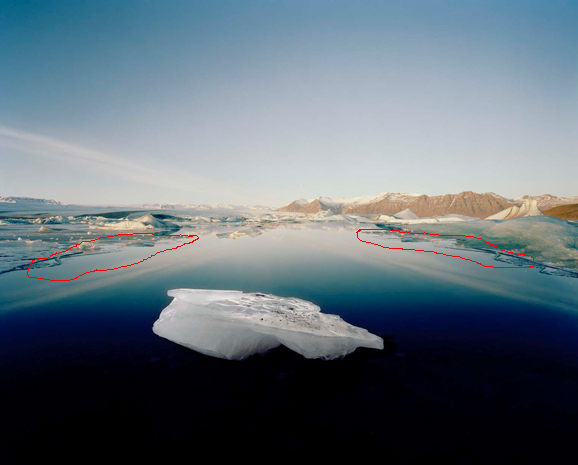
posted by tellurian at 9:08 AM on July 9, 2009
It's cool that PDN added a MetaFilter reference to their story and all, but the course of events pretty much went:
1. unixrat spies the manipulation, announces it here, makes the gif, and alerts the NYT.
2. Everything after.
So, regardless of whether they knew about unixrat's role up front, if PDN only thought to examine the photograph after seeing the NYT retraction, then they are merely an also-ran.
posted by pineapple at 9:12 AM on July 9, 2009
1. unixrat spies the manipulation, announces it here, makes the gif, and alerts the NYT.
2. Everything after.
So, regardless of whether they knew about unixrat's role up front, if PDN only thought to examine the photograph after seeing the NYT retraction, then they are merely an also-ran.
posted by pineapple at 9:12 AM on July 9, 2009
But to my mind this guy's ideological credibility is shot and not worth spending any more time on.
A friend pointed out to me that a Portuguese art critic quotes another interview he gave some years ago (2004, in Portuguese) that runs something like this:
"photos are not absolutes. There aren't objective photos, only points of view.....my work alludes to the fact that we should be suspicious, not only of the world around us, but also of photography."
The critic also says that it is that type of statements he finds interesting despite acknowledging that he claimed non-manipulation.
So, there. Artist statement reversed, everything will be fine because he was probably messing up with our minds from the start. In Portugal, at least.
posted by lucia__is__dada at 9:27 AM on July 9, 2009
A friend pointed out to me that a Portuguese art critic quotes another interview he gave some years ago (2004, in Portuguese) that runs something like this:
"photos are not absolutes. There aren't objective photos, only points of view.....my work alludes to the fact that we should be suspicious, not only of the world around us, but also of photography."
The critic also says that it is that type of statements he finds interesting despite acknowledging that he claimed non-manipulation.
So, there. Artist statement reversed, everything will be fine because he was probably messing up with our minds from the start. In Portugal, at least.
posted by lucia__is__dada at 9:27 AM on July 9, 2009
I'm having a hard time believing that this picture (the second one) didn't raise any red flags in any minds.
posted by DU at 9:43 AM on July 9, 2009
posted by DU at 9:43 AM on July 9, 2009
There were some red flags, DU, but they were digitally removed.
posted by ODiV at 9:47 AM on July 9, 2009 [8 favorites]
posted by ODiV at 9:47 AM on July 9, 2009 [8 favorites]
Even though I'm pretty inflamed about metafilter getting credit for this, I'd like to say that I've made no comments anywhere else about it. Mainly because I embarrass myself here enough as it stands.
posted by dead cousin ted at 10:04 AM on July 9, 2009
posted by dead cousin ted at 10:04 AM on July 9, 2009
I'm having a hard time believing that this picture (the second one) didn't raise any red flags in any minds.
It's interesting to note that the guy who did this interview comments on the NYTimes Lens Blog that he is terribly disappointed to hear that Martins used photoshop. It was that interview I quoted from in the original thread in which Martins insists (more than once) that he "do any post production to the images, either in the darkroom or digitally, because it erodes the process" (he also says "I am making use of very simple tools which photography has to offer such as the depth of field , perspective, color, density, etc. If the images are deceptive and illusionary is because photography has these qualities").
The interviewer comments in the interview on how long and hard he has looked at Martins' photographs--seeing interesting geometries and symmetries that he doubts even Martins himself is aware of. And yet, clearly, it never once occurred to him that Martins was simply lying to him.
I think that if you say to someone "hey, there's this photographer who's been found to be using photomanipulation and here's one of his photos" and then show them this, their response will be "oh my god--how did anyone ever NOT see that as manipulated!"
On the other hand if you say to someone "hey, there's this amazingly brilliant photographer who takes photographs using no digital manipulation at all, but who manages to find these slightly surreal/superreal images just by concentrating our gaze on a particular portion of the scene" and then show them this picture (with, notice, the tell-tale Martins technique of just enough photoshopped-in asymmetry in the leaves of the tree to not instantly set the BS-meter on overload), they're more likely to think "wow, what an amazing eye that guy has!"
posted by yoink at 10:44 AM on July 9, 2009 [1 favorite]
It's interesting to note that the guy who did this interview comments on the NYTimes Lens Blog that he is terribly disappointed to hear that Martins used photoshop. It was that interview I quoted from in the original thread in which Martins insists (more than once) that he "do any post production to the images, either in the darkroom or digitally, because it erodes the process" (he also says "I am making use of very simple tools which photography has to offer such as the depth of field , perspective, color, density, etc. If the images are deceptive and illusionary is because photography has these qualities").
The interviewer comments in the interview on how long and hard he has looked at Martins' photographs--seeing interesting geometries and symmetries that he doubts even Martins himself is aware of. And yet, clearly, it never once occurred to him that Martins was simply lying to him.
I think that if you say to someone "hey, there's this photographer who's been found to be using photomanipulation and here's one of his photos" and then show them this, their response will be "oh my god--how did anyone ever NOT see that as manipulated!"

On the other hand if you say to someone "hey, there's this amazingly brilliant photographer who takes photographs using no digital manipulation at all, but who manages to find these slightly surreal/superreal images just by concentrating our gaze on a particular portion of the scene" and then show them this picture (with, notice, the tell-tale Martins technique of just enough photoshopped-in asymmetry in the leaves of the tree to not instantly set the BS-meter on overload), they're more likely to think "wow, what an amazing eye that guy has!"
posted by yoink at 10:44 AM on July 9, 2009 [1 favorite]
Yeah, on that tree one you linked, the lower right branch is obviously the same as the next-lowest left branch.
I've seen several references to him shooting on film, including large format. Does anyone know if this was used for the NYT spread? It would make a lot of the talk about the EXIF data and the RAW images redundant. yet if true, it makes me wonder if shooting on large format and then printing from a scanned digital file is normal in the photography world. people are buying these prints for a lot of money, are they normally expecting something coming off a printer?
posted by Rumple at 10:52 AM on July 9, 2009
I've seen several references to him shooting on film, including large format. Does anyone know if this was used for the NYT spread? It would make a lot of the talk about the EXIF data and the RAW images redundant. yet if true, it makes me wonder if shooting on large format and then printing from a scanned digital file is normal in the photography world. people are buying these prints for a lot of money, are they normally expecting something coming off a printer?
posted by Rumple at 10:52 AM on July 9, 2009
yet if true, it makes me wonder if shooting on large format and then printing from a scanned digital file is normal in the photography world. people are buying these prints for a lot of money, are they normally expecting something coming off a printer?
That is an excellent question--one I really hadn't thought about. When you sell an photograph in an art gallery, you usually have to give pretty complete details about the processes involved in creating it. I would imagine that some collectors (and galleries) might kick up rough if they discover that they've been sold something under false pretenses.
posted by yoink at 10:58 AM on July 9, 2009
That is an excellent question--one I really hadn't thought about. When you sell an photograph in an art gallery, you usually have to give pretty complete details about the processes involved in creating it. I would imagine that some collectors (and galleries) might kick up rough if they discover that they've been sold something under false pretenses.
posted by yoink at 10:58 AM on July 9, 2009
Let us task bullshitsailormouthtalkingguy to investigate. Perhaps mathowie will cough up a ticket to Lisbon, or Bedford, or wherever.
Seriously, it might be a second-order scandal from this one if he has been selling work (not just presenting it) under false pretenses for years. If the collectors are saying, over their martinis, "Oh luvvie look at this new Martins photo I bought, amazing isn't it, just one long exposure onto medium format film of a tree. And only 2,500$. Anyone for tennis?
posted by Rumple at 11:06 AM on July 9, 2009
Seriously, it might be a second-order scandal from this one if he has been selling work (not just presenting it) under false pretenses for years. If the collectors are saying, over their martinis, "Oh luvvie look at this new Martins photo I bought, amazing isn't it, just one long exposure onto medium format film of a tree. And only 2,500$. Anyone for tennis?
posted by Rumple at 11:06 AM on July 9, 2009
I guess this is flogging a dead, two-headed horse by now, but I was doing some Googling to see if I could find gallery-type descriptions of Martins's prints and came across this review of Martins's book Topologies which, once again, dutifully informs us that the photographs were all taken without digital manipulation of any kind. It also includes this photo from one of his earlier photo series, "The Rehearsal of Space," as an example of his work. I was looking at the photo and thinking "oh well, it's a nature-shot, there's not much reason for him to digitally manipulate something like that, is there?" when I realized that at least two of the large rocks in stream the lower left hand corner of the painting have been doubled.
This is clearly some sort of weird compulsive behavior on his part.
posted by yoink at 11:17 AM on July 9, 2009 [4 favorites]
This is clearly some sort of weird compulsive behavior on his part.
posted by yoink at 11:17 AM on July 9, 2009 [4 favorites]
Gah: I am just the typo king lately. "large rocks IN the stream IN the lower left hand corner..."
posted by yoink at 11:18 AM on July 9, 2009
posted by yoink at 11:18 AM on July 9, 2009
Let us task bullshitsailormouthtalkingguy to investigate...
Let's start calling him unixratshit.
posted by The Deej at 11:31 AM on July 9, 2009
Let's start calling him unixratshit.
posted by The Deej at 11:31 AM on July 9, 2009
Regarding this whole "Exif Data" thing, is this seriously supposed to be some kind of unforgable proof you have not edited a file? Because you don't have to be Kevin Mitnick to whip out a binary editor and make a fool of someone making that claim if it is.
Or you could do it the lazy way and download and use one of those free programs that allows arbitrary editing of Exif Data.
posted by idiopath at 12:11 PM on July 9, 2009
Or you could do it the lazy way and download and use one of those free programs that allows arbitrary editing of Exif Data.
posted by idiopath at 12:11 PM on July 9, 2009
I told my professor to look at the timestamp on my term paper but he was all like "you faked it" and I was all like "noooo way that's totally impossible and besides my grandma like died" but he's a total fascist so whatever.
posted by cortex (staff) at 12:19 PM on July 9, 2009 [4 favorites]
posted by cortex (staff) at 12:19 PM on July 9, 2009 [4 favorites]
Yeah, on that tree one you linked, the lower right branch is obviously the same as the next-lowest left branch.
All the curbstones are mirrored as well, judging by the exactly matching discoloration and water patterns.
posted by George_Spiggott at 12:27 PM on July 9, 2009
All the curbstones are mirrored as well, judging by the exactly matching discoloration and water patterns.
posted by George_Spiggott at 12:27 PM on July 9, 2009
Regarding this whole "Exif Data" thing, is this seriously supposed to be some kind of unforgable proof you have not edited a file?
This is why I made my probably-too-subtle comment about Martins' Cyber-shot, laughing at the shrill cries of 'CHECK THE EXIF DATA!!!!'. Credibility of EXIF aside, Martins pretty much exclusively uses 5x4 large format film, and they have an austere, erm, grandness that only really comes from that format. He may be a liar and a fraud, but on the whole his pictures are beautiful, and the assumption that he uses a digital camera for them is both laughable and depressing, in the same way that the popular assumption that music is only available as mp3s is laughable and depressing.
posted by Beautiful Screaming Lady at 12:44 PM on July 9, 2009
This is why I made my probably-too-subtle comment about Martins' Cyber-shot, laughing at the shrill cries of 'CHECK THE EXIF DATA!!!!'. Credibility of EXIF aside, Martins pretty much exclusively uses 5x4 large format film, and they have an austere, erm, grandness that only really comes from that format. He may be a liar and a fraud, but on the whole his pictures are beautiful, and the assumption that he uses a digital camera for them is both laughable and depressing, in the same way that the popular assumption that music is only available as mp3s is laughable and depressing.
posted by Beautiful Screaming Lady at 12:44 PM on July 9, 2009
Also, what the fuck kind of road is that? That just makes no sense. At all. What.
I don't think you're supposed to read it as a road. You're supposed to read it as the oddly-angled corner of a playground or some such sealed area. Obviously it was originally, in fact, a road.
All the curbstones are mirrored as well, judging by the exactly matching discoloration and water patterns.
I think you'll find that Rumple was commenting on what wasn't mirrored in the photograph. Finding the stuff that is, in fact, mirrored is pretty easy (it's about 95% of the image). My point was that Martins adds in about 5% of asymmetry (notice the leaves in the gutter--he's altered them so that they don't perfectly mirror each other--notice a few branches of the tree--notice some of the markings on the road surface etc.) and that that asymmetry has--demonstrably--been sufficient to fool the vast majority of those who have looked at this photos into believing that they are not digitally manipulated.
posted by yoink at 12:59 PM on July 9, 2009 [1 favorite]
I don't think you're supposed to read it as a road. You're supposed to read it as the oddly-angled corner of a playground or some such sealed area. Obviously it was originally, in fact, a road.
All the curbstones are mirrored as well, judging by the exactly matching discoloration and water patterns.
I think you'll find that Rumple was commenting on what wasn't mirrored in the photograph. Finding the stuff that is, in fact, mirrored is pretty easy (it's about 95% of the image). My point was that Martins adds in about 5% of asymmetry (notice the leaves in the gutter--he's altered them so that they don't perfectly mirror each other--notice a few branches of the tree--notice some of the markings on the road surface etc.) and that that asymmetry has--demonstrably--been sufficient to fool the vast majority of those who have looked at this photos into believing that they are not digitally manipulated.
posted by yoink at 12:59 PM on July 9, 2009 [1 favorite]
the assumption that he uses a digital camera for them is both laughable and depressing
I don't know enough about the current state of digital photography to say this one way or the other: is it really impossible for him to produce those images on a digital camera? I mean, I know he claims to use 5x4 large format film, but he also claims to do no post production alterations of any kind. Given his pathological addiction to digital alteration, I'd have thought it would simplify his life a good deal to start with a digital source rather than starting by having to scan images from a film source.
posted by yoink at 1:03 PM on July 9, 2009
I don't know enough about the current state of digital photography to say this one way or the other: is it really impossible for him to produce those images on a digital camera? I mean, I know he claims to use 5x4 large format film, but he also claims to do no post production alterations of any kind. Given his pathological addiction to digital alteration, I'd have thought it would simplify his life a good deal to start with a digital source rather than starting by having to scan images from a film source.
posted by yoink at 1:03 PM on July 9, 2009
Good point, yoink. I don't know what to think anymore. It'll turn out he's been downloading these things from iStockphoto next.
posted by Beautiful Screaming Lady at 1:14 PM on July 9, 2009 [1 favorite]
posted by Beautiful Screaming Lady at 1:14 PM on July 9, 2009 [1 favorite]
Apparently, Edgar Martin's initial response to the hoopla. He keeps his response brief, saying that he's travelling in an area with limited Internet access. Here's a snippet:
I have been informed of the discussion that is currently taking place concerning the feature, which I had anticipated to some degree, but which I have not yet been able to acquaitance myself with it, as I am travelling and so unable to access the internet. (Yes, believe it or not there are still places in this world with limited or no internet connection..)
I will no doubt be discussing this issue you with yourself, your readers and readers from other blogs fairly soon.
In the meantime let the debate rage on… no doubt this will open up a healthy dialogue about Photography, its inexorable links to the real & its inadequacies. Or so I hope…
posted by yeoja at 1:32 PM on July 9, 2009 [1 favorite]
I have been informed of the discussion that is currently taking place concerning the feature, which I had anticipated to some degree, but which I have not yet been able to acquaitance myself with it, as I am travelling and so unable to access the internet. (Yes, believe it or not there are still places in this world with limited or no internet connection..)
I will no doubt be discussing this issue you with yourself, your readers and readers from other blogs fairly soon.
In the meantime let the debate rage on… no doubt this will open up a healthy dialogue about Photography, its inexorable links to the real & its inadequacies. Or so I hope…
posted by yeoja at 1:32 PM on July 9, 2009 [1 favorite]
LOL! See, he's just trying to open up a healthy dialog. FINALLY there can be a dialog about photography, something so lacking on the internet.
posted by The Deej at 1:37 PM on July 9, 2009 [9 favorites]
posted by The Deej at 1:37 PM on July 9, 2009 [9 favorites]
What a weasel.
I wonder what he's using for email in this place where he can't access the internet? Binary jungle drums?
posted by yoink at 1:40 PM on July 9, 2009
I wonder what he's using for email in this place where he can't access the internet? Binary jungle drums?
posted by yoink at 1:40 PM on July 9, 2009
What a weasel.
Bingo.
no doubt this will open up a healthy dialogue about Photography, its inexorable links to the real & its inadequacies.
So I guess the weasel is going to play this off as pushing artistic boundaries.
posted by dirtdirt at 1:43 PM on July 9, 2009
Bingo.
no doubt this will open up a healthy dialogue about Photography, its inexorable links to the real & its inadequacies.
So I guess the weasel is going to play this off as pushing artistic boundaries.
posted by dirtdirt at 1:43 PM on July 9, 2009
Let's see, hmmm - right click, save as - woah, ha ha, this shit is too easy! Ok, now the tricky part... print print print... come on, where's the cocking print button... hoy, there it is! Go baby go! Print that bitch! Oh man, this is too easy.
- .....
- Dave, hi, Edgar here. Yeah, good thanks. Listen, I've got some new work I want you to take a look at. Yeah, some of the large format shit. I think you'll like it.
posted by Beautiful Screaming Lady at 1:44 PM on July 9, 2009 [1 favorite]

- .....
- Dave, hi, Edgar here. Yeah, good thanks. Listen, I've got some new work I want you to take a look at. Yeah, some of the large format shit. I think you'll like it.
posted by Beautiful Screaming Lady at 1:44 PM on July 9, 2009 [1 favorite]
the assumption that he uses a digital camera for them is both laughable and depressing, in the same way that the popular assumption that music is only available as mp3s is laughable and depressing.
Except that CDs, which _are_ the only way to get music (besides mp3s and other compressed formats,) _are_ digital. So I'm not sure what your point is, unless you're trying to argue that CDs lack the grandeur of vinyl, or something along those lines. Music has transitioned to digital. Photography will too. For now, large format film is better than any not-completely-insanely-expensive digital sensor, but just give it time.
posted by blenderfish at 1:44 PM on July 9, 2009
Except that CDs, which _are_ the only way to get music (besides mp3s and other compressed formats,) _are_ digital. So I'm not sure what your point is, unless you're trying to argue that CDs lack the grandeur of vinyl, or something along those lines. Music has transitioned to digital. Photography will too. For now, large format film is better than any not-completely-insanely-expensive digital sensor, but just give it time.
posted by blenderfish at 1:44 PM on July 9, 2009
I thought a lot of pro photographers use digital cameras. Am I mistaken in that assumption?
posted by dead cousin ted at 1:47 PM on July 9, 2009
posted by dead cousin ted at 1:47 PM on July 9, 2009
And yes, it appears the guy's a weasely douchebag. We'll see what if anything he owns up to.
posted by dead cousin ted at 1:52 PM on July 9, 2009
posted by dead cousin ted at 1:52 PM on July 9, 2009
"Inexorable links to the real"--he's not just a weasel, he's a fucking Lacanian weasel. You wait--there'll be some crap about the "mirror stage" in whatever BS excuse he's desperately working on.
posted by yoink at 1:55 PM on July 9, 2009 [7 favorites]
posted by yoink at 1:55 PM on July 9, 2009 [7 favorites]
I thought a lot of pro photographers use digital cameras. Am I mistaken in that assumption?
Not a pro, but this is my understanding (someone can correct me if I'm wrong):
For news/sports/event photography, where time is of the essence, and you're not making huge prints, my understanding is that film is dead and buried. For 'art' photography, where the artist has a feel for his toolset that he's built up for possibly his entire career, film has a lot more personal momentum, and is viewed as more expressive by some. Also, large format photography produces sharper results (both due to optics and increased number of what you could call 'film pixels') for large (e.g., poster-sized) prints. Larger-than-35mm digital sensors are available, but insanely expensive for now. 35mm film, though very widely adopted, is neither large enough to get great prints nor as convenient as digital, so that's why it is disappearing fastest.
posted by blenderfish at 2:04 PM on July 9, 2009
Not a pro, but this is my understanding (someone can correct me if I'm wrong):
For news/sports/event photography, where time is of the essence, and you're not making huge prints, my understanding is that film is dead and buried. For 'art' photography, where the artist has a feel for his toolset that he's built up for possibly his entire career, film has a lot more personal momentum, and is viewed as more expressive by some. Also, large format photography produces sharper results (both due to optics and increased number of what you could call 'film pixels') for large (e.g., poster-sized) prints. Larger-than-35mm digital sensors are available, but insanely expensive for now. 35mm film, though very widely adopted, is neither large enough to get great prints nor as convenient as digital, so that's why it is disappearing fastest.
posted by blenderfish at 2:04 PM on July 9, 2009
FINALLY there can be a dialog about photography, something so lacking on the internet.
If only Walter Benjamin were here to give us The Work of Art in the Age of Mechanical Weaselhood.
posted by scody at 2:11 PM on July 9, 2009 [8 favorites]
If only Walter Benjamin were here to give us The Work of Art in the Age of Mechanical Weaselhood.
posted by scody at 2:11 PM on July 9, 2009 [8 favorites]
Before we begin the trial, Your Honor, I just want to point out that I'm really looking forward to opening up a healthy dialogue...
posted by blenderfish at 2:12 PM on July 9, 2009 [4 favorites]
posted by blenderfish at 2:12 PM on July 9, 2009 [4 favorites]
I am travelling and so unable to access the internet. (Yes, believe it or not there are still places in this world with limited or no internet connection..)I am travelling and so unable to access the internet. (Yes, believe it or not there are still places in this world with limited or no internet connection..)
I call bullshit on that. The Portuguese news agency Lusa contacted him and he was in Portugal.
posted by lucia__is__dada at 2:25 PM on July 9, 2009 [1 favorite]
I call bullshit on that. The Portuguese news agency Lusa contacted him and he was in Portugal.
posted by lucia__is__dada at 2:25 PM on July 9, 2009 [1 favorite]
And yes, there is internet access in portugal. And a pretty good cellphone coverage.
posted by lucia__is__dada at 2:26 PM on July 9, 2009
posted by lucia__is__dada at 2:26 PM on July 9, 2009
dead cousin ted : I thought a lot of pro photographers use digital cameras. Am I mistaken in that assumption?
My buddy shoots sports professionally, and he hasn't used film for at least eight years. Currently he uses a Canon 1DMIII and if I understand correctly, pretty much every one else on the field is going to be using something similar.
Film is still used in art and movie making, but for professional stills, it's essentially gone.
posted by quin at 2:26 PM on July 9, 2009
My buddy shoots sports professionally, and he hasn't used film for at least eight years. Currently he uses a Canon 1DMIII and if I understand correctly, pretty much every one else on the field is going to be using something similar.
Film is still used in art and movie making, but for professional stills, it's essentially gone.
posted by quin at 2:26 PM on July 9, 2009
"But, but, the emperor isn't wearing any clothes!!"
"I'm so glad you've given me this chance to open up a dialogue about clothing and its inexorable relationship to the body, young child. It is, in a sense, true that I am wearing no clothes, but what are clothes, really, when one comes down to it? If I collected all the dead skin I sloughed off over a year and then spun it into yarn and made a suit out of it, wouldn't you recognize that suit as clothing? So obviously in looking at my skin you are simply looking at clothing. Clearly, in this age of skin-based clothing products we are forced to acknowledge that the distinction between clothed and unclothed is arbitrary and out of date.
And, after all, what are clothes made from but textiles? And what is the etymological origin of the word "textile" but "text"? And as you know there is no hors texte, except, of course for the subject, that impossible, unnameable "object X" that must always be a mere rem(a)inder. So the subject is that which is surrounded by the text(ile)--or that which is, in fact, always "clothed" in the s(a)ussurating murmure of the textual world in which it (fails to) find itself.
Don't you see?"
posted by yoink at 2:31 PM on July 9, 2009 [8 favorites]
"I'm so glad you've given me this chance to open up a dialogue about clothing and its inexorable relationship to the body, young child. It is, in a sense, true that I am wearing no clothes, but what are clothes, really, when one comes down to it? If I collected all the dead skin I sloughed off over a year and then spun it into yarn and made a suit out of it, wouldn't you recognize that suit as clothing? So obviously in looking at my skin you are simply looking at clothing. Clearly, in this age of skin-based clothing products we are forced to acknowledge that the distinction between clothed and unclothed is arbitrary and out of date.
And, after all, what are clothes made from but textiles? And what is the etymological origin of the word "textile" but "text"? And as you know there is no hors texte, except, of course for the subject, that impossible, unnameable "object X" that must always be a mere rem(a)inder. So the subject is that which is surrounded by the text(ile)--or that which is, in fact, always "clothed" in the s(a)ussurating murmure of the textual world in which it (fails to) find itself.
Don't you see?"
posted by yoink at 2:31 PM on July 9, 2009 [8 favorites]
Nonetheless, even if a photographer uses film, do I understand it is accepted that they will then scan the film in and digitally manipulate it and then print it out? I would have thought it would have to made to the buyer / client clear whether it was "printed from negative", or "printed out." and surely they don't convert back to a negative and then print the photoshopped version!
It seems like the conversion from negative (with all the resolution and detail and subtlety) will inevitably be "lossy" at some level.
posted by Rumple at 2:37 PM on July 9, 2009
It seems like the conversion from negative (with all the resolution and detail and subtlety) will inevitably be "lossy" at some level.
posted by Rumple at 2:37 PM on July 9, 2009
Rumple, I don't know the answer to the first part of your question, but drum scanners can be really, really good.
posted by blenderfish at 2:40 PM on July 9, 2009
posted by blenderfish at 2:40 PM on July 9, 2009
yet if true, it makes me wonder if shooting on large format and then printing from a scanned digital file is normal in the photography world. people are buying these prints for a lot of money, are they normally expecting something coming off a printer
No way. If the photographer shoots film you get a photographic print, along with a lot of detail about what kind of print it is, where it was printed and by whom, the type of paper used, what board it should be mounted on, exactly how many prints there are in the edition, how long the print is expected to last, &c. Also, some artists provide evidence that negatives or plates have been destroyed, so that a given edition will maintain its rarity.
All these things can affect the value of a work in the art market - eg. Diane Arbus did her own printing in the darkroom, and those photographs are worth more (moneywise, at least) than later prints done by Neil Selkirk, the only person authorised to make prints after her death.
The same level of provenance detail applies to prints of work by digital artists made on a printer, or prints as in linotypes, woodcuts, or whatever. (It would be nice if we had different words for all these types of print.)
If Martin is found to have sold work as photographic prints to collectors and museums, and they in fact have something different, he's in deep shit, as is the gallery that represents him, as are any auction houses/galleries that have sold his work. Unless he manages a brilliant bit of spin about questioning accepted notions of authenticity, the role of fine art photographer in the context of documentary work or what have you.
(All that said, I don't know if he does sell work that way - all the interviews and reviews I've read have been about books or magazines, so he might just be guilty of lying, but not fraud.)
posted by jack_mo at 2:42 PM on July 9, 2009 [1 favorite]
No way. If the photographer shoots film you get a photographic print, along with a lot of detail about what kind of print it is, where it was printed and by whom, the type of paper used, what board it should be mounted on, exactly how many prints there are in the edition, how long the print is expected to last, &c. Also, some artists provide evidence that negatives or plates have been destroyed, so that a given edition will maintain its rarity.
All these things can affect the value of a work in the art market - eg. Diane Arbus did her own printing in the darkroom, and those photographs are worth more (moneywise, at least) than later prints done by Neil Selkirk, the only person authorised to make prints after her death.
The same level of provenance detail applies to prints of work by digital artists made on a printer, or prints as in linotypes, woodcuts, or whatever. (It would be nice if we had different words for all these types of print.)
If Martin is found to have sold work as photographic prints to collectors and museums, and they in fact have something different, he's in deep shit, as is the gallery that represents him, as are any auction houses/galleries that have sold his work. Unless he manages a brilliant bit of spin about questioning accepted notions of authenticity, the role of fine art photographer in the context of documentary work or what have you.
(All that said, I don't know if he does sell work that way - all the interviews and reviews I've read have been about books or magazines, so he might just be guilty of lying, but not fraud.)
posted by jack_mo at 2:42 PM on July 9, 2009 [1 favorite]
So I'm not sure what your point is, unless you're trying to argue that CDs lack the grandeur of vinyl, or something along those lines
No no, my point is that mp3s are an inferior format, even though they're significantly more common now than lossless digital or analogue audio. I'm saying that - in the same way that you wouldn't record quality live music direct to 192kb mp3 for archive purposes, you also wouldn't want to take fine art stills, where you can take your time setting up and where you want to be able to reproduce them at a large scale, on a 10 megapixel camera. I'm equating the blind assumption that Martins uses a digital camera for his fine art landscapes with the assumption that the only way to listen to Morton Feldman's String Quartet II is on mp3s on an iPod with white earbuds. And the idea that checking Martins' EXIF data is (somewhat) equivalent to demanding a check of ID3 tags to prove that an audio recording is an original, unprocessed work.
Yes, digital cameras are quite good these days, and yes, for professional sports photography and photojournalism they're pretty ubiquitous for practical reasons, but that doesn't alter the fact that a 5x4 negative is a fundamentally more appropriate format for serious fine art stills than a 10Mb RAW file.
That's all. Anyway, I don't really know what the fuck I'm talking about, but I did want to make it clear that I'm not one these HURF DURF VINYL IS BETTER THAN CDS weirdos.
posted by Beautiful Screaming Lady at 2:59 PM on July 9, 2009
No no, my point is that mp3s are an inferior format, even though they're significantly more common now than lossless digital or analogue audio. I'm saying that - in the same way that you wouldn't record quality live music direct to 192kb mp3 for archive purposes, you also wouldn't want to take fine art stills, where you can take your time setting up and where you want to be able to reproduce them at a large scale, on a 10 megapixel camera. I'm equating the blind assumption that Martins uses a digital camera for his fine art landscapes with the assumption that the only way to listen to Morton Feldman's String Quartet II is on mp3s on an iPod with white earbuds. And the idea that checking Martins' EXIF data is (somewhat) equivalent to demanding a check of ID3 tags to prove that an audio recording is an original, unprocessed work.
Yes, digital cameras are quite good these days, and yes, for professional sports photography and photojournalism they're pretty ubiquitous for practical reasons, but that doesn't alter the fact that a 5x4 negative is a fundamentally more appropriate format for serious fine art stills than a 10Mb RAW file.
That's all. Anyway, I don't really know what the fuck I'm talking about, but I did want to make it clear that I'm not one these HURF DURF VINYL IS BETTER THAN CDS weirdos.
posted by Beautiful Screaming Lady at 2:59 PM on July 9, 2009
jack_mo: Aperture is pleased to offer this new and previously unpublished photograph from this series to our collecting community—a chance to own the work of one of the emerging stars of contemporary photography. (1,200 bucks)
(that's the first one I found in 30 seconds of googling. Interestingly, it seems to be a classic candidate for having been "flipped"
posted by Rumple at 3:00 PM on July 9, 2009
(that's the first one I found in 30 seconds of googling. Interestingly, it seems to be a classic candidate for having been "flipped"
posted by Rumple at 3:00 PM on July 9, 2009
Larger version of above. Self evidently mirrored, I think.
Another one for sale.
I can't tell if these are being sold as prints-from-negs or as prints-from-Lexmark
posted by Rumple at 3:03 PM on July 9, 2009

Another one for sale.
I can't tell if these are being sold as prints-from-negs or as prints-from-Lexmark
posted by Rumple at 3:03 PM on July 9, 2009
yoink, you scare me, in a beautiful rotten flashback-to-grad-school sort of way.
If the Great Enspousing weren't over already, I fear I'd almost ask you to be my Other.
posted by catlet at 3:07 PM on July 9, 2009
If the Great Enspousing weren't over already, I fear I'd almost ask you to be my Other.
posted by catlet at 3:07 PM on July 9, 2009
Also here, described as
Print available as:
Signed c-type prints
Prices from £3000
All prices exclusive of vat and framing and subject to change.
c-type prints: A type C print or simply C-print is a color photographic print made on negative-type color photographic paper which has at least three emulsion layers of light-sensitive silver salts. Type C is a negative-to-positive chromogenic print. The most common type C print process is RA-4. It is the most common type of color photographic print.
C-prints were originally called color coupler prints, referring to the dye couplers in the paper.
The exposure phase of a type C print may be accomplished with a traditional photographic enlarger, using color filters to adjust the color balance of the print. Type C prints can also be made using digital exposure systems such as the Durst Lambda, Océ LightJet and ZBE Chromira, yielding a digital C print (sometimes called a Lambda print or LightJet print). These digital systems expose the paper using red, green, and blue lasers or light emitting diodes, and have the capability of correcting paper sensitivity errors.
posted by Rumple at 3:07 PM on July 9, 2009
Print available as:
Signed c-type prints
Prices from £3000
All prices exclusive of vat and framing and subject to change.
c-type prints: A type C print or simply C-print is a color photographic print made on negative-type color photographic paper which has at least three emulsion layers of light-sensitive silver salts. Type C is a negative-to-positive chromogenic print. The most common type C print process is RA-4. It is the most common type of color photographic print.
C-prints were originally called color coupler prints, referring to the dye couplers in the paper.
The exposure phase of a type C print may be accomplished with a traditional photographic enlarger, using color filters to adjust the color balance of the print. Type C prints can also be made using digital exposure systems such as the Durst Lambda, Océ LightJet and ZBE Chromira, yielding a digital C print (sometimes called a Lambda print or LightJet print). These digital systems expose the paper using red, green, and blue lasers or light emitting diodes, and have the capability of correcting paper sensitivity errors.
posted by Rumple at 3:07 PM on July 9, 2009
I am travelling and so unable to access the internet.I call bullshit on that.
Come, now, it's not like Edgar Martin is a known liar.
Oh, wait…
posted by five fresh fish at 3:12 PM on July 9, 2009 [1 favorite]
I'm equating the blind assumption that Martins uses a digital camera for his fine art landscapes with the assumption that the only way to listen to Morton Feldman's String Quartet II is on mp3s on an iPod with white earbuds.
I think the reason people are making the assumption that he shot these images digitally is because they have been digitally altered. It's kind of an offensive leap to say that comes from a place of being only wedded to digital technology and not understanding its weaknesses.
posted by oneirodynia at 3:13 PM on July 9, 2009
I think the reason people are making the assumption that he shot these images digitally is because they have been digitally altered. It's kind of an offensive leap to say that comes from a place of being only wedded to digital technology and not understanding its weaknesses.
posted by oneirodynia at 3:13 PM on July 9, 2009
There are methods of making "true" photographic prints of digital photos. If you think about how traditional prints are made from film, a light is shone through a positive/negative piece of film onto photographic/light reactive paper, which is then developed with chemicals to make a print. With digital files, you can do the same thing. There is essentially a projector that is used to make the image on the photographic paper. It is a "print" the same way a "print" is made from the pos/neg, not a "printout" as in something you get from an inkjet/laser/other-more-expensive-means printer. They're both called "prints," but most galleries will tell you what the process was, whether via somewhat traditional printing methods (like c-prints or whatever) or from something using inks/dyes.
posted by nevercalm at 3:19 PM on July 9, 2009
posted by nevercalm at 3:19 PM on July 9, 2009
BSL:
0> I don't think you're a hurfdurfer.
1> Checking EXIF data isn't an ideal, or even a good way to authenticate images, but might be enlightening in some cases.
2> Not sure if you're implying this, but having EXIF data doesn't imply you're shooting on a cheap or crappy digital camera.
3> Given that his assignment was for a newspaper web site (and, upon further exposition, a 8x10-or-so print magazine,) and not necessarily for a fine art exhibit, (and, as its been pointed out, since he was allegedly going to Photoshop the bitch anyway) I fail to see anything inherently inappropriate about shooting digital.
Knowing he's an 'artist', I guess he might want to have more resolution around in case he wants to exhibit these later or something (probably not going to happen now, though :) .) I don't see these being digital as flippant-dismissably crazy. And, it will only get _less_ crazy with time.
posted by blenderfish at 3:26 PM on July 9, 2009
0> I don't think you're a hurfdurfer.
1> Checking EXIF data isn't an ideal, or even a good way to authenticate images, but might be enlightening in some cases.
2> Not sure if you're implying this, but having EXIF data doesn't imply you're shooting on a cheap or crappy digital camera.
3> Given that his assignment was for a newspaper web site (and, upon further exposition, a 8x10-or-so print magazine,) and not necessarily for a fine art exhibit, (and, as its been pointed out, since he was allegedly going to Photoshop the bitch anyway) I fail to see anything inherently inappropriate about shooting digital.
Knowing he's an 'artist', I guess he might want to have more resolution around in case he wants to exhibit these later or something (probably not going to happen now, though :) .) I don't see these being digital as flippant-dismissably crazy. And, it will only get _less_ crazy with time.
posted by blenderfish at 3:26 PM on July 9, 2009
Signed c-type prints
I can't check up on the documentation I have just now, because I keep it in a safe deposit box for insurance reasons (and I've never spent anything even remotely close to three grand on a photograph) but I defo own work described as a 'c-type print' and other work described as a 'digital c-type print', and I was clear on that when I bought the work (the digital stuff is obviously digitally manipulated). So if he's running stuff through Photoshop, making digital c-type prints and selling them as c-type prints... I think that would be considered a wee bit dodgy.
Though some collectors might not care (because they're more interested in the image than the - supposed - process), or could be made not to care if he does read this thread and borrows yoink's splendid 'mirror stage' suggestion above!
posted by jack_mo at 3:38 PM on July 9, 2009
I can't check up on the documentation I have just now, because I keep it in a safe deposit box for insurance reasons (and I've never spent anything even remotely close to three grand on a photograph) but I defo own work described as a 'c-type print' and other work described as a 'digital c-type print', and I was clear on that when I bought the work (the digital stuff is obviously digitally manipulated). So if he's running stuff through Photoshop, making digital c-type prints and selling them as c-type prints... I think that would be considered a wee bit dodgy.
Though some collectors might not care (because they're more interested in the image than the - supposed - process), or could be made not to care if he does read this thread and borrows yoink's splendid 'mirror stage' suggestion above!
posted by jack_mo at 3:38 PM on July 9, 2009
I hate to be cynical, but it appears possible the art gallery owners, and certainly the buyers, may not be able to tell the difference between print-neg and print-lexmark.....
posted by Rumple at 3:44 PM on July 9, 2009
posted by Rumple at 3:44 PM on July 9, 2009
and borrows yoink's splendid 'mirror stage' suggestion above!
If he does, I expect it to come out "egats rorrim."
posted by yoink at 3:46 PM on July 9, 2009
If he does, I expect it to come out "egats rorrim."
posted by yoink at 3:46 PM on July 9, 2009
I just hope I'm never asked to take a Rorschach test because I won't be able to think of anything but Edgar Martins.
posted by tellurian at 4:27 PM on July 9, 2009 [1 favorite]
posted by tellurian at 4:27 PM on July 9, 2009 [1 favorite]
Except that CDs, which _are_ the only way to get music
Huh? What planet do you live on?
posted by dersins at 4:32 PM on July 9, 2009
Huh? What planet do you live on?
posted by dersins at 4:32 PM on July 9, 2009
Even if 1% of albums are available in vinyl, what tiny subset of that 1% weren't mastered digitally?
posted by blenderfish at 4:42 PM on July 9, 2009
posted by blenderfish at 4:42 PM on July 9, 2009
I have been informed of the discussion that is currently taking place concerning the feature, which I had anticipated to some degree
Ha. So "I was critiquing authenticity and laughing at you all for years" is exactly what he's trying. Bravo, Edgar. Good luck with that.
posted by mediareport at 6:28 PM on July 9, 2009 [1 favorite]
Ha. So "I was critiquing authenticity and laughing at you all for years" is exactly what he's trying. Bravo, Edgar. Good luck with that.
posted by mediareport at 6:28 PM on July 9, 2009 [1 favorite]
IT WAS ALL PART OF MY BRILLIANT PLAN TO BE FOUND OUT!
posted by scody at 6:58 PM on July 9, 2009 [3 favorites]
posted by scody at 6:58 PM on July 9, 2009 [3 favorites]
If the guy does manage to turn this into a world class "I was scamming you the whole time" hoaxish thing, I will be seriously impressed.
posted by jessamyn (staff) at 7:06 PM on July 9, 2009
posted by jessamyn (staff) at 7:06 PM on July 9, 2009
If I were him, some sort of "Oh please! Did you actually think I thought I could get away with that? The fakery is so blatant I'm amazed I wasn't revealed as a fraud long before now!" statement would be next.
posted by mediareport at 7:30 PM on July 9, 2009
posted by mediareport at 7:30 PM on July 9, 2009
I can't believe McCain thought this guy could be vice president.
posted by Justinian at 7:55 PM on July 9, 2009 [4 favorites]
posted by Justinian at 7:55 PM on July 9, 2009 [4 favorites]
This appeared on cnn.com about 53 minutes ago, and includes this bit:
posted by davejay at 11:31 PM on July 9, 2009
"A reader ... discovered upon close examination that one of the pictures was digitally altered, apparently for aesthetic reasons," the Times editors wrote.I like how the part that probably identified the reader as unixrat, or at least coming from MetaFilter, was dropped from the AP wire.
posted by davejay at 11:31 PM on July 9, 2009
It was announced yesterday that Edgar Martins is on the shortlist of the Prix Pictet, a photography prize of 100,000 Swiss Francs (about $66,000). The presented photos are from his forest fire series. Interestingly, in the gallery there is a photo that shows the same scene as the one yoink linked above for having cloned stones, but from a different point of view. At least, in the artist's statement on the price webpage, there is no mention of lack of digital manipulation.
posted by ltl at 12:41 AM on July 10, 2009
posted by ltl at 12:41 AM on July 10, 2009
At least, in the artist's statement on the price webpage, there is no mention of lack of digital manipulation.
Good job too! Look at this section of the right-hand bank of the river from picture eight [larger pixelated view]. I call cloning shenanigans.
posted by tellurian at 1:13 AM on July 10, 2009 [2 favorites]
Good job too! Look at this section of the right-hand bank of the river from picture eight [larger pixelated view]. I call cloning shenanigans.

![[larger pixelated view]](http://farm3.static.flickr.com/2536/3705972873_2a0c9aa246_o.jpg)
posted by tellurian at 1:13 AM on July 10, 2009 [2 favorites]
He may be able to get away with it - the judges process on the site says:
posted by tellurian at 1:38 AM on July 10, 2009
An artist using photographs, for example, will be judged by precisely the same criteria as a photojournalist or a commercial photographer, or a professional in another field for whom photography may be no more than one of many tools.It depends on whether they use the criteria of a 'photojournalist' or a 'professional in another field' to judge him. Also of course, if they spot the cloning and feel it matters.
posted by tellurian at 1:38 AM on July 10, 2009
Aperture publishes the book Topologies for Edgar Martins. The book description (e.g. at Amazon) states:
This might be something Lesley Martin, publisher of Aperture books, should have mentioned when talking to CNN...
posted by ltl at 1:40 AM on July 10, 2009 [14 favorites]
With artful composition and controlled framing - but no digital manipulation-Edgar Martins creates sublimely beautiful views of often un-beautiful sites.Now, at the publisher's website, the no digital manipulation promise has been silently removed:
With artful composition and controlled framing Edgar Martins creates sublimely beautiful views of often un-beautiful sites.The Google Cache version of the publisher's page shows the original statement - including the no digital manipulation promise (as of 4 Jul 2009 11:23:00 GMT).
This might be something Lesley Martin, publisher of Aperture books, should have mentioned when talking to CNN...
posted by ltl at 1:40 AM on July 10, 2009 [14 favorites]
From the actual magazine, quoting Martins:
"People are present in these images, but not physically. You trace their action, the destruction they left behind."
If you guys want anything else from the print issue, let me know.
posted by clorox at 2:45 AM on July 10, 2009
"People are present in these images, but not physically. You trace their action, the destruction they left behind."
If you guys want anything else from the print issue, let me know.
posted by clorox at 2:45 AM on July 10, 2009
The description text of the $1250 C-print of one of the apparently mirrored beach scenes at aperture.org has had the "With artful composition and rigorously controlled framing; Edgar Martins creates sublimely beautiful views of often un-beautiful sites." variant without the "but no digital manipulation" since at least 2 Jul 2009 17:10:49 GMT. As that was before the story broke we can probably assume that for these high-price items the description never had the claim that they were not digitally manipulated. It would be interesting to know how that difference in the description texts with the Topologies book came about...
posted by ltl at 3:06 AM on July 10, 2009
posted by ltl at 3:06 AM on July 10, 2009
Goodness, unixrat seems to have lit a fire in Martins' pants. No wonder the bloke doesn't have time to talk to anyone to explain things: he's too busy revising history in a desperate attempt to cover his ass!
posted by five fresh fish at 5:11 AM on July 10, 2009
posted by five fresh fish at 5:11 AM on July 10, 2009
For the record, there is no way that gallery owners wouldn't know the difference between a photo print and a "lexmark" print. the difference is obvious to a trained eye (and often to an untrained one as well, but....you know...you've gotta be looking)
posted by nevercalm at 6:07 AM on July 10, 2009
posted by nevercalm at 6:07 AM on July 10, 2009
Wow, lots of cloning happening in that series up for the prize.
This image has some cloned rocks.
and this one has lots of cloned stuff in the water and plants.
I hope his defense doesn't involve a lot of irritating art-speak. He seems to have a deep and interesting compulsion to control his compositions and I'd be curious to her him talk about it in a straight forward way. I like his photos, lies and all. Very curious to understand his reasons for the faux purist stance.
It's a shame Aperture isn't talking about the "non-manipulation" issue of his work they published and have instead silently removed the line from their description.
posted by JBennett at 6:49 AM on July 10, 2009 [2 favorites]
This image has some cloned rocks.


and this one has lots of cloned stuff in the water and plants.

I hope his defense doesn't involve a lot of irritating art-speak. He seems to have a deep and interesting compulsion to control his compositions and I'd be curious to her him talk about it in a straight forward way. I like his photos, lies and all. Very curious to understand his reasons for the faux purist stance.
It's a shame Aperture isn't talking about the "non-manipulation" issue of his work they published and have instead silently removed the line from their description.
posted by JBennett at 6:49 AM on July 10, 2009 [2 favorites]
Okay, I screwed up my links in that last comment but you get the point. Sorry.
posted by JBennett at 6:50 AM on July 10, 2009
posted by JBennett at 6:50 AM on July 10, 2009
It's a shame Aperture isn't talking about the "non-manipulation" issue of his work they published and have instead silently removed the line from their description.
Seems prudent to remove an untruthful statement from your site immediately. To give the benefit of the doubt, they haven't had much time to address what is, for them, a rather complicated situation. Especially while their intrepid photographer is off traversing remote Internetless regions.
posted by zennie at 7:23 AM on July 10, 2009
Seems prudent to remove an untruthful statement from your site immediately. To give the benefit of the doubt, they haven't had much time to address what is, for them, a rather complicated situation. Especially while their intrepid photographer is off traversing remote Internetless regions.
posted by zennie at 7:23 AM on July 10, 2009
Especially while their intrepid photographer is off traversing remote Internetless regions.
Of course there are places without internet access. Backpedalville, Excusistan, Bullshitopolis...
posted by The Deej at 7:25 AM on July 10, 2009 [12 favorites]
Of course there are places without internet access. Backpedalville, Excusistan, Bullshitopolis...
posted by The Deej at 7:25 AM on July 10, 2009 [12 favorites]
...and Damagecontrolham (near Bedford, Portugal).
lol @ backpedalville
The mental image you have of him backpedalling is actually an image of him forwardpedalling that has been digimentally manipulated.
posted by memebake at 8:03 AM on July 10, 2009 [5 favorites]
lol @ backpedalville
The mental image you have of him backpedalling is actually an image of him forwardpedalling that has been digimentally manipulated.
posted by memebake at 8:03 AM on July 10, 2009 [5 favorites]
Yes, you're right. That's what the Times did and I think it was handled well. In time Aperture will probably get into the details.
posted by JBennett at 8:28 AM on July 10, 2009
posted by JBennett at 8:28 AM on July 10, 2009
So... I had given in to curiosity and emailed Mr. Martins suggesting how he might come clean. He has replied, and because content indicated I should share, here it is:
posted by zennie at 10:33 AM on July 10, 2009 [4 favorites]
Hi [zennie],And now I have an IP origin that puts him in a part of the world currently in upheaval, with major communications problems. Don't really want to say where, just in case he's actually there. Seems unlikely to me.
Thanks for your email. Please also thank the site administrator or founder for me for trying to contact me some days ago, but I have been unable to retrieve his email.
I have been informed of the discussion that is currently taking place concerning the feature, which I had anticipated to some degree, but which I have not yet been able to acquaitance myself with it, as I am travelling and so unable to access the internet. (Yes, believe it or not there are still places in this world with limited or no internet connection..)
I will no doubt be discussing this issue fairly soon. However given that I currently only have intermittent access to any kind of communication I will be unable to do this for a few more days yet. There is no point starting a discussion, which I have been inciting for many years now, until I am able to follow it up.
The only issue at here is the NYT work. As an artist I respond to situations in different ways.
I will be releasing a statement in due time and will happily be debating this. This has always been my goal.
In the meantime let the debate rage on... no doubt this will open up a healthy dialogue about Photography, its inexorable links to the real & its inadequacies. Or so I hope... The only thing that needs to happen is for the conversation to be refocused.
Warm regards,
Edgar Martins
posted by zennie at 10:33 AM on July 10, 2009 [4 favorites]
Are you Kidding???
Bullshitopolis has better internet access than most of us.
posted by pointilist at 10:40 AM on July 10, 2009
Bullshitopolis has better internet access than most of us.
posted by pointilist at 10:40 AM on July 10, 2009
So he's going to claim that the images for the NYT were a special case because of their rules around photojournalism, but in his other, uh, artistic practice the shoppery is a non-issue? Even though his reputation largely rests on the claim that he hasn't digitally manipulated his images?
posted by jokeefe at 10:49 AM on July 10, 2009
posted by jokeefe at 10:49 AM on July 10, 2009
Yeah, striking that he seems to think being An Artist exempts him from telling the truth to his colleagues, employers, and benefactors.
posted by zennie at 10:50 AM on July 10, 2009
posted by zennie at 10:50 AM on July 10, 2009
which I have been inciting for many years now
You know, here's a way of inciting a discussion about digital manipulation in photography:
"I used a lot of digital manipulation in these photographs--do you think that in any way undermines their aesthetic value?"
Here's a way of not inciting a discussion about digital manipulation in photography:
"I don't do any post production to the images, either in the darkroom or digitally, because it erodes the process."
Guess which one is the actual quotation from Mr. Martins. No, there's no prize.
posted by yoink at 10:56 AM on July 10, 2009 [1 favorite]
You know, here's a way of inciting a discussion about digital manipulation in photography:
"I used a lot of digital manipulation in these photographs--do you think that in any way undermines their aesthetic value?"
Here's a way of not inciting a discussion about digital manipulation in photography:
"I don't do any post production to the images, either in the darkroom or digitally, because it erodes the process."
Guess which one is the actual quotation from Mr. Martins. No, there's no prize.
posted by yoink at 10:56 AM on July 10, 2009 [1 favorite]
The city limits of Bullshitopolis ger bigger by the minute.
posted by The Deej at 11:00 AM on July 10, 2009
posted by The Deej at 11:00 AM on July 10, 2009
(get, not ger. Although this is making me so angry I am saying "ger")
posted by The Deej at 11:02 AM on July 10, 2009
posted by The Deej at 11:02 AM on July 10, 2009
From the Prix Pictet site, Martins's "artist statement":
posted by yoink at 11:09 AM on July 10, 2009 [1 favorite]
Martins’ intentions in these images were not only pictorial, of course; there is a contemporary anxiety to them as well. Portugal’s 2005/2008 fires were the result of extended drought and extreme heat; many believed them to be an expression of global climate change. Moreover, they could be seen as evidence of environmental mismanagement: much of the forest was eucalyptus, a fast-growing but extremely flammable tree that is frequently planted in reforestation projects. Martins was in search of this story as much as pictorial effects in these images of fire.In other words, he's claiming that these photographs should be viewed as photojournalism, not just art. The Prix Pictet people should drop him from consideration, in my view.
posted by yoink at 11:09 AM on July 10, 2009 [1 favorite]
Maybe the art is in manipulating the standard artist statements, while clearly breaking them, and seeing if anyone cares?
You might think that's unlikely, but I saw a piece somewhere where the art was the title of the piece, and the wall was just blank. So there are no limits of how meta they can go.
posted by smackfu at 11:13 AM on July 10, 2009
You might think that's unlikely, but I saw a piece somewhere where the art was the title of the piece, and the wall was just blank. So there are no limits of how meta they can go.
posted by smackfu at 11:13 AM on July 10, 2009
Seems prudent to remove an untruthful statement from your site immediately. To give the benefit of the doubt, they haven't had much time to address what is, for them, a rather complicated situation. Especially while their intrepid photographer is off traversing remote Internetless regions.
The only problem with that is that the book, Topologies, is already published and includes the claim about the absence of digital manipulation. To remove that claim from the website seems very much like bolting the stable door after the horse has turned out to be a pig.
posted by yoink at 11:45 AM on July 10, 2009
The only problem with that is that the book, Topologies, is already published and includes the claim about the absence of digital manipulation. To remove that claim from the website seems very much like bolting the stable door after the horse has turned out to be a pig.
posted by yoink at 11:45 AM on July 10, 2009
You might think that's unlikely, but I saw a piece somewhere where the art was the title of the piece, and the wall was just blank. So there are no limits of how meta they can go.
Was it at an art school, by chance? Because that's the sort of BS that art students pull. Someone in my high school art class did that, and was immensely offended when they got an "F" for the project. The excuse from the student was that the teacher was a bourgeois hack who didn't understand real artists. In fact, the teacher was the sort of teacher who was able to spot lazy student potheads and see through their pretentious crap.
posted by oneirodynia at 12:14 PM on July 10, 2009
Was it at an art school, by chance? Because that's the sort of BS that art students pull. Someone in my high school art class did that, and was immensely offended when they got an "F" for the project. The excuse from the student was that the teacher was a bourgeois hack who didn't understand real artists. In fact, the teacher was the sort of teacher who was able to spot lazy student potheads and see through their pretentious crap.
posted by oneirodynia at 12:14 PM on July 10, 2009
Good work zennie and well done running his IP...
His reply is quite bizarre... It's almost like he kept doing it and was waiting to be caught like an arsonist or serial killer. (NOT that I'm comparing his misdeeds to that of a serial killer... rather...) Sometime wackos leave clues at crimes because they are playing mental games with the authorities.
This guy must be mental... He didn't even try to hide his Photoshop on this one. Was he pulling a gag on the art world?
Did he chuckle when nobody noticed it in that pic? Or did he really think he could get away with it?
Bizarre.
posted by Jfalways at 12:38 PM on July 10, 2009
His reply is quite bizarre... It's almost like he kept doing it and was waiting to be caught like an arsonist or serial killer. (NOT that I'm comparing his misdeeds to that of a serial killer... rather...) Sometime wackos leave clues at crimes because they are playing mental games with the authorities.
This guy must be mental... He didn't even try to hide his Photoshop on this one. Was he pulling a gag on the art world?
Did he chuckle when nobody noticed it in that pic? Or did he really think he could get away with it?
Bizarre.
posted by Jfalways at 12:38 PM on July 10, 2009
Or did he really think he could get away with it?
A decade of experience gave him no reason to think otherwise.
You know, I don't think there's any possibility that he really was "just waiting until someone noticed" or deliberately hoping to provoke a controversy. I'm sure that's the angle he'll play now (what other option is left to him--and he's clearly comfortable with lying). But if he'd actually expected to be caught he'd have had his high-art-speak justification all lined up and ready to go. This whole "I'm traveling and I don't have internet access" crap shows that he had become so used to people's inability to detect what are only in retrospect "obvious" manipulations that he figured he was safe.
posted by yoink at 12:45 PM on July 10, 2009
A decade of experience gave him no reason to think otherwise.
You know, I don't think there's any possibility that he really was "just waiting until someone noticed" or deliberately hoping to provoke a controversy. I'm sure that's the angle he'll play now (what other option is left to him--and he's clearly comfortable with lying). But if he'd actually expected to be caught he'd have had his high-art-speak justification all lined up and ready to go. This whole "I'm traveling and I don't have internet access" crap shows that he had become so used to people's inability to detect what are only in retrospect "obvious" manipulations that he figured he was safe.
posted by yoink at 12:45 PM on July 10, 2009
Was it at an art school, by chance? Because that's the sort of BS that art students pull.
Actually I think it was the Tate Modern.
posted by smackfu at 12:54 PM on July 10, 2009 [2 favorites]
Actually I think it was the Tate Modern.
posted by smackfu at 12:54 PM on July 10, 2009 [2 favorites]
I love the page-long response of "I'm unable to respond." It's like a long break-up letter intended to say "I'm over you" that accomplishes just the opposite result.
posted by misha at 1:03 PM on July 10, 2009 [3 favorites]
posted by misha at 1:03 PM on July 10, 2009 [3 favorites]
Was it at an art school, by chance? Because that's the sort of BS that art students pull.
Actually I think it was the Tate Modern.
Then I assume that the artist had a body of work to back it up in some way, because everyone who has gone to art school has seen that before.
posted by oneirodynia at 1:13 PM on July 10, 2009
Actually I think it was the Tate Modern.
Then I assume that the artist had a body of work to back it up in some way, because everyone who has gone to art school has seen that before.
posted by oneirodynia at 1:13 PM on July 10, 2009
It seems that Mr. Martins doesn't understand the consequences of making people feel the fool. And his glaring audacity leaves little opportunity for those people to save face.
Meanwhile, are striking photos in such short supply that one up-and-coming photographer would be missed?
posted by zennie at 1:29 PM on July 10, 2009
Meanwhile, are striking photos in such short supply that one up-and-coming photographer would be missed?
posted by zennie at 1:29 PM on July 10, 2009
I love the page-long response of "I'm unable to respond."
It's so that one month from now he can say, "Haven't we already talked about this?"
And then a year later, "That was a year ago. Get over it!"
posted by ODiV at 1:34 PM on July 10, 2009
It's so that one month from now he can say, "Haven't we already talked about this?"
And then a year later, "That was a year ago. Get over it!"
posted by ODiV at 1:34 PM on July 10, 2009
Yep, he's running a combination slow-walk/brazen it out strategy. Not a bad choice, it's about all he has left. Doing both as opposed to picking one and running with it is ambitious but might pay off handsomely. All in all I am impressed!
I give him an 8.5 so far.
posted by Justinian at 2:56 PM on July 10, 2009
I give him an 8.5 so far.
posted by Justinian at 2:56 PM on July 10, 2009
An 8.5? For claiming that he planned a way years ago to make a fool of his publisher? I don't think so.
I say 0.7.
/russian judge
posted by mediareport at 3:17 PM on July 10, 2009
I say 0.7.
/russian judge
posted by mediareport at 3:17 PM on July 10, 2009
Random House offered a refund for A Million Little Pieces. Will Aperture do the same? Will they at least change the message in future publications of the book?
posted by ageispolis at 3:19 PM on July 10, 2009
posted by ageispolis at 3:19 PM on July 10, 2009
mediareport: He is combining the lame "I PLANNED THIS ALL ALONG" bit with the clever I'm-backpacking-through-no-internet-land which means he can't be questioned about any of this until later when our short attention spans have moved on! The fusion of two lame excuses is producing one much lamer and yet viable excuse! It is this dissonance that makes me give him an 8.5.
Besides, he bribed me. It's just like ice dancing!
posted by Justinian at 3:43 PM on July 10, 2009
Besides, he bribed me. It's just like ice dancing!
posted by Justinian at 3:43 PM on July 10, 2009
and yet viable
*kicks excuse laying on the ground*
*watches for signs of life*
We must have different definitions of viable. :)
posted by mediareport at 4:06 PM on July 10, 2009
*kicks excuse laying on the ground*
*watches for signs of life*
We must have different definitions of viable. :)
posted by mediareport at 4:06 PM on July 10, 2009
I'm not sure if this has already been linked to, but here's his response to a Portuguese website about all of this. From Google's translator, you can see the tide of BS rising:
posted by yoink at 5:08 PM on July 10, 2009
Edgar Martins, BES Photo Prize winner of this year answered the controversy: "I expect this discussion, which was not expected was the way happened," he said to the public. "The problem was the" New York Times "have sold the story to sell," he said, denying the charges of manipulation. "I am critical of the photographer as a tourist, which produces a factual work, refuse to be a mere intermediary, giving a fragmented vision," adds the author, stating that he was never told that it was a fact, despite knowing "the anxieties of the publisher "conceptual work on which all kinds of stylistic liberties.Oh how drearily predictable.
"I knew that would defy the conventions of journalism. I went to see, I went to comment, "admits that Edgar Martins notes that never put aside the use of computers and that speaks of a" mismatch "on how each party has made a point of departure for work.
Edgar Martins acknowledges that appealed to a technical Photoshop intentionally to convey the idea of a parallel world - hence the mirror image that was detected. And that is not flame manipulation: "It was a change to serve aesthetics. It is a message I want to spend the duality between the aspiration and the excess, the ruin and decay. "
The author, who has already spoken on this issue with critics of American art, and is in negotiations to publish the work with a full North American publisher, is pleased about the opening of a debate on a subject that should long have been launched on the factual and conceptual in photography: "They asked me if instiguei debate this deliberately and I said no, but somehow that was awaiting him. I have a picture that shows a brick on top of a sponge, which reflects the fragility of the situation. All reality is a construction."
posted by yoink at 5:08 PM on July 10, 2009
Martins is so full of crap it's a wonder all his shots don't come out sepia toned.
It made sense in my head.
posted by Lentrohamsanin at 5:20 PM on July 10, 2009 [2 favorites]
It made sense in my head.
posted by Lentrohamsanin at 5:20 PM on July 10, 2009 [2 favorites]
I've been waiting to say this for a while but thought it was a little extreme until I read his "response": What a fucking douchebag this guy is.
posted by dead cousin ted at 6:23 PM on July 10, 2009
posted by dead cousin ted at 6:23 PM on July 10, 2009
What a fucking douchebag this guy is.
Agreed. Rarely do the actions of strangers make me genuinely angry, but that's my reaction to this.
I love photography, and I take it seriously. I don't care if a photographer manipulates images or not, for the cause of art. But manipulating people for the cause of profit is reprehensible.
posted by The Deej at 6:31 PM on July 10, 2009 [3 favorites]
Agreed. Rarely do the actions of strangers make me genuinely angry, but that's my reaction to this.
I love photography, and I take it seriously. I don't care if a photographer manipulates images or not, for the cause of art. But manipulating people for the cause of profit is reprehensible.
posted by The Deej at 6:31 PM on July 10, 2009 [3 favorites]
So he lied. Then we figured it out. So he's saying that makes him the clever one?
This is why I don't get art.
If by "expecting this discussion" I hope he means "forfeiting his fees" for a number of projects. For example I'm sure his contract with the NYT stipulated that the photos would not be retouched since that's their policy.
I expect his properly translated statement to make even less sense than the robotranslated one. And someone will claim somethign got lost in translation.
But by all means I hope he provokes more discussion. There aren't near enough links calling bullshit on him on Google's first page.
posted by Ookseer at 8:55 PM on July 10, 2009
This is why I don't get art.
If by "expecting this discussion" I hope he means "forfeiting his fees" for a number of projects. For example I'm sure his contract with the NYT stipulated that the photos would not be retouched since that's their policy.
I expect his properly translated statement to make even less sense than the robotranslated one. And someone will claim somethign got lost in translation.
But by all means I hope he provokes more discussion. There aren't near enough links calling bullshit on him on Google's first page.
posted by Ookseer at 8:55 PM on July 10, 2009
There aren't near enough links calling bullshit on him on Google's first page.
I wrote a review on his Amazon page for his Topologies book. It's one way to get the word out. There are only 3 reviews there right now.
posted by The Deej at 9:29 PM on July 10, 2009
I wrote a review on his Amazon page for his Topologies book. It's one way to get the word out. There are only 3 reviews there right now.
posted by The Deej at 9:29 PM on July 10, 2009
The commentary on the blog referenced by yoink shows a strongly negative reaction so far. The lack of humility on Mr. Martins' part is only compounding the ill effects of his deceit.
posted by zennie at 9:39 PM on July 10, 2009
posted by zennie at 9:39 PM on July 10, 2009
"Shame is the watchword for Edgar Martins who has accumulated credits on a lie."
That's some slightly-clunky machine translation behind which I can get.
posted by cortex (staff) at 9:46 PM on July 10, 2009 [3 favorites]
That's some slightly-clunky machine translation behind which I can get.
posted by cortex (staff) at 9:46 PM on July 10, 2009 [3 favorites]
I like how the translation came up with this phrase:
"...withdrawn on Tuesday after a player has identified changes in the images by computer..."
Unixrat is a playah, yo!
posted by The Deej at 9:52 PM on July 10, 2009
"...withdrawn on Tuesday after a player has identified changes in the images by computer..."
Unixrat is a playah, yo!
posted by The Deej at 9:52 PM on July 10, 2009
Edgar Martins, BES Photo Prize winner of this year answered the controversy: "I am a fucknozzle and that is fun. I have lots of money! PBLTBLTBLTPBLTPBLT!!!"
posted by dirigibleman at 10:04 PM on July 10, 2009
posted by dirigibleman at 10:04 PM on July 10, 2009
Metafilter: Maybe if you have your Swedish, you swallow your pride.
posted by dirigibleman at 10:08 PM on July 10, 2009
posted by dirigibleman at 10:08 PM on July 10, 2009
All references to Edgar Martins have mysteriously disappeared from the site of the Betty Cunningham Gallery, which is where I turned up his résumé on July 8 (the document is still there). According to the Aperture Foundation, this is the gallery representing Edgar Martins in New York.
posted by zennie at 10:09 PM on July 10, 2009
posted by zennie at 10:09 PM on July 10, 2009
He's taken the NYT photo essay off the list of projects on his website, too (or at least delinked it). It really does seem like he's in the midst of a bit of a shitstorm of his own making.
posted by jokeefe at 11:02 PM on July 10, 2009
posted by jokeefe at 11:02 PM on July 10, 2009
And yes indeed, http://www.bettycuninghamgallery.com/artists/edgar_martins/ is now 404.
posted by jokeefe at 11:06 PM on July 10, 2009
posted by jokeefe at 11:06 PM on July 10, 2009
I bet he'd really like to flip some nearby blank space over onto himself, right now.
posted by fleacircus at 2:26 AM on July 11, 2009
posted by fleacircus at 2:26 AM on July 11, 2009
A couple updates.
A reader on the Lens blog has discovered that Edgar Martins copies from photo to photo as well.
See the foreground of these two photos:
Photo 1
Photo 2
Also, Edgar Martins has already responded - to a Portuguese blog.
Link is here.
Choice quote (my translation):
"I knew I was going to break the conventions of journalism. I did not go to observe but to comment."
The commenters on the article don't buy any of it.
posted by vacapinta at 3:11 AM on July 11, 2009 [1 favorite]
A reader on the Lens blog has discovered that Edgar Martins copies from photo to photo as well.
See the foreground of these two photos:
Photo 1
Photo 2
Also, Edgar Martins has already responded - to a Portuguese blog.
Link is here.
Choice quote (my translation):
"I knew I was going to break the conventions of journalism. I did not go to observe but to comment."
The commenters on the article don't buy any of it.
posted by vacapinta at 3:11 AM on July 11, 2009 [1 favorite]
See also this new post by Jain Lemos, the friend who emailed him.
Edgar Martins: The Madoff of Photography?
posted by vacapinta at 3:15 AM on July 11, 2009
Edgar Martins: The Madoff of Photography?
posted by vacapinta at 3:15 AM on July 11, 2009
He's in Publico, the major Portuguese newspaper:
Publico discussion
Edgar Martins, vencedor do prémio BES Photo deste ano, responde à polémica: “Já esperava esta discussão, o que não esperava era a forma como aconteceu”, disse ao PÚBLICO. “O problema foi o 'New York Times' ter vendido a história como vendeu”, disse, negando a acusação de manipulação. “Sou crítico do fotógrafo como turista, que produz um trabalho factual, recuso ser um mero intermediário, que dá uma visão fragmentária”, acrescenta o autor, referindo que nunca lhe foi dito que o objectivo era uma abordagem factual, apesar de conhecer “as ansiedades da editora” sobre trabalhos conceptuais que permitem todo o tipo de liberdades estilísticas.
“Sabia que ia desafiar as convenções do jornalismo. Eu não fui para observar, fui para comentar”, admite Edgar Martins que frisa que nunca colocou de lado o uso do computador e que fala de “um desencontro” sobre o modo como cada parte assumiu o ponto de partida para o trabalho.
Edgar Martins reconhece assim que recorreu a um técnico de Photoshop para transmitir intencionalmente a ideia de um mundo paralelo – daí a imagem espelhada que foi detectada. E que isso não se chama manipulação: “Não foi uma alteração para servir a estética. É uma mensagem que eu quero passar da dualidade entre a aspiração e o excesso, a ruína e a decadência”.
O autor, que já falou sobre este assunto com críticos de arte norte-americanos, e que está em negociações para publicar o trabalho integral com uma editora norte-americana, felicita-se sobre a abertura de um debate sobre um assunto que há muito deveria ter sido lançado, sobre o factual e o conceptual na fotografia: “Perguntaram-me se instiguei este debate deliberadamente e eu respondi que não, mas que de certa forma estava à espera dele. E vai prolongar-se. Tenho uma fotografia que mostra um tijolo em cima de uma esponja, que traduz a fragilidade desta situação. Toda a realidade é uma construção”.
I won't translate the whole thing. But he blames the NY Times for "selling" it the way they did. He ends with saying he's had this discussion already with American critics and he is in discussions to have this entire series published by an American publisher.
I take that last part to be "The Americans have forgiven me so shut up Portuguese people" which of course is not true. He's still trying to BS his way through this.
posted by vacapinta at 3:47 AM on July 11, 2009
Publico discussion
Edgar Martins, vencedor do prémio BES Photo deste ano, responde à polémica: “Já esperava esta discussão, o que não esperava era a forma como aconteceu”, disse ao PÚBLICO. “O problema foi o 'New York Times' ter vendido a história como vendeu”, disse, negando a acusação de manipulação. “Sou crítico do fotógrafo como turista, que produz um trabalho factual, recuso ser um mero intermediário, que dá uma visão fragmentária”, acrescenta o autor, referindo que nunca lhe foi dito que o objectivo era uma abordagem factual, apesar de conhecer “as ansiedades da editora” sobre trabalhos conceptuais que permitem todo o tipo de liberdades estilísticas.
“Sabia que ia desafiar as convenções do jornalismo. Eu não fui para observar, fui para comentar”, admite Edgar Martins que frisa que nunca colocou de lado o uso do computador e que fala de “um desencontro” sobre o modo como cada parte assumiu o ponto de partida para o trabalho.
Edgar Martins reconhece assim que recorreu a um técnico de Photoshop para transmitir intencionalmente a ideia de um mundo paralelo – daí a imagem espelhada que foi detectada. E que isso não se chama manipulação: “Não foi uma alteração para servir a estética. É uma mensagem que eu quero passar da dualidade entre a aspiração e o excesso, a ruína e a decadência”.
O autor, que já falou sobre este assunto com críticos de arte norte-americanos, e que está em negociações para publicar o trabalho integral com uma editora norte-americana, felicita-se sobre a abertura de um debate sobre um assunto que há muito deveria ter sido lançado, sobre o factual e o conceptual na fotografia: “Perguntaram-me se instiguei este debate deliberadamente e eu respondi que não, mas que de certa forma estava à espera dele. E vai prolongar-se. Tenho uma fotografia que mostra um tijolo em cima de uma esponja, que traduz a fragilidade desta situação. Toda a realidade é uma construção”.
I won't translate the whole thing. But he blames the NY Times for "selling" it the way they did. He ends with saying he's had this discussion already with American critics and he is in discussions to have this entire series published by an American publisher.
I take that last part to be "The Americans have forgiven me so shut up Portuguese people" which of course is not true. He's still trying to BS his way through this.
posted by vacapinta at 3:47 AM on July 11, 2009
I am travelling and so unable to access the internet. (Yes, believe it or not there are still places in this world with limited or no internet connection..)
I call bullshit on that. The Portuguese news agency Lusa contacted him and he was in Portugal.
I heard he was hiking the Appalacian trail.
posted by Kid Charlemagne at 3:57 AM on July 11, 2009 [4 favorites]
I call bullshit on that. The Portuguese news agency Lusa contacted him and he was in Portugal.
I heard he was hiking the Appalacian trail.
posted by Kid Charlemagne at 3:57 AM on July 11, 2009 [4 favorites]
He's still up at Kopeiki gallery and they have his statement over there:
As he explains: "These nighttime beach images are all about temporal experience - there is a kind of theatricality to them, a sense of observing an abandoned stage, or a stage awaiting some event." These moments bring the viewer to another world, yet he does not manipulate or stage any of his photographs. While these images convey a sense of solitude and emptiness, the manner in which they are composed fills the viewer with a sense of calm rather than abandonment. Nostalgic props of an imminent event or one in the recent past are also an important aspect of the work in this series. As a result of his positioning of the camera and use of natural ambient light, life size objects can seem minuscule. He plays with the notion of scale and composition to confuse the viewer, not knowing whether we are viewing an inhabitable space or simply model created in its form. Even though the figures and subjects of these images appear to be contrived and manipulated for the scene, they are almost all found by the artist.
posted by lucia__is__dada at 4:38 AM on July 11, 2009 [1 favorite]
As he explains: "These nighttime beach images are all about temporal experience - there is a kind of theatricality to them, a sense of observing an abandoned stage, or a stage awaiting some event." These moments bring the viewer to another world, yet he does not manipulate or stage any of his photographs. While these images convey a sense of solitude and emptiness, the manner in which they are composed fills the viewer with a sense of calm rather than abandonment. Nostalgic props of an imminent event or one in the recent past are also an important aspect of the work in this series. As a result of his positioning of the camera and use of natural ambient light, life size objects can seem minuscule. He plays with the notion of scale and composition to confuse the viewer, not knowing whether we are viewing an inhabitable space or simply model created in its form. Even though the figures and subjects of these images appear to be contrived and manipulated for the scene, they are almost all found by the artist.
posted by lucia__is__dada at 4:38 AM on July 11, 2009 [1 favorite]
I don't speak Portuguese, but I want a MetaFilter T-shirt that says:
O, autor
And on the back:
com críticos de arte norte-americanos
posted by Dumsnill at 6:08 AM on July 11, 2009
O, autor
And on the back:
com críticos de arte norte-americanos
posted by Dumsnill at 6:08 AM on July 11, 2009
He's taken the NYT photo essay off the list of projects on his website, too (or at least delinked it). It really does seem like he's in the midst of a bit of a shitstorm of his own making.
I wonder how he managed that with his almost total lack of computer access?
posted by yoink at 8:13 AM on July 11, 2009
I wonder how he managed that with his almost total lack of computer access?
posted by yoink at 8:13 AM on July 11, 2009
I wonder how he managed that with his almost total lack of computer access?
His alleged lack of computer access, at such ainconvenient time, truly made me LOL IRL. I can only assume his next argument will feature dramatic tales of his little brother hacking his various email and photo exhibit accounts, doubtlessly for the lulz, and posting all these shamefully manipulated pictures. Meanwhile Edgar himself was in the hospital, bravely recovering from some tragic accident/surgery/pseuicide/&c, and is shocked, shocked at these accusations of wrongdoing.
NO EDGAR, WE ARE NOT INTERROGATING YOURTEXT PHOTOS FROM THE WRONG PERSPECTIVE. STOP SOURCING YOUR SELF-DEFENSE ARGUMENTS FROM FANDOM WANK.
posted by elizardbits at 9:14 AM on July 11, 2009 [1 favorite]
His alleged lack of computer access, at such a
NO EDGAR, WE ARE NOT INTERROGATING YOUR
posted by elizardbits at 9:14 AM on July 11, 2009 [1 favorite]
From the comments on the most recent Jain Lemos blog entry:
A couple of months ago he own a 25 thousand euro award in Portugal (BES PHOTO BAWARD), but the rules of the competition clearly state that no manipulated images are aloud... well it is proven now that Edgar manipulates them, however he kept the prize and the benefit of all promotional ordeal.
2500 Euros is a good amount of money. Will he be able to keep the award? It's a major embarassment for them, no?
posted by jokeefe at 12:19 PM on July 11, 2009
A couple of months ago he own a 25 thousand euro award in Portugal (BES PHOTO BAWARD), but the rules of the competition clearly state that no manipulated images are aloud... well it is proven now that Edgar manipulates them, however he kept the prize and the benefit of all promotional ordeal.
2500 Euros is a good amount of money. Will he be able to keep the award? It's a major embarassment for them, no?
posted by jokeefe at 12:19 PM on July 11, 2009
Also, this is eye-rolling:
The author, who has already spoken on this issue with critics of American art, and is in negotiations to publish the work with a full North American publisher, is pleased about the opening of a debate on a subject that should long have been launched on the factual and conceptual in photography
Like the debate that's been going on for, I dunno, the last hundred years or so?
posted by jokeefe at 12:21 PM on July 11, 2009
The author, who has already spoken on this issue with critics of American art, and is in negotiations to publish the work with a full North American publisher, is pleased about the opening of a debate on a subject that should long have been launched on the factual and conceptual in photography
Like the debate that's been going on for, I dunno, the last hundred years or so?
posted by jokeefe at 12:21 PM on July 11, 2009
I am getting really tired of liars and assholes. I feel like I should feel bad for suggesting this, but I'm going to do it anyway:
Is there any way we make it impossible for this jackass jerkoff to continue posing as a photographer? Eliminate photography as an income stream for him?
posted by five fresh fish at 12:44 PM on July 11, 2009
Is there any way we make it impossible for this jackass jerkoff to continue posing as a photographer? Eliminate photography as an income stream for him?
posted by five fresh fish at 12:44 PM on July 11, 2009
The other thing I respect about unixrat, apart from being sharp enough to spot it in the first place, is that he's done now and doesn't have this prurient interest in being in at the death.
There does exist a set of people and organizations who have a legitimate interest in the professional consequences to this guy, but I'm not one of them. Contrary to the melodramatic title to the blog post linked above, Edgar Martins is not Bernie Madoff. He's an artist who's been bullshitting about his technique for years. Yeah, that's never happened before, artists aren't supposed to bullshit or anything. Now he's fucked professionally, probably. But harassing him by email and worrying that he's going to wiggle out of it? That's just nauseating. There are real criminals out there in positions of real responsibility who are lying to us about things that actually matter to us. Personally I'll save it for them.
posted by George_Spiggott at 12:56 PM on July 11, 2009 [1 favorite]
There does exist a set of people and organizations who have a legitimate interest in the professional consequences to this guy, but I'm not one of them. Contrary to the melodramatic title to the blog post linked above, Edgar Martins is not Bernie Madoff. He's an artist who's been bullshitting about his technique for years. Yeah, that's never happened before, artists aren't supposed to bullshit or anything. Now he's fucked professionally, probably. But harassing him by email and worrying that he's going to wiggle out of it? That's just nauseating. There are real criminals out there in positions of real responsibility who are lying to us about things that actually matter to us. Personally I'll save it for them.
posted by George_Spiggott at 12:56 PM on July 11, 2009 [1 favorite]
He's an artist who's been bullshitting about his technique for years. Yeah, that's never happened before, artists aren't supposed to bullshit or anything. Now he's fucked professionally, probably. But harassing him by email and worrying that he's going to wiggle out of it? That's just nauseating.
Actually, people in general "aren't supposed to bullshit or anything." No, nobody is going to die as a result of Martins's bullshitting, but for those of us interested in the art world, this is actually a reasonably important matter. Unless you're suggesting that the only issues in the entire world that anybody should ever care about are life-and-death ones, then all you're really saying is that this particular issue doesn't happen to be of interest to you. I don't think you'll find that anybody is forcing you to pay any attention to it.
As for "harassing him by email"--one person in this entire thread has sent him one polite email. There's no campaign here to "harass him by email" or to hunt him down and make him "pay"--but for many of us who do care about the issues raised by this controversy, it's actually going to be very telling how it ends up playing out. For those of us who do, in fact, think that it matters in photojournalism that papers make a strong distinction between acceptable and unacceptable modification of images, for example, it's important that the NYT sticks to its guns (you might be surprised how many people are out there arguing that the NYT should simply put these pictures back up online sans the line about not being digitally manipulated).
Similarly, if you're interested in the world of fine-art photography, and care at all about the honesty and integrity of the artistic process in that sphere, it's important that Martins doesn't get to simply do a little pomo soft-shoe shuffle and have the entire issue evaporate. I'm not saying that I want to see him drummed out of the business, or have his career ruined (although I'd certainly like to see him return any prize money that was won under completely false pretenses). I do, however, think it would be good for the entire discourse of contemporary art criticism if this incident became a moment for clarifying certain boundaries rather than the usual tennis-without-a-net game of reveling in the "indeterminacy" and "undecidability" and "instability" of every possible epistemological category.
So please, feel free to ignore the issue if it's not of any importance to you--but be a little less quick to accuse people who don't happen to share your priorities of only having the worst possible motives for their different interests.
posted by yoink at 2:31 PM on July 11, 2009 [8 favorites]
Actually, people in general "aren't supposed to bullshit or anything." No, nobody is going to die as a result of Martins's bullshitting, but for those of us interested in the art world, this is actually a reasonably important matter. Unless you're suggesting that the only issues in the entire world that anybody should ever care about are life-and-death ones, then all you're really saying is that this particular issue doesn't happen to be of interest to you. I don't think you'll find that anybody is forcing you to pay any attention to it.
As for "harassing him by email"--one person in this entire thread has sent him one polite email. There's no campaign here to "harass him by email" or to hunt him down and make him "pay"--but for many of us who do care about the issues raised by this controversy, it's actually going to be very telling how it ends up playing out. For those of us who do, in fact, think that it matters in photojournalism that papers make a strong distinction between acceptable and unacceptable modification of images, for example, it's important that the NYT sticks to its guns (you might be surprised how many people are out there arguing that the NYT should simply put these pictures back up online sans the line about not being digitally manipulated).
Similarly, if you're interested in the world of fine-art photography, and care at all about the honesty and integrity of the artistic process in that sphere, it's important that Martins doesn't get to simply do a little pomo soft-shoe shuffle and have the entire issue evaporate. I'm not saying that I want to see him drummed out of the business, or have his career ruined (although I'd certainly like to see him return any prize money that was won under completely false pretenses). I do, however, think it would be good for the entire discourse of contemporary art criticism if this incident became a moment for clarifying certain boundaries rather than the usual tennis-without-a-net game of reveling in the "indeterminacy" and "undecidability" and "instability" of every possible epistemological category.
So please, feel free to ignore the issue if it's not of any importance to you--but be a little less quick to accuse people who don't happen to share your priorities of only having the worst possible motives for their different interests.
posted by yoink at 2:31 PM on July 11, 2009 [8 favorites]
Actually, people in general "aren't supposed to bullshit or anything."
Well that's not true. Some people are actually paid to bullshit you, but whatever. I do think there is a difference between flogging the shit out of this guy's corpse and actually having an open debate about photo manipulation.
I mean, sure, yeah, have at it. This guy obviously deserves it, and I actually do kind of think this guy should be drummed out of the business. He may take great photos but he also based his whole character upon the fact that he doesn't (excessively) manipulate them, and that is clearly bullshit.
But don't be fooled by thinking that equating an attack on this guy and having a debate about photo manipulation, or the constructs of reality, are the same thing.
posted by P.o.B. at 3:04 PM on July 11, 2009
Well that's not true. Some people are actually paid to bullshit you, but whatever. I do think there is a difference between flogging the shit out of this guy's corpse and actually having an open debate about photo manipulation.
I mean, sure, yeah, have at it. This guy obviously deserves it, and I actually do kind of think this guy should be drummed out of the business. He may take great photos but he also based his whole character upon the fact that he doesn't (excessively) manipulate them, and that is clearly bullshit.
But don't be fooled by thinking that equating an attack on this guy and having a debate about photo manipulation, or the constructs of reality, are the same thing.
posted by P.o.B. at 3:04 PM on July 11, 2009
I do think there is a difference between flogging the shit out of this guy's corpse and actually having an open debate about photo manipulation.
Not to put too fine a point on it, but this debate is not about photo manipulation. It's about lying about photo manipulation for profit (or accolades, or whatever). I don't think anyone is mistaking an attack on a liar with an attack on photo manipulation.
posted by The Deej at 3:27 PM on July 11, 2009 [1 favorite]
Not to put too fine a point on it, but this debate is not about photo manipulation. It's about lying about photo manipulation for profit (or accolades, or whatever). I don't think anyone is mistaking an attack on a liar with an attack on photo manipulation.
posted by The Deej at 3:27 PM on July 11, 2009 [1 favorite]
But don't be fooled by thinking that equating an attack on this guy and having a debate about photo manipulation, or the constructs of reality, are the same thing.
Actually, almost my entire point was that I think it's important that this guy not be allowed to get away with turning this into some kind of bullshit discussion about "the constructs of reality" (whatever the hell that phrase might be construed to mean).
NOBODY is arguing that it would have been wrong for him to make his digitally constructed images and say "so, do you like my nice, digitally constructed images?"
posted by yoink at 3:51 PM on July 11, 2009
Actually, almost my entire point was that I think it's important that this guy not be allowed to get away with turning this into some kind of bullshit discussion about "the constructs of reality" (whatever the hell that phrase might be construed to mean).
NOBODY is arguing that it would have been wrong for him to make his digitally constructed images and say "so, do you like my nice, digitally constructed images?"
posted by yoink at 3:51 PM on July 11, 2009
but this debate is not about photo manipulation. It's about lying about photo manipulation for profit (or accolades, or whatever).
Welllllll, I don't think we've specifically ruled out any debates. I just don't think we should sanctify one mode of action by using another.
I think it's important that this guy not be allowed to get away with turning this into some kind of bullshit discussion about "the constructs of reality" (whatever the hell that phrase might be construed to mean).
I agree...but...and I mean this constructively, posting in a forum is rather an odd way of "not letting this guy get away." Unless you mean that by way of elucidating and informing Metafilter at large about what this guy is talking about.
yoink, you seem to be one of the more vocal people in this thread and I don't know if you have something invested here or not. I'm curious to see how this turns out also. I would be really interested to see some real action taken, like the return of the prize money you suggested.
posted by P.o.B. at 4:05 PM on July 11, 2009
Welllllll, I don't think we've specifically ruled out any debates. I just don't think we should sanctify one mode of action by using another.
I think it's important that this guy not be allowed to get away with turning this into some kind of bullshit discussion about "the constructs of reality" (whatever the hell that phrase might be construed to mean).
I agree...but...and I mean this constructively, posting in a forum is rather an odd way of "not letting this guy get away." Unless you mean that by way of elucidating and informing Metafilter at large about what this guy is talking about.
yoink, you seem to be one of the more vocal people in this thread and I don't know if you have something invested here or not. I'm curious to see how this turns out also. I would be really interested to see some real action taken, like the return of the prize money you suggested.
posted by P.o.B. at 4:05 PM on July 11, 2009
Welllllll, I don't think we've specifically ruled out any debates.
That's debatable.
posted by The Deej at 4:10 PM on July 11, 2009 [1 favorite]
That's debatable.
posted by The Deej at 4:10 PM on July 11, 2009 [1 favorite]
I think we can debate that debate apropos of the curent debate.
posted by P.o.B. at 4:17 PM on July 11, 2009
posted by P.o.B. at 4:17 PM on July 11, 2009
I agree...but...and I mean this constructively, posting in a forum is rather an odd way of "not letting this guy get away." Unless you mean that by way of elucidating and informing Metafilter at large about what this guy is talking about.
I'm not suggesting that by posting here one is making any contribution one way or another to the outcome of the case. I'm saying that this is why I, and others, feel it remains interesting to continue following the case and to continue talking about the way in which it is unfolding.
posted by yoink at 4:40 PM on July 11, 2009
I'm not suggesting that by posting here one is making any contribution one way or another to the outcome of the case. I'm saying that this is why I, and others, feel it remains interesting to continue following the case and to continue talking about the way in which it is unfolding.
posted by yoink at 4:40 PM on July 11, 2009
I think we can debate that debate apropos of the curent debate.
Seriously guys, take it to the MetaMetaTalk.
posted by infinitefloatingbrains at 5:20 PM on July 11, 2009 [4 favorites]
Seriously guys, take it to the MetaMetaTalk.
posted by infinitefloatingbrains at 5:20 PM on July 11, 2009 [4 favorites]
Yeah, forgive me, P.o.B. if I find your argument uninteresting; I'm not going to apologize for sticking with this story and being intensely curious about how it will play out. It's actually a pretty clear cut issue: if you are a photographer who has made his reputation, and his living, by selling images which have gained in authority and value because you claim that they are something that they are not, then it's a basic situation of fraud. Martins is a bit like the James Frey of photography right now.
Personally I find his work extremely beautiful and dramatic, though knowing that this photographs are constructed, not discovered, takes away from them. (However, I still find them beautiful, in an artificial way.) That he has won substantial prize money, representation in galleries, and sales from claiming his that his images are not manipulated-- which is a bit of an important thing in the medium-- pisses me off. There are many far lesser-known photographers out there who deserve the kind of aclaim he has recieved, and they have been honest about disclosing what they have done in terms of Photoshop or manipulation.
posted by jokeefe at 6:34 PM on July 11, 2009
Personally I find his work extremely beautiful and dramatic, though knowing that this photographs are constructed, not discovered, takes away from them. (However, I still find them beautiful, in an artificial way.) That he has won substantial prize money, representation in galleries, and sales from claiming his that his images are not manipulated-- which is a bit of an important thing in the medium-- pisses me off. There are many far lesser-known photographers out there who deserve the kind of aclaim he has recieved, and they have been honest about disclosing what they have done in terms of Photoshop or manipulation.
posted by jokeefe at 6:34 PM on July 11, 2009
You know what I would have loved to see? The photos - without any cloning or flipping, just the usual cropping, etc. - then used with the text to illustrate the article. Then as a separate slideshow - with explanatory essay - the photos with Martin going wild and flipping/clonning/whatever he felt was needed for his art. And in that written explanation I'd love to hear what he was trying to provoke, in his own words.
I understand some artists hate to caption things themselves - some won't even help museums write up factual blurbs for displays - but Martin seems (or so I assume from the translated bits people are posting) to have wanted to provoke discussions about reality. (I know, it's probably just a cover story, I'm not completely buying it either.) But there's a difference between not wanting to tell the audience what they should be seeing (and thus letting everyone see things as they individually imagine) and trying to fool them into seeing what you present as reality. Because he wasn't up front with his changes he now looks as though he was always trying to lie to us (as if he thought his viewers were too stupid to ever notice anything he manipulated). If he had some higher motive he can't really claim now to have done this to teach the viewer something - where was the point where he was going to explain what he was teaching?! Unless this is an example of "artist making an inside joke, with himself as the only audience."
I have no problem with photo manipulation - just the lying and the attempt (if that's his story) to mess with the viewer. And the fact that there's really no logical reason he can give as to why he felt the photos needed the manipulation for this particular story.
Oh and if continuing the discussion is somehow hurting/flogging poor Martin - um, wait, how is this hurting him again? That I don't get. This guy is an artist - on some level even for the most reclusive, they all want people to be talking about them and their work. Which is what we're doing. And Martin may not be as fragile as you think. We'll probably hear from him next week in some manner of media.
posted by batgrlHG at 6:37 PM on July 11, 2009
I understand some artists hate to caption things themselves - some won't even help museums write up factual blurbs for displays - but Martin seems (or so I assume from the translated bits people are posting) to have wanted to provoke discussions about reality. (I know, it's probably just a cover story, I'm not completely buying it either.) But there's a difference between not wanting to tell the audience what they should be seeing (and thus letting everyone see things as they individually imagine) and trying to fool them into seeing what you present as reality. Because he wasn't up front with his changes he now looks as though he was always trying to lie to us (as if he thought his viewers were too stupid to ever notice anything he manipulated). If he had some higher motive he can't really claim now to have done this to teach the viewer something - where was the point where he was going to explain what he was teaching?! Unless this is an example of "artist making an inside joke, with himself as the only audience."
I have no problem with photo manipulation - just the lying and the attempt (if that's his story) to mess with the viewer. And the fact that there's really no logical reason he can give as to why he felt the photos needed the manipulation for this particular story.
Oh and if continuing the discussion is somehow hurting/flogging poor Martin - um, wait, how is this hurting him again? That I don't get. This guy is an artist - on some level even for the most reclusive, they all want people to be talking about them and their work. Which is what we're doing. And Martin may not be as fragile as you think. We'll probably hear from him next week in some manner of media.
posted by batgrlHG at 6:37 PM on July 11, 2009
Just looking around at the images on the Kopeiking Gallery site, the duplication and manipulations in the foreground of this one is screamingly obvious. People really did take him at his word, and on faith, didn't they?
posted by jokeefe at 6:56 PM on July 11, 2009

posted by jokeefe at 6:56 PM on July 11, 2009
Yeah, forgive me, P.o.B. if I find your argument uninteresting
What argument? I agree with you. In the same vein saying something like this to me:
NOBODY is arguing that it would have been wrong for him to make his digitally constructed images and say "so, do you like my nice, digitally constructed images?"
is kind of funny. Because I never said anything adverse to that idea and I agree with it.
Look, people, you found your villian. There's no need to create others here. Especially when I wasn't disagreeing with what's going on. Let the foaming at the mouth commence henceforth with great drooling boisterousness.
posted by P.o.B. at 7:17 PM on July 11, 2009
What argument? I agree with you. In the same vein saying something like this to me:
NOBODY is arguing that it would have been wrong for him to make his digitally constructed images and say "so, do you like my nice, digitally constructed images?"
is kind of funny. Because I never said anything adverse to that idea and I agree with it.
Look, people, you found your villian. There's no need to create others here. Especially when I wasn't disagreeing with what's going on. Let the foaming at the mouth commence henceforth with great drooling boisterousness.
posted by P.o.B. at 7:17 PM on July 11, 2009
I would not be surprised if this mirrors the Givewell thing: "Aha! We caught you! You will pay for this.... Woo, you were punished. We are proven right! What? You came back after all the attention died down? That's not fair, we caught you!"
posted by smackfu at 7:26 PM on July 11, 2009
posted by smackfu at 7:26 PM on July 11, 2009
In the Givewell case, Metafilter and a few other blogs were wronged, insulted, and generally rather entertained.
In the Martins case, the entire art-photography world was wronged, insulted, and in some cases robbed.
I could be wrong, but I suspect there might be a difference in the scope of the fallout.
posted by zennie at 8:01 PM on July 11, 2009
In the Martins case, the entire art-photography world was wronged, insulted, and in some cases robbed.
I could be wrong, but I suspect there might be a difference in the scope of the fallout.
posted by zennie at 8:01 PM on July 11, 2009
> But harassing him by email and worrying that he's going to wiggle out of it? That's just nauseating. There are real criminals out there in positions of real responsibility who are lying to us about things that actually matter to us.
Metafilter's email harrassment:
posted by zennie at 8:30 PM on July 11, 2009
Metafilter's email harrassment:
Dear Mr. Martins,Concern for Mr. Martins' psychological welfare was a primary factor behind my decision to contact him. I wanted Metafilter to have no part in driving someone off a cliff. Fortunately, that possibility now seems remote.
I hope you are well, despite the recent uproar about the nature of your artistic process. This turn of events is all the more troubling because you are quite a gifted artist.
Many of us love your work and find your art striking; it's the kind of reflecting pool one can stare into and be lost. However, many are rather confused as to the discrepancy between your implied artistic process and your actual artistic process...
...I believe you would be doing your reputation a service, if you would reveal the details of your process and motivation....
posted by zennie at 8:30 PM on July 11, 2009
This is how Martins's work is described in his next exhibit at the Kopeik Gallery on July 18.
Even though the figures and subjects of these images appear to be contrived and manipulated for the scene, they are almost all found by the artist.
I think Mr. Unixrat has had an affect on the artist. I still think it's funny that in this case, the mediator is the message. Ha.
almost honest
posted by Mrs Sasaki at 8:31 PM on July 11, 2009
Even though the figures and subjects of these images appear to be contrived and manipulated for the scene, they are almost all found by the artist.
I think Mr. Unixrat has had an affect on the artist. I still think it's funny that in this case, the mediator is the message. Ha.
almost honest
posted by Mrs Sasaki at 8:31 PM on July 11, 2009
Unixrat, I fixed your unfortunate choice of phrasing:
"I call bullllub llac I"
posted by spacely_sprocket at 7:09 AM on July 14, 2009 [1 favorite]
"I call bullllub llac I"
posted by spacely_sprocket at 7:09 AM on July 14, 2009 [1 favorite]
unixrat, if it makes you feel any better, the next time I uncover a major deception and announce it to the world, I will remember your embarrassingly crude and trite quote and instead call shenanigans!
(and tell everyone I 'putz' around with computers...)
posted by straight at 11:53 AM on July 14, 2009
(and tell everyone I 'putz' around with computers...)
posted by straight at 11:53 AM on July 14, 2009
So I was thinking about how I could get the original photographs, and something occured to me, how do we know if these houses are even abandoned or not selling because of the bad economy? Because he says so? Then I began thinking about how the photos were all over the place, some in Arizona, some in Connecticut, etc. Can you imagine flying around to all those places to find houses? How does someone even do that? Decide to go to Arizona and ask a cabbie where abandoned houses are?
Does it make more sense that he just happened to have photos of houses in various stages of construction? That, say, he was in Arizona for some reason 3 years ago and got a couple of photos of a house, and hey it works great now let's send them into the NYT. My guess is that this goes way beyond photoshopping or photographers have enormous travel budgets to do a single piece.
Can anyone verify even one house? Is anyone in contact with him via e-mail? I think it would be incredibly interesting to show his photos next to the real houses and if he is actually honest about wanting to "open a discussion" on the issue he would at least provide addresses so we can see what's there, even if the house is already complete.
I can't find the text of the original slide show. One mentioned a specific development and I think even gave a name of the developer. If someone can get the text, I'll try to hunt down the developer and see if we can get a photo. It'd at least be a place to start. We're through the looking glass people.
posted by geoff. at 1:29 PM on July 14, 2009
Does it make more sense that he just happened to have photos of houses in various stages of construction? That, say, he was in Arizona for some reason 3 years ago and got a couple of photos of a house, and hey it works great now let's send them into the NYT. My guess is that this goes way beyond photoshopping or photographers have enormous travel budgets to do a single piece.
Can anyone verify even one house? Is anyone in contact with him via e-mail? I think it would be incredibly interesting to show his photos next to the real houses and if he is actually honest about wanting to "open a discussion" on the issue he would at least provide addresses so we can see what's there, even if the house is already complete.
I can't find the text of the original slide show. One mentioned a specific development and I think even gave a name of the developer. If someone can get the text, I'll try to hunt down the developer and see if we can get a photo. It'd at least be a place to start. We're through the looking glass people.
posted by geoff. at 1:29 PM on July 14, 2009
You are starting to sound a little bit crazy.
posted by smackfu at 1:34 PM on July 14, 2009 [2 favorites]
posted by smackfu at 1:34 PM on July 14, 2009 [2 favorites]
I was trying to make a joke about how how he goes crazy thinking about the photograph in Blowup and starts making things up, but um, I guess it just comes off as crazy.
posted by geoff. at 2:45 PM on July 14, 2009
posted by geoff. at 2:45 PM on July 14, 2009
Practice will make perfect, geoff!
or is it photoshop will make perfect? it's so hard to know these days...
posted by five fresh fish at 3:45 PM on July 14, 2009
or is it photoshop will make perfect? it's so hard to know these days...
posted by five fresh fish at 3:45 PM on July 14, 2009
Since he has been proven to be an brash lair about the fundimental purpose of his life's work, I think it's safe to assume he lies about everything. If you can't be trusted to even tell the truth about your core principles how likely is it you'll tell the truth about the details of a work for hire.
posted by y6y6y6 at 4:53 AM on July 15, 2009
posted by y6y6y6 at 4:53 AM on July 15, 2009
I would guess that the houses are what they were reported to be and that editorial found them and sent Martins out to photograph them. That my feeling just because the content seems so… NYTimesey. I'd love to know the whole story. I hope someone (credible) tells it.
posted by JBennett at 10:22 AM on July 15, 2009
posted by JBennett at 10:22 AM on July 15, 2009
Here's another example of inappropriate photoshoppery. This time it is in National Geographic.
Specifically, Eye of Science or Photo Researchers Inc that did the deceptive photoshopping. The bottom two images are identical save the viron structure and a deliberately-shopped dust-mote over the duplicated cell wall background.
This was not necessary. One does not expect electron microscopy to show successive images of a biological change within the same organism. The subject is dead. And when you photoshop a sequence to make it look like electron microscopy can show live action sequences, you end up with people saying that what is being shown is not really what you claim it to be. And they are right.
That can be harmful to useful progress, as I think the first link shows.
posted by five fresh fish at 9:17 PM on July 19, 2009
Specifically, Eye of Science or Photo Researchers Inc that did the deceptive photoshopping. The bottom two images are identical save the viron structure and a deliberately-shopped dust-mote over the duplicated cell wall background.
This was not necessary. One does not expect electron microscopy to show successive images of a biological change within the same organism. The subject is dead. And when you photoshop a sequence to make it look like electron microscopy can show live action sequences, you end up with people saying that what is being shown is not really what you claim it to be. And they are right.
That can be harmful to useful progress, as I think the first link shows.
posted by five fresh fish at 9:17 PM on July 19, 2009
What a load of rubbish that self-aggrandizing 'response' is, too. Sheesh.
posted by misha at 8:29 AM on August 1, 2009
posted by misha at 8:29 AM on August 1, 2009
There's a followup thread about the response, if you feel like discussing the rubbishload at length.
posted by cortex (staff) at 8:54 AM on August 1, 2009
posted by cortex (staff) at 8:54 AM on August 1, 2009
You are not logged in, either login or create an account to post comments
posted by yoink at 7:19 PM on July 7, 2009